The Drum · Weekly AI news, freeSubscribe →

Share
As patients increasingly turn to AI chatbots for medical advice, healthcare providers and developers face complex questions of trust, ethics, and legal responsibility.
Patients are walking into exam rooms with a new kind of companion: AI chatbots. These digital tools have become a go-to source for symptom checking and health advice, sometimes even earning as much trust as the doctors themselves. But what happens when these chatbots get it wrong? Who is held accountable if a patient gets hurt?
Meghan O’Connor, a health law partner at Quarles & Brady and co-chair of the firm’s AI team, emphasizes that this is one of the most significant open questions in healthcare law today. “The honest answer is that liability allocation is going to be highly fact-dependent and will likely take years of litigation to clarify,” she said.
O’Connor breaks down the liability question into three main layers: the AI developer, the patient, and the provider. Each layer carries its own set of responsibilities and potential risks.
AI developers often include disclaimers stating that their outputs are not medical advice. However, these disclaimers might not hold up in court if the chatbot was marketed in a way that encouraged patients to treat its answers as diagnostic guidance. “If an AI tool is presented as a reliable source of health information, courts may find that it has a duty to ensure the accuracy and safety of its advice,” O’Connor explained.
For patients, the legal landscape is somewhat more forgiving. Courts are unlikely to blame patients for trusting a tool that presents itself as authoritative. “Patients have a right to rely on the information they receive from these tools, especially if they appear to be endorsed by healthcare professionals or institutions,” said O’Connor.
Providers, however, must tread carefully. Once a patient discloses that they’ve been relying on inaccurate AI advice, the provider’s failure to correct it could become a malpractice issue. “The standard of care in this situation is what a reasonable provider would do with the same information,” O’Connor noted. This means providers need to be vigilant about addressing and documenting any AI-sourced information that conflicts with clinical judgment.
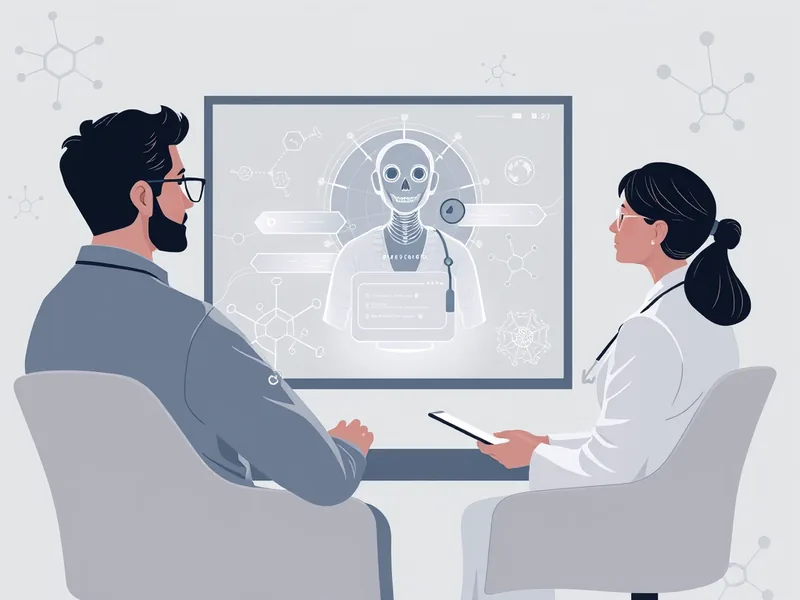
The integration of AI chatbots into healthcare is not just a legal issue; it has significant implications for public health and patient trust. On one hand, these tools can improve access to health information, especially in underserved areas. They can also reduce the administrative burden on healthcare providers, allowing more time for meaningful interactions with patients.
However, the risks are substantial. Misinformation from AI chatbots could lead to delayed or incorrect diagnoses, potentially harming patient outcomes. “It’s crucial that we strike a balance between harnessing the benefits of AI and ensuring patient safety,” O’Connor emphasized.
Healthcare providers must be equipped to handle these new challenges. They need training on how to recognize and address AI-generated information effectively. There should be clear guidelines for when and how patients can use these tools responsibly.
From an educational standpoint, medical schools and residency programs may need to adapt their curricula to include more content on AI in healthcare. “We must ensure that our future healthcare professionals are well-prepared to navigate this evolving landscape,” said Dr. Michael Blackman, Chief Medical Officer at Greenway Health.
As the use of AI chatbots in healthcare continues to grow, it’s clear that a collaborative effort is needed from all stakeholders-developers, patients, providers, and policymakers-to ensure that these tools enhance rather than undermine patient care.
The journey toward clarifying liability and ensuring safe and effective use of AI in healthcare will be long and complex. But with the right approach, we can harness the power of technology to improve health outcomes for everyone.
Tags
Original Sources
What Happens When Patients Trust AI Over Their Doctor? - MedCity News
↗ https://medcitynews.com/2026/07/ai-chatbot-healthcare-law
About the author
Amara's entry point into AI was an epidemiology role at a London research hospital, where she spent five years studying how digital health tools reached — or conspicuously failed to reach — underserved communities. Watching early algorithmic systems in healthcare quietly entrench existing inequalities, she redirected her career toward the systemic consequences of AI at scale. She covers AI through an unflinching lens: who benefits, who bears the cost, and what evidence actually says versus what the press release claims. Her writing is calm and precise, but she doesn't mistake balance for neutrality.
More from The Steward →This Week's Edition
6 August 2026
25 articles
Related Articles

Study Finds Pharmacy Care Coordination Cuts Hospitalizations for Cancer Patients
Health & Science · 5 min

A Decade-Late Diagnosis Sparked a New Model for Funding Precision Health
Health & Science · 5 min

Stanford Scientists Grow Mice With Nearly Half-Human Brains, Reviving Old Ethical Questions
Health & Science · 5 min
Related Articles
Study Finds Pharmacy Care Coordination Cuts Hospitalizations for Cancer Patients
Health & Science · 5 min
A Decade-Late Diagnosis Sparked a New Model for Funding Precision Health
Health & Science · 5 min
Stanford Scientists Grow Mice With Nearly Half-Human Brains, Reviving Old Ethical Questions
Health & Science · 5 min
More Stories
© 2026 Cedar & Bloom. All rights reserved.
