The Drum · Weekly AI news, freeSubscribe →

Share
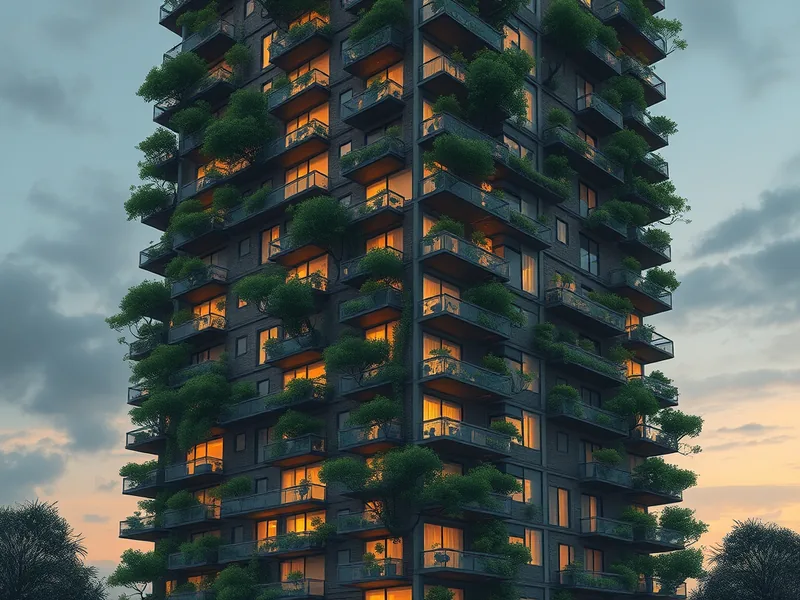
AI-generated designs merge dense greenery with towering structures, creating vertical forests that combat urban sprawl and restore ecological balance in densely populated areas.
In a world where urbanization is rapidly encroaching on natural habitats, the challenge of integrating green spaces into cityscapes has never been more pressing. A recent collaboration between an architect and artificial intelligence (AI) has yielded a fascinating solution: a vertical forest skyscraper that could redefine sustainable architecture.
The concept emerged when an unnamed architect asked AI to design futuristic skyscrapers with sustainability at their core. The AI responded by proposing a structure that not only houses human inhabitants but also supports a thriving ecosystem of plants and trees, effectively turning the building into a vertical forest.
Urban areas are often characterized by concrete jungles, where green spaces are few and far between. This lack of vegetation can lead to a host of environmental issues, including increased air pollution, higher temperatures (the urban heat island effect), and reduced biodiversity. The vertical forest skyscraper aims to address these problems by integrating nature into the very fabric of the building.
The design features multiple levels of balconies and terraces, each planted with a variety of trees and plants. These green spaces not only provide aesthetic value but also offer significant environmental benefits. For instance, the vegetation can help filter air pollutants, reduce the urban heat island effect, and even sequester carbon dioxide, contributing to efforts to combat climate change.
Imagine stepping out of your apartment onto a lush, tree-lined terrace, where you can breathe in fresh, clean air. This is the vision that the vertical forest skyscraper aims to realize. The building's design includes:
The benefits of vertical forest skyscrapers are manifold. They can:
However, there are also challenges to consider. The initial cost of building a vertical forest skyscraper can be high due to the specialized design and materials required. Additionally, maintaining the plants and ensuring they thrive in an urban environment will require ongoing effort and resources. There is also the question of whether such structures can be scaled up to have a meaningful impact on large cities.
Despite these challenges, the vertical forest skyscraper represents a promising step towards more sustainable urban development. As cities continue to grow, innovative solutions like this one will be crucial in creating environments that are both livable and environmentally responsible.
The collaboration between human creativity and AI technology has opened up new possibilities for how we can live in harmony with nature, even in the heart of bustling metropolises. The vertical forest skyscraper is not just a building; it's a symbol of hope for a greener, more sustainable future.
Tags
Original Sources
About the author
Amara's entry point into AI was an epidemiology role at a London research hospital, where she spent five years studying how digital health tools reached — or conspicuously failed to reach — underserved communities. Watching early algorithmic systems in healthcare quietly entrench existing inequalities, she redirected her career toward the systemic consequences of AI at scale. She covers AI through an unflinching lens: who benefits, who bears the cost, and what evidence actually says versus what the press release claims. Her writing is calm and precise, but she doesn't mistake balance for neutrality.
More from The Steward →This Week's Edition
29 April 2026
29 articles
Related Articles

Nuclear Plants Are Squeezing Out More Power, But It Won't Be Enough to Meet AI's Demand
Environment & Climate · 5 min

The Hidden Environmental Price Tag of Artificial Intelligence
Environment & Climate · 5 min

Iambic Therapeutics Raises $150 Million in IPO to Fund AI-Designed Cancer Drugs
Finance & Markets · 5 min
Related Articles
Nuclear Plants Are Squeezing Out More Power, But It Won't Be Enough to Meet AI's Demand
Environment & Climate · 5 min
The Hidden Environmental Price Tag of Artificial Intelligence
Environment & Climate · 5 min
Iambic Therapeutics Raises $150 Million in IPO to Fund AI-Designed Cancer Drugs
Finance & Markets · 5 min
More Stories
© 2026 Cedar & Bloom. All rights reserved.
