The Drum · Weekly AI news, freeSubscribe →
Share
AI outperforms conventional methods by spotting 20% more breast cancers, offering a significant boost to early detection and potentially saving thousands of lives annually.
Breast cancer is one of the most common cancers among women, and early detection can significantly improve outcomes. A recent study has shown that artificial intelligence (AI) can detect up to 20% more breast cancers than traditional screening methods used by radiologists. This breakthrough could have a profound impact on public health, potentially saving thousands of lives each year.
Early detection is crucial in the fight against breast cancer. When caught early, the five-year survival rate can be as high as 90%. However, when detected at later stages, this rate drops significantly. Traditional mammography screening has been a cornerstone of early detection, but it's not perfect. False negatives-where cancer is present but not detected-and false positives-where benign abnormalities are flagged as potentially cancerous-can lead to unnecessary anxiety and further testing.
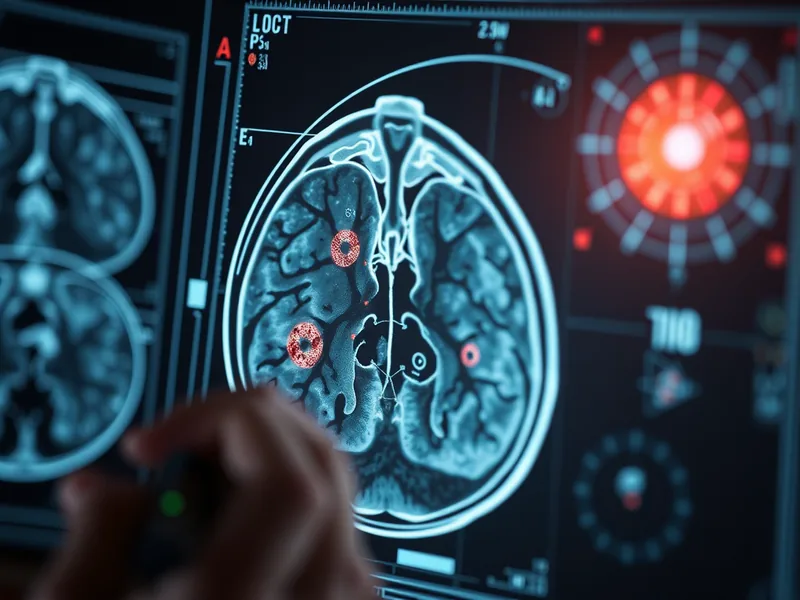
AI technology in medical imaging works by analyzing mammograms with algorithms that can detect subtle patterns and anomalies that might be missed by the human eye. These algorithms are trained on vast datasets of mammogram images, learning to identify the hallmarks of cancerous tissue. In a study published in the journal Nature, researchers found that AI systems were not only more accurate in detecting breast cancers but also reduced the number of false positives and false negatives.
The study, conducted by an international team of researchers, compared the performance of AI with that of human radiologists. They analyzed over 25,000 mammograms from women in the United States and the United Kingdom. The results were striking:
The potential benefits of AI in breast cancer screening are significant:
However, there are also risks and challenges:
The integration of AI into breast cancer screening could have far-reaching consequences. On a personal level, it means more women will receive timely and accurate diagnoses, leading to better health outcomes. On a societal level, it could reduce the overall burden of breast cancer on healthcare systems, freeing up resources for other critical needs.
While the results are promising, more research is needed to fully understand the long-term impacts of AI in breast cancer screening. Healthcare providers and policymakers must work together to address the challenges and ensure that these technologies are implemented ethically and effectively.
AI has the potential to revolutionize breast cancer detection, offering a powerful tool to improve early diagnosis and treatment outcomes. As we continue to refine these technologies, it is essential to prioritize patient safety, data privacy, and equitable access to care.
Tags
Original Sources
About the author
Amara's entry point into AI was an epidemiology role at a London research hospital, where she spent five years studying how digital health tools reached — or conspicuously failed to reach — underserved communities. Watching early algorithmic systems in healthcare quietly entrench existing inequalities, she redirected her career toward the systemic consequences of AI at scale. She covers AI through an unflinching lens: who benefits, who bears the cost, and what evidence actually says versus what the press release claims. Her writing is calm and precise, but she doesn't mistake balance for neutrality.
More from The Steward →This Week's Edition
30 April 2026
29 articles
Related Articles
Related Articles
More Stories
© 2026 Cedar & Bloom. All rights reserved.