The Drum · Weekly AI news, freeSubscribe →

Share
As clinics increasingly turn to AI for operational efficiency, many are finding that success hinges on understanding what tasks AI can handle-and where it falls short.
A few months ago, a clinic executive pulled me aside at a conference. The executive knew some of the clinics we partnered with and said, “We tried an AI Voice Agent. It didn’t bring the results we hoped for. What did we do wrong?” This is a question I hear often. Executives know AI should be solving operational problems-but too often it falls short. And the answer almost always surprises them: the problem is rarely the model. The reasons are more operational than technical.
The first and most critical step that many clinics skip is defining what they want the AI to do and understanding the context it needs. Not all patient interactions are equal. Some are transactional, like checking availability or confirming appointments where a specific answer exists in a system. Others are relational, open-ended, and clinically complex, shaped by context no system fully holds.
AI agents work well in the first category. I recently reviewed transcripts from a behavioral health clinic using an AI Voice Agent for their medication line. A patient called in, unsure of the name of their medication-they only remembered it was prescribed to help them sleep. The agent pulled up the patient’s chart, identified the medication consistent with the description, and confirmed it with the patient. No human needed. Call closed. That is AI doing exactly what it was built to do-because it had the context.
Clinical intake and follow-up sessions are a different story. An AI agent can read the last session note, surface the diagnosis, medications, and treatment plan. However, the challenge lies in observing what wasn’t written-the shift in a patient’s affect, the hesitation before answering, or the subtle cues that a therapist of six months would immediately notice. In behavioral health, these unwritten, unstructured signals are often the most clinically significant.
The problem isn’t giving AI access to a patient’s chart; it’s providing the context that was never written down. Patient-clinician rapport is foundational in behavioral health. It shapes what a patient discloses, how they respond to questions, and how a clinician interprets what they’re hearing. Whether AI can meaningfully replicate this over time remains up for debate. As of today, AI deployed into clinical interactions has context on the notes-not the patient relationship.
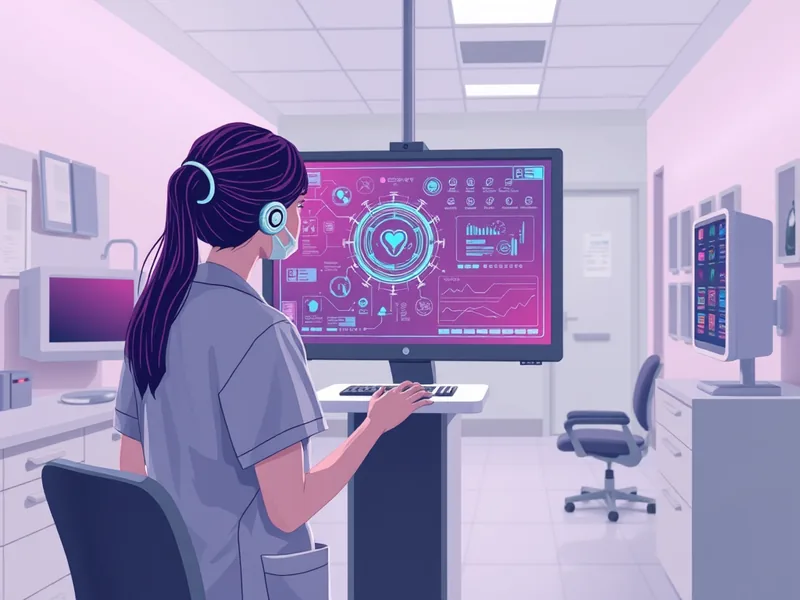
For example, consider a scenario where a patient is discussing their mental health with a therapist. The AI might accurately read and summarize past sessions, but it cannot detect the subtle changes in tone or body language that a human clinician can pick up on. These nuances are crucial for effective therapy and can significantly impact treatment outcomes.
Understanding these limitations is crucial for clinics looking to integrate AI effectively. By focusing on transactional tasks where context is clear, clinics can achieve meaningful operational improvements without compromising patient care. However, it’s equally important to recognize the boundaries of what AI can do in more complex, relational settings.
For healthcare providers, this means being selective about where and how they deploy AI. Transactional tasks like appointment scheduling, medication reminders, and basic health information can be efficiently managed by AI, freeing up clinicians to focus on more nuanced, patient-centered care. This balanced approach ensures that technology enhances rather than replaces the human touch in healthcare.
Ultimately, the success of AI in healthcare clinics depends on a clear understanding of its capabilities and limitations. By aligning AI applications with tasks where it can excel, clinics can improve efficiency and patient satisfaction while maintaining the high standards of care their patients deserve.
Tags
Original Sources
Why AI Fails in Healthcare Clinics (And What Actually Works) - MedCity News
↗ https://medcitynews.com/2026/05/why-ai-fails-in-healthcare-clinics-and-what-actually-works
About the author
Amara's entry point into AI was an epidemiology role at a London research hospital, where she spent five years studying how digital health tools reached — or conspicuously failed to reach — underserved communities. Watching early algorithmic systems in healthcare quietly entrench existing inequalities, she redirected her career toward the systemic consequences of AI at scale. She covers AI through an unflinching lens: who benefits, who bears the cost, and what evidence actually says versus what the press release claims. Her writing is calm and precise, but she doesn't mistake balance for neutrality.
More from The Steward →This Week's Edition
22 May 2026
29 articles
Related Articles
Related Articles
More Stories
© 2026 Cedar & Bloom. All rights reserved.