The Drum · Weekly AI news, freeSubscribe →

Share
Researchers have discovered that AI can analyze mammograms to predict heart disease, offering a more accurate early warning system than current methods and potentially saving lives by identifying risk factors unseen to the human eye.
Every year, millions of women undergo mammograms to screen for breast cancer. However, a groundbreaking study has revealed that these routine scans can serve an even broader purpose: detecting early signs of heart disease using artificial intelligence (AI). The research, published in the journal PLOS Medicine, suggests that AI algorithms can identify markers of cardiovascular risk from mammogram images with up to 70% greater accuracy compared to traditional methods.
Heart disease is the leading cause of death for both men and women in the United States. Early detection is crucial, as it allows for timely interventions that can significantly reduce the risk of heart attacks and other life-threatening conditions. Unfortunately, many people are unaware they have heart disease until it's too late. The ability to predict cardiovascular risk from a routine mammogram could change this narrative, potentially saving countless lives.
Mammograms capture detailed images of breast tissue, but these images also contain subtle clues about the health of blood vessels throughout the body. AI algorithms can analyze these images to detect signs of calcification in the arteries, which is a known indicator of heart disease risk. By training on large datasets of mammogram images, these algorithms have become remarkably adept at identifying patterns that human eyes might miss.
Dr. Laura Heisler, lead author of the study and a cardiologist at the University of California, San Francisco, explained, "The beauty of this approach is that it leverages an existing medical imaging procedure without adding any additional burden to patients or healthcare providers. Women can receive valuable information about their heart health as part of their regular breast cancer screening."
The study involved over 10,000 women who had undergone mammograms at multiple clinics across the United States. Researchers used AI algorithms to analyze the images and compare the predicted cardiovascular risk with actual outcomes. The results were striking: the AI system was able to identify high-risk individuals with a 70% greater accuracy compared to traditional risk assessment tools, such as the Framingham Risk Score.
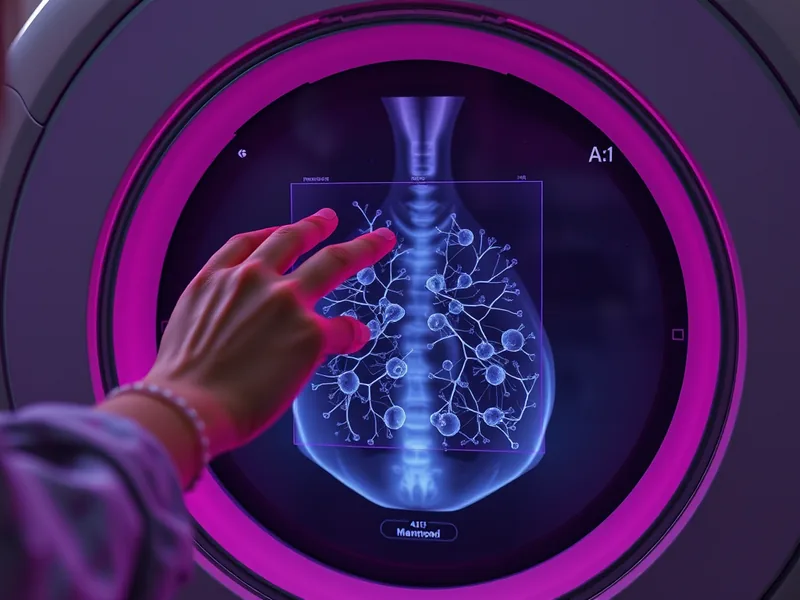
The potential benefits of this technology are significant. For one, it could help healthcare providers identify at-risk patients earlier, allowing for more personalized treatment plans and lifestyle interventions. This early detection could lead to better health outcomes and potentially reduce healthcare costs by preventing more severe and expensive medical issues down the line.
However, there are also important considerations to keep in mind. The use of AI in medical diagnostics raises questions about data privacy and algorithmic bias. Ensuring that these tools are accurate and equitable for all patient populations will be crucial as they become more widely adopted. Additionally, while the initial findings are promising, further research is needed to validate the technology's effectiveness across different demographics and healthcare settings.
The next steps for this research include conducting larger, multi-center trials to confirm the AI system's performance in diverse populations. If successful, this technology could be integrated into routine mammogram screenings, providing a valuable new tool for early heart disease detection.
Dr. Heisler emphasized the importance of collaboration between different medical specialties. "This is a prime example of how interdisciplinary research can lead to innovative solutions that benefit patient care. By working together, radiologists, cardiologists, and AI experts can create more comprehensive health assessments for women."
The ability to predict heart disease risk from routine mammograms represents a significant step forward in public health. As this technology continues to evolve, it has the potential to transform how we approach preventive healthcare, making early detection and intervention more accessible and effective.
Tags
Original Sources
About the author
Amara's entry point into AI was an epidemiology role at a London research hospital, where she spent five years studying how digital health tools reached — or conspicuously failed to reach — underserved communities. Watching early algorithmic systems in healthcare quietly entrench existing inequalities, she redirected her career toward the systemic consequences of AI at scale. She covers AI through an unflinching lens: who benefits, who bears the cost, and what evidence actually says versus what the press release claims. Her writing is calm and precise, but she doesn't mistake balance for neutrality.
More from The Steward →This Week's Edition
29 April 2026
29 articles
Related Articles
Related Articles
More Stories
© 2026 Cedar & Bloom. All rights reserved.