The Drum · Weekly AI news, freeSubscribe →
Share
An AI system detected breast cancer in a California woman after conventional tests missed it, highlighting the technology's potential to save lives by catching tumors earlier than traditional methods.
In an age where technology is increasingly integrated into healthcare, the story of a woman whose life was saved by artificial intelligence (AI) serves as a powerful reminder of the potential benefits and limitations of current medical practices. Jennifer, a 42-year-old mother from California, had her annual mammogram, which came back normal. However, just weeks later, an AI system flagged an area of concern that led to the early detection of breast cancer.
Breast cancer is one of the most common cancers among women worldwide, and early detection can significantly improve survival rates. According to the American Cancer Society, when breast cancer is detected early and confined to the breast, the 5-year relative survival rate is 99%. However, if it spreads to other parts of the body, that rate drops dramatically.
Jennifer's story highlights the critical role that AI can play in enhancing diagnostic accuracy and potentially saving lives. "I feel so lucky," Jennifer said. "If not for the AI system, I might have missed my chance at early treatment."
The AI system used to detect Jennifer's cancer is part of a growing trend in medical diagnostics. These systems are trained on vast datasets of medical images and can identify subtle patterns that human eyes might miss. In Jennifer's case, the AI flagged an area of her mammogram that was initially deemed normal by radiologists.
Dr. Sarah Thompson, a breast imaging specialist at California Medical Center, explained the process: "The AI system acts as a second set of eyes. It can detect abnormalities that are too small or subtle for human detection. This is particularly important in early-stage cancers where the tumors are often very small."
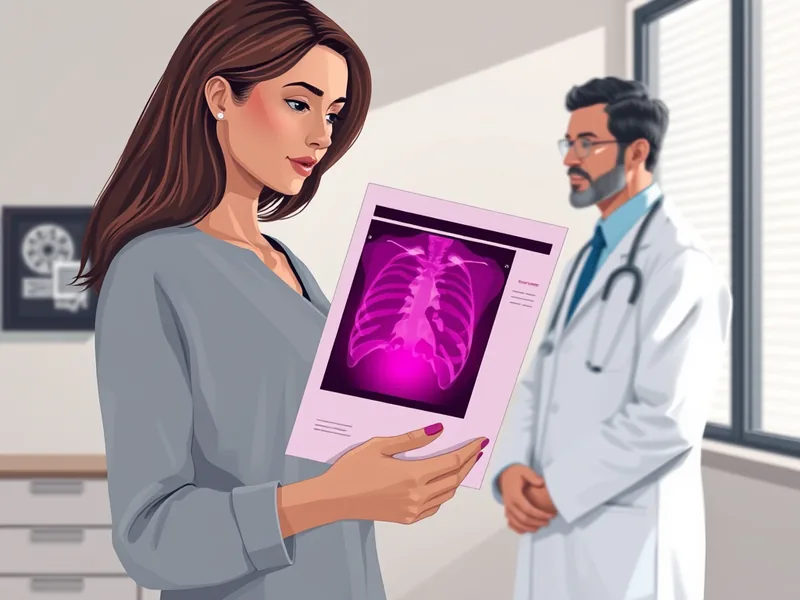
The benefits of using AI in medical diagnostics are clear. Early detection leads to more effective treatment options and better patient outcomes. AI systems can also help reduce the workload on radiologists, allowing them to focus on more complex cases.
However, there are risks and challenges to consider. False positives-where the AI incorrectly identifies an area as suspicious-can lead to unnecessary biopsies and anxiety for patients. Additionally, there is a need for rigorous testing and validation of these systems to ensure they perform consistently across different populations and imaging technologies.
The integration of AI into healthcare has the potential to revolutionize diagnostic practices. As more hospitals and clinics adopt these technologies, we can expect to see improvements in early detection rates and overall patient care. However, it is crucial that these systems are developed and implemented with transparency, accountability, and a commitment to patient safety.
While AI offers promising advancements, it should be seen as a tool to augment, not replace, human expertise. Dr. Thompson emphasized this point: "AI is a powerful ally in the fight against breast cancer, but it works best when used alongside skilled radiologists. The combination of human and machine intelligence can lead to the most accurate and reliable diagnoses."
Jennifer's story is a testament to the potential of AI in healthcare. It underscores the importance of continued research, development, and ethical considerations as we move forward with these technologies.
Tags
Original Sources
About the author
Amara's entry point into AI was an epidemiology role at a London research hospital, where she spent five years studying how digital health tools reached — or conspicuously failed to reach — underserved communities. Watching early algorithmic systems in healthcare quietly entrench existing inequalities, she redirected her career toward the systemic consequences of AI at scale. She covers AI through an unflinching lens: who benefits, who bears the cost, and what evidence actually says versus what the press release claims. Her writing is calm and precise, but she doesn't mistake balance for neutrality.
More from The Steward →This Week's Edition
29 April 2026
29 articles
Related Articles
Related Articles
More Stories
© 2026 Cedar & Bloom. All rights reserved.