The Drum · Weekly AI news, freeSubscribe →
Share
Scientists at Google DeepMind and HHMI Janelia created an AI model that mimics a fruit fly's complex behaviors, offering unprecedented insights into the neurological underpinnings of movement and environment interaction.
Understanding how animals move and interact with their environment is a fundamental challenge in neuroscience. A recent breakthrough by Google DeepMind, in collaboration with the Howard Hughes Medical Institute's Janelia Research Campus (HHMI Janelia), has brought us closer to unraveling these mysteries. They have developed an AI model that can simulate not just how a fruit fly walks and flies but also how it behaves in complex environments.
Fruit flies, or Drosophila melanogaster, are more than just common pests; they are crucial subjects in biological research. These tiny insects share many genetic and physiological traits with humans, making them invaluable for studying everything from genetics to neurology. By creating a realistic simulation of a fruit fly, researchers can gain deeper insights into how the brain, body, and environment collectively influence behavior. This could lead to breakthroughs in understanding human conditions such as neurological disorders.
To create this sophisticated model, the team used MuJoCo, an open-source physics simulator initially developed for robotics and biomechanics. They enhanced it with several features:
The next step was training an artificial neural network (ANN) using real fly behavior captured in video recordings. The ANN learned how to control the virtual fly's movements by mimicking these behaviors within the MuJoCo environment. This process, known as deep reinforcement learning, allows the model to refine its actions over time, much like a real organism would.
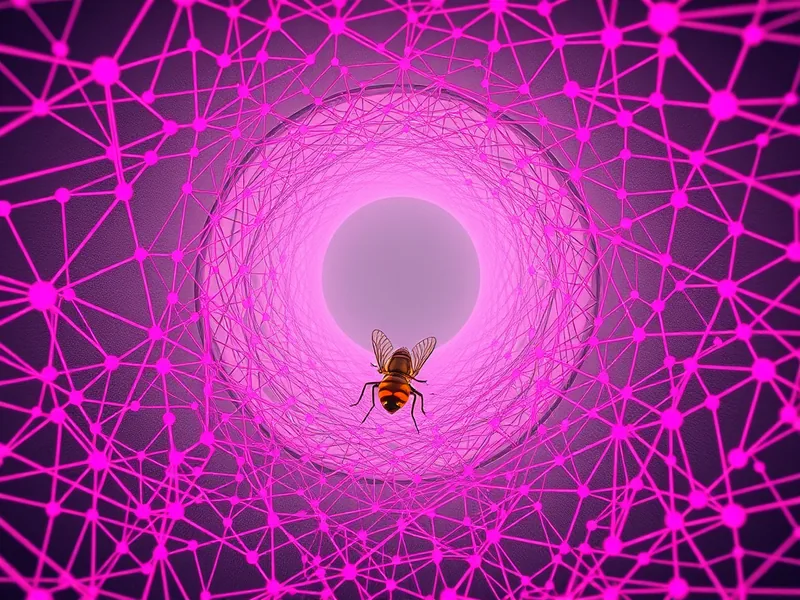
The result is a highly realistic simulation. The virtual fruit fly can move along complex natural flight trajectories with remarkable accuracy. For example, when instructed to follow a path marked by blue dots, it navigates the route just as a real fly would. This level of detail is crucial for understanding how flies interact with their environment and make decisions.
The implications of this research are far-reaching. By simulating an organism's behavior in a controlled digital environment, scientists can explore scenarios that are difficult or impossible to replicate in a lab setting. For instance, they can test how changes in the fly's brain or body affect its movements without causing harm.
Moreover, this approach is not limited to fruit flies. The team has already applied similar techniques to create virtual rodents and plans to extend their work to zebrafish. Zebrafish are particularly interesting because they share about 70% of their protein-coding genes with humans, making them a valuable model for studying human biology.
To benefit the broader scientific community, Google DeepMind and HHMI Janelia have open-sourced the fruit fly model. This means that researchers worldwide can access the code and build upon this work, potentially leading to new discoveries and applications in various fields of science.
The development of a realistic AI-driven fruit fly simulation marks a significant step forward in our understanding of animal behavior and neuroscience. By combining advanced physics simulations with deep learning, researchers are opening up new avenues for exploring the intricate relationships between an organism's brain, body, and environment. This work not only advances scientific knowledge but also paves the way for more ethical and efficient research methods.
Tags
Original Sources
About the author
Amara's entry point into AI was an epidemiology role at a London research hospital, where she spent five years studying how digital health tools reached — or conspicuously failed to reach — underserved communities. Watching early algorithmic systems in healthcare quietly entrench existing inequalities, she redirected her career toward the systemic consequences of AI at scale. She covers AI through an unflinching lens: who benefits, who bears the cost, and what evidence actually says versus what the press release claims. Her writing is calm and precise, but she doesn't mistake balance for neutrality.
More from The Steward →This Week's Edition
29 April 2025
29 articles
Related Articles
Related Articles
More Stories
© 2026 Cedar & Bloom. All rights reserved.