The Drum · Weekly AI news, freeSubscribe →
Share
AI-driven analysis of cell microscopy images uncovers previously unseen biological nuances, offering unprecedented insights into cellular dynamics and potential new directions for medical research.
In a groundbreaking study published on arXiv, researchers have demonstrated how artificial intelligence (AI) can uncover hidden biological concepts from microscopic images of cells. This work, led by Konstantin Donhauser and colleagues, opens new avenues for scientific discovery by making complex cell data more interpretable.
Microscopy is a powerful tool in biology, allowing scientists to observe the intricate structures and behaviors of cells. However, interpreting these images can be challenging, especially when it comes to identifying subtle changes caused by genetic modifications or environmental factors. Traditional methods often rely on human expertise, which can be time-consuming and prone to bias. The new AI approach promises to automate this process, potentially accelerating research and leading to faster breakthroughs in fields like genetics and drug development.
The researchers used a technique called sparse dictionary learning (DL), which is typically applied to text data to extract meaningful concepts. In this study, they adapted DL for use with visual data from cell microscopy. The key innovation was the combination of a specific DL algorithm, called Iterative Codebook Feature Learning (ICFL), with a preprocessing step known as PCA whitening.
Imagine you have a large collection of photographs of different types of fruits. Sparse dictionary learning would help identify common features, such as the shape and color of apples, oranges, and bananas. In this case, the "fruits" are cell images, and the features could be different cell types or genetic perturbations.
The ICFL algorithm works by breaking down these images into a set of basic building blocks (or "features") that can be combined to reconstruct the original images. The PCA whitening step helps normalize the data, making it easier for the algorithm to identify significant patterns without being misled by noise or irrelevant variations.
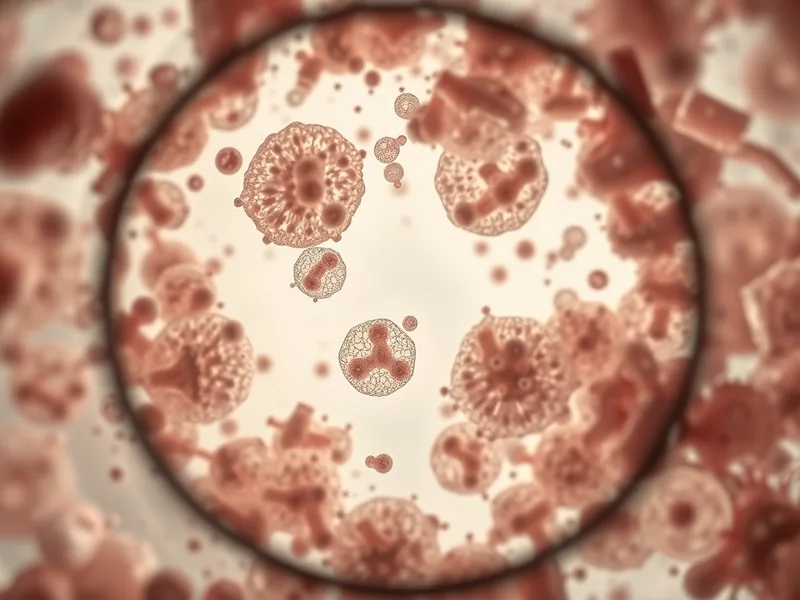
Using this approach, the researchers were able to extract biologically meaningful concepts from cell microscopy images. For example, they identified different types of cells and subtle morphological changes caused by genetic interventions. These findings are significant because they demonstrate that AI can reveal insights that might be difficult for human observers to detect.
The ability to automatically extract meaningful biological concepts from microscopic images has several important implications:
While the results are promising, there are still challenges to overcome. For instance, the interpretability of AI models remains a significant concern. Ensuring that the concepts extracted by these algorithms are truly meaningful and useful for scientific research is an ongoing area of investigation.
The researchers also note that their method could be applied to other types of biological data, such as imaging from different organs or tissues. This versatility makes it a valuable tool in the broader toolkit of biomedical research.
By combining advanced AI techniques with microscopic cell images, this study paves the way for more efficient and insightful scientific discovery. As researchers continue to refine these methods, we can expect even more exciting developments in our understanding of biology and medicine.
Tags
Original Sources
About the author
Amara's entry point into AI was an epidemiology role at a London research hospital, where she spent five years studying how digital health tools reached — or conspicuously failed to reach — underserved communities. Watching early algorithmic systems in healthcare quietly entrench existing inequalities, she redirected her career toward the systemic consequences of AI at scale. She covers AI through an unflinching lens: who benefits, who bears the cost, and what evidence actually says versus what the press release claims. Her writing is calm and precise, but she doesn't mistake balance for neutrality.
More from The Steward →This Week's Edition
6 February 2025
29 articles
Related Articles
Related Articles
More Stories
© 2026 Cedar & Bloom. All rights reserved.