The Drum · Weekly AI news, freeSubscribe →
Share
This study challenges the supremacy of human expertise by pitting AI against seasoned doctors, raising questions about the future role of technology in healthcare and patient trust.
When it comes to healthcare, accuracy and trust are paramount. The idea that artificial intelligence (AI) could outperform human doctors in diagnosing illnesses has sparked both excitement and concern. A recent high-profile study claiming that an AI system surpassed the diagnostic accuracy of experienced physicians has made headlines, but what does this really mean for patients and the medical community?
The study, published in a leading medical journal, compared the performance of an advanced AI model to that of 50 board-certified doctors across a range of common and complex conditions. The results suggested that the AI system had a slightly higher accuracy rate, particularly in identifying rare diseases. However, the nuances of this study reveal a more complex picture.
To understand the implications, it's important to break down what the study actually found. The AI model was trained on an extensive dataset of patient records, including symptoms, test results, and medical histories. When tested against real-world cases, the AI showed a marginally better performance in diagnosing certain conditions, especially those that are less common.
However, this doesn't mean that AI is ready to replace human doctors entirely. The study's authors noted several limitations. For one, the AI system was not tested in a clinical setting with real patients. Instead, it relied on historical data, which may not fully capture the dynamic and unpredictable nature of patient interactions. Additionally, the conditions used in the study were carefully selected and may not represent the full spectrum of medical challenges that doctors face daily.
Moreover, while the AI showed promise in diagnosing rare diseases, it did not consistently outperform human doctors across all conditions. In some cases, the difference in accuracy was statistically significant but practically negligible. This suggests that AI could be a valuable tool for supporting, rather than supplanting, human decision-making.
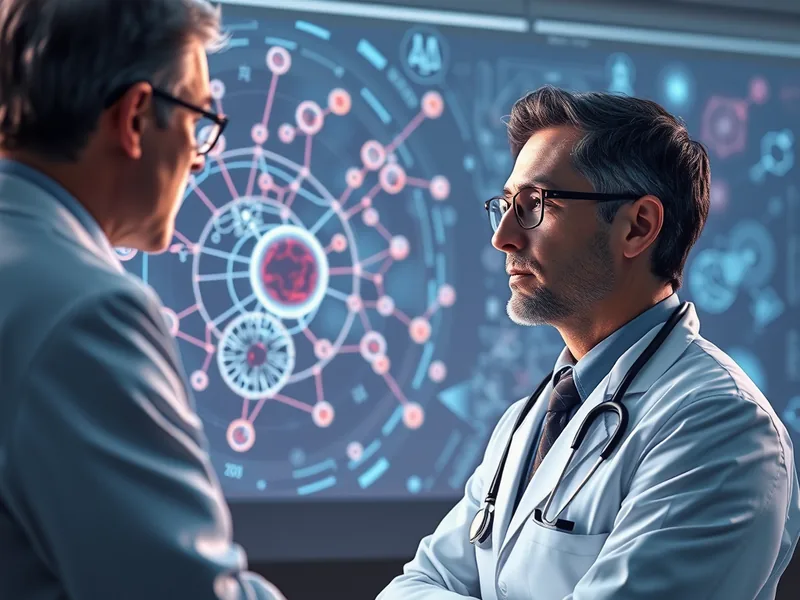
The potential of AI to enhance medical diagnosis is undeniable. For patients, this could mean faster and more accurate diagnoses, leading to better outcomes and potentially saving lives. For doctors, AI can serve as a second opinion, helping to catch rare conditions that might otherwise be overlooked. This collaborative approach could also help alleviate the growing burden on healthcare systems by reducing diagnostic errors and improving efficiency.
However, there are significant ethical and practical considerations. The integration of AI into clinical practice must be done carefully to ensure patient safety and privacy. There is a risk that over-reliance on AI could erode the critical thinking skills of human doctors or lead to complacency. Additionally, the cost of developing and maintaining these systems could be prohibitive for many healthcare providers, potentially widening disparities in access to quality care.
As we move forward, it's crucial to strike a balance between embracing the potential benefits of AI and addressing the challenges it presents. This includes ongoing research to validate AI models in real-world settings, robust training programs for doctors on how to effectively use these tools, and transparent discussions about the ethical implications of AI in healthcare.
In conclusion, while the study provides promising evidence that AI can enhance diagnostic accuracy, it is just one step in a long journey. The true value of AI in medicine will be realized through thoughtful integration, continuous evaluation, and a commitment to improving patient outcomes for all.
Tags
Original Sources
Did AI really beat doctors at diagnosis?
↗ https://www.statnews.com/2026/05/05/did-ai-really-beat-doctors-at-diagnosis-health-tech
About the author
Amara's entry point into AI was an epidemiology role at a London research hospital, where she spent five years studying how digital health tools reached — or conspicuously failed to reach — underserved communities. Watching early algorithmic systems in healthcare quietly entrench existing inequalities, she redirected her career toward the systemic consequences of AI at scale. She covers AI through an unflinching lens: who benefits, who bears the cost, and what evidence actually says versus what the press release claims. Her writing is calm and precise, but she doesn't mistake balance for neutrality.
More from The Steward →This Week's Edition
7 May 2026
29 articles
Related Articles
Related Articles
More Stories
© 2026 Cedar & Bloom. All rights reserved.