The Drum · Weekly AI news, freeSubscribe →

Share
As artificial intelligence systems grow more powerful, their energy demands are quietly pushing electrical grids to their limits, with significant implications for climate and sustainability.
The rapid advancement of artificial intelligence (AI) has brought about remarkable innovations in various fields, from healthcare to transportation. However, the surge in AI's computational power comes at a steep environmental cost: increased energy consumption that strains electrical grids and raises concerns about climate impact.
Data centers, which house the servers running AI models, are among the most energy-intensive facilities globally. These centers require vast amounts of electricity to operate and cool their equipment. According to a report by the International Energy Agency (IEA), data centers currently account for about 1% of global electricity demand, with this figure projected to rise as AI adoption accelerates.
The problem is not just the sheer volume of energy consumed but also the variability in power usage. AI models often require bursts of intense computation followed by periods of lower activity. This fluctuating demand can create instability on electrical grids, which are designed for steady, predictable loads. Grid operators must balance supply and demand to prevent blackouts or brownouts, and the unpredictable nature of AI's energy use complicates this task.
Imagine a city where traffic lights suddenly turn green and red at random intervals. This would lead to chaos on the roads, with cars stopping and starting unpredictably. Similarly, when data centers draw large amounts of power in short bursts, it can cause instability in the electrical grid. These fluctuations can lead to voltage drops or spikes, which can damage equipment and disrupt services.
The issue is particularly acute during peak usage periods. For example, a recent study by researchers at the University of California, Berkeley, found that AI training sessions often coincide with times when renewable energy sources like solar and wind are less available. This means that grids must rely more heavily on fossil fuels to meet the increased demand, negating some of the environmental benefits of renewable energy.
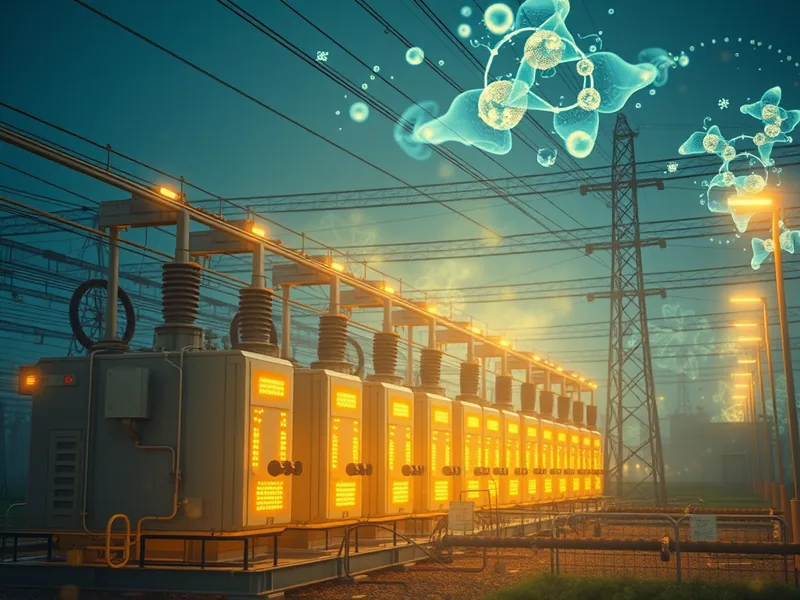
The geographic concentration of data centers exacerbates the problem. Many large tech companies have clusters of data centers in specific regions, such as the Pacific Northwest or the Southeastern United States. This concentration can overload local grids and make it difficult to distribute power efficiently across broader areas.
Addressing the energy challenges posed by AI requires a multi-faceted approach that involves both technological innovation and policy intervention. On the technical front, researchers are exploring ways to optimize AI models to reduce their computational demands. Techniques such as model compression and pruning can significantly lower the amount of energy required for training and inference.
Data centers are increasingly adopting renewable energy sources to power their operations. For instance, Google has committed to running all its data centers on carbon-free energy by 2030. Other companies are exploring innovative solutions like using excess heat from servers to warm nearby buildings or employing advanced cooling systems that use less electricity.
Policy measures can also play a crucial role. Governments and regulatory bodies can incentivize the development of more efficient AI technologies and encourage the adoption of renewable energy sources. For example, tax credits for green data centers or regulations that require tech companies to report their carbon footprints could drive industry-wide improvements.
Ultimately, the goal is to ensure that the benefits of AI are realized without compromising grid stability or exacerbating climate change. By working together, stakeholders can find sustainable solutions that support both technological progress and environmental stewardship.
Tags
Original Sources
AI’s Wild Power Demands Are Quietly Rewriting Grid Rules
↗ https://spectrum.ieee.org/data-centers-grid-instability
About the author
Amara's entry point into AI was an epidemiology role at a London research hospital, where she spent five years studying how digital health tools reached — or conspicuously failed to reach — underserved communities. Watching early algorithmic systems in healthcare quietly entrench existing inequalities, she redirected her career toward the systemic consequences of AI at scale. She covers AI through an unflinching lens: who benefits, who bears the cost, and what evidence actually says versus what the press release claims. Her writing is calm and precise, but she doesn't mistake balance for neutrality.
More from The Steward →This Week's Edition
13 July 2026
34 articles
Related Articles

Oracle Trucks In Natural Gas to Keep AI Data Centers Running Ahead of Pipelines
Environment & Climate · 5 min

MIT Technology Review's 2026 Climate Tech List Shows Where Capital Is Actually Flowing
Environment & Climate · 5 min

Corporate Carbon Pledges Face a Reckoning as Accountability Rules Tighten
Environment & Climate · 5 min
Related Articles
Oracle Trucks In Natural Gas to Keep AI Data Centers Running Ahead of Pipelines
Environment & Climate · 5 min
MIT Technology Review's 2026 Climate Tech List Shows Where Capital Is Actually Flowing
Environment & Climate · 5 min
Corporate Carbon Pledges Face a Reckoning as Accountability Rules Tighten
Environment & Climate · 5 min
More Stories
© 2026 Cedar & Bloom. All rights reserved.
