The Drum · Weekly AI news, freeSubscribe →

Share
Data centers are straining America's aging electrical grid, but the capital pouring into AI infrastructure is also funding the transmission and load-management technology utilities have needed for decades. Investors should watch who captures that spending.
The AI boom's energy appetite is well documented. Less discussed is what that appetite is funding on the other side of the meter.
Data center power demand has become one of the defining stress tests for the U.S. grid, with critics warning of higher electricity bills in the near term and outages further out. That concern is legitimate. But a panel at TechCrunch Disrupt earlier this month offered a counterpoint worth taking seriously: the same demand surge straining the system is also bankrolling the modernization it has long needed and lacked the urgency to pursue.
Apoorv Bhargava, founder and CEO of WeaveGrid, framed the shift in structural terms. "It's a very different electric grid, right?" he said. "We're dealing with a ton of new variables, including renewable energy. We're dealing with a ton of new load in the form of electric vehicles and data centers and heat pumps, and the ability to manage and orchestrate is fundamentally what utilities are now grappling with."
That orchestration problem is WeaveGrid's business. The company builds software that helps utilities deploy existing grid capacity more efficiently and optimize new connections, with the stated goal of keeping bills down for ratepayers. It is not adding capacity so much as squeezing more utility out of what already exists, a cheaper and faster fix than new transmission lines in many cases.
Software optimization only goes so far when physical infrastructure is the bottleneck. That's where Veir comes in.
Tim Heidel, the company's CEO, runs a business building superconductive power lines designed to move electricity far more efficiently than conventional cables. Veir says its cables can carry power five times farther than traditional lines while requiring 20 times less space, a meaningful advantage in dense data center corridors where land and permitting are both constrained. The company backed up that pitch with capital: it raised a $110 million Series C earlier this month, a sizable round for a hardware-heavy infrastructure play and a signal that investors see a real market forming around transmission bottlenecks.
"The scale of the investment in AI infrastructure is driving a tremendous amount of innovation," Heidel said. "There's a ton of new technologies that are coming off the shelves and starting to get to scale that, pulled together, can actually really make sure that data centers are the best community neighbors and citizens they can possibly be."
He added that the industry needs to adopt those technologies "as fast as possible to ease this next stage of growth."
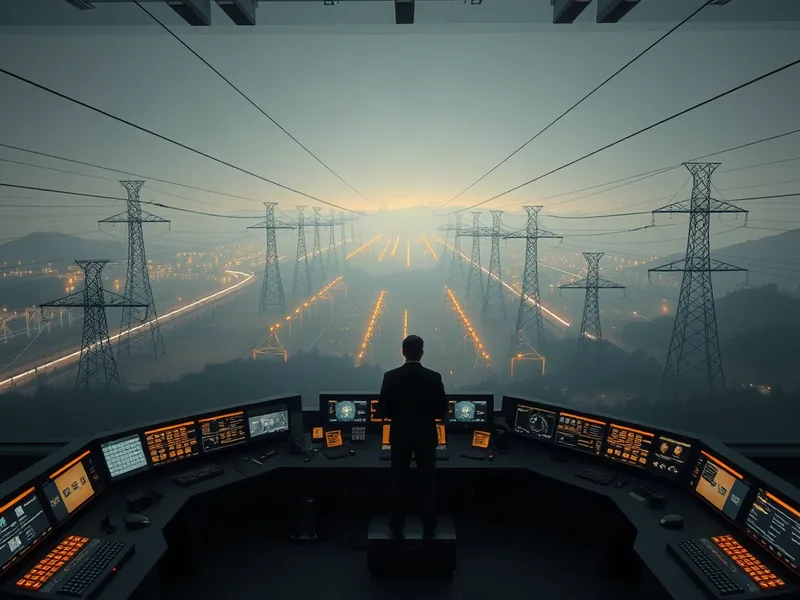
That urgency is the operative word here. Grid modernization has been a known need for years, hampered by slow-moving capital allocation and limited political appetite for infrastructure spending. AI demand has changed the calculus by making the cost of inaction immediate and visible, in the form of strained interconnection queues and rising rates. Capital tends to follow pain points, and this one is now large enough to attract venture-scale checks.
Kristin Eberhard, VP of policy at Rewiring America, offered the clearest articulation of why this moment differs from prior infrastructure pushes. "I feel like this era of AI and load growth is a very improv era," she said. "There's a lot of yes-and-ing going on. So yes, we need more transmission lines. Yes, we need more centralized power plants, and we also need to make sure that we're taking advantage of all this other stuff that we had previously been leaving on the table when we didn't have this urgency of the AI demand."
That framing matters for how investors should read this sector. It is not an either-or between new generation capacity and efficiency gains. Both are getting funded simultaneously, which widens the opportunity set beyond the obvious power-generation plays that have dominated headlines around AI energy demand, nuclear restarts, gas turbine orders, and the like.
The risk, as with any infrastructure-adjacent venture bet, is timeline mismatch. Utilities move slowly, regulatory approval cycles are long, and the payback period on superconducting cable deployment or grid software integration can stretch years beyond a typical venture fund's horizon. Veir's $110 million round buys runway, not certainty of commercial scale. WeaveGrid's software still depends on utility procurement cycles that are notoriously conservative. Neither company has proven it can capture share at the pace the AI buildout is demanding.
There's also a concentration risk worth flagging. Much of this innovation narrative is being driven by a handful of well-capitalized startups serving a narrow customer base of utilities and hyperscalers. If data center buildout slows, whether from a pause in AI capital expenditure or a pullback in model training demand, the urgency funding this wave of grid innovation could evaporate quickly. These companies are, in effect, riding the tailwind of a demand spike that may not be permanent.
The upside case here is real but narrower than the panel's optimism suggests. AI-driven load growth has created genuine urgency and genuine capital flows into grid modernization, areas like load orchestration software and superconducting transmission that were previously underfunded relative to their value. Veir's $110 million raise and WeaveGrid's utility partnerships are tangible evidence that money is moving.
But the sector remains early-stage, utility-dependent, and exposed to the same demand volatility that created the opportunity in the first place. Investors looking at this space should treat it as a derivative bet on sustained AI infrastructure spending rather than a standalone thesis. If data center growth continues at its current pace, the companies solving grid bottlenecks will have a durable runway. If it stalls, the urgency driving this innovation wave stalls with it.
Tags
Original Sources
The data center boom has an upside: innovation for the US grid | TechCrunch
↗ https://techcrunch.com/2026/10/27/the-data-center-boom-has-an-upside-innovation-for-the-us-grid
About the author
Marcus began tracking AI's market implications in 2016, noticing AI-related patent filings accelerating ahead of earnings upgrades before most of the sell-side had caught on. A former fixed-income quantitative analyst, he spent two decades building models that priced risk across emerging markets before pivoting to cover the economic impact of AI full-time. His writing translates opaque technical developments into clear risk/reward terms — and he's rarely diplomatic about the gap between AI valuations and underlying fundamentals. He believes most market participants still underestimate AI's long-run deflationary effect on knowledge work.
More from The Analyst →This Week's Edition
28 October 2026
30 articles
Related Articles
Related Articles
More Stories
© 2026 Cedar & Bloom. All rights reserved.