The Drum · Weekly AI news, freeSubscribe →

Share
Firefighters in Carmel gear up with AR helmets that turn smoke-filled rooms into navigable maps, boosting safety and efficiency during blazes. Qwake Technologies aims to revolutionize rescue operations.
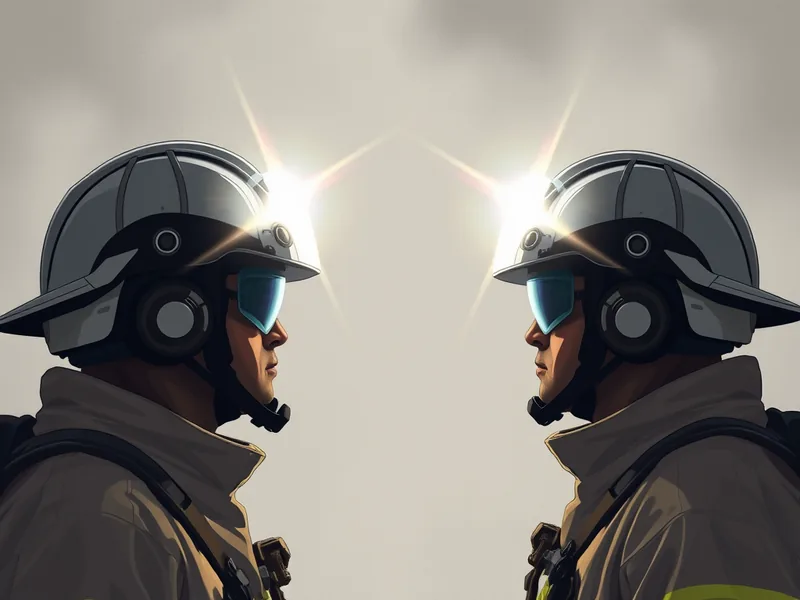
In a quiet moment of preparation, a team of firefighters in Carmel, Indiana, gather around a table where the latest innovation in their toolkit is being unveiled. The air is filled with a mix of anticipation and curiosity as Brandon Smith, the chief deployment officer from Qwake Technologies, carefully fits each firefighter with an augmented reality helmet. These are not just any helmets; they represent a significant leap forward in firefighting technology, designed to enhance visibility and communication in conditions where every second counts.
The Carmel Fire Department is set to be among the first in the United States to deploy these advanced Qwake Technologies C-THRU helmets. Developed over more than a decade with a $10 million contract from the U.S. Department of Homeland Security, these helmets are engineered to provide firefighters with real-time, critical information about their environment, even in the most challenging and low-visibility conditions.
On a recent Friday, Fire Department leaders gathered to showcase the new equipment, which will be rolled out this summer. The demonstration was more than just a technical display; it was a moment of hope for a community that relies on these brave individuals to protect them from the unpredictable dangers of fire.
The helmets are equipped with thermal imaging and augmented reality capabilities, allowing firefighters to see through smoke and other obstructions. This technology not only enhances their ability to navigate dangerous environments but also provides them with instant information about the scene, such as the location of hotspots and potential exit routes. The goal is to reduce operational risks and increase the safety of both firefighters and those they are rescuing.
"We've been working on this technology for over a decade, and it's incredibly rewarding to see it being used by real heroes like the Carmel Fire Department," said Brandon Smith. "These helmets can make a significant difference in how quickly and safely firefighters can operate in some of the most hazardous situations."
The cost of the equipment is partially covered by a contribution of more than $200,000 from the city, which underscores the commitment to innovation and safety within the department. For the firefighters who will be using these helmets, the impact is both personal and professional.
Firefighter John Thompson, who has been with the Carmel Fire Department for over 15 years, shared his thoughts on the new technology. "Every tool that helps us do our job better means we can save more lives," he said. "These helmets are going to be a game-changer. They'll help us see what was once invisible and make decisions faster."
The deployment of these augmented reality helmets in Carmel is part of a broader trend in the firefighting community, where first responders across the country are increasingly turning to advanced technologies like AR and AI to enhance their capabilities. The 10 cities currently testing this technology will play a crucial role in shaping its nationwide adoption, as their experiences provide valuable insights into how these tools can be most effectively used.
While there are still challenges to overcome-such as ensuring seamless integration with existing systems and training firefighters to use the new equipment-the potential benefits are undeniable. The C-THRU helmets represent a significant step forward in the ongoing effort to make firefighting safer and more effective.
As the Carmel Fire Department prepares to deploy these innovative helmets, the community watches with a mix of pride and hope. For the families who rely on these firefighters, the technology means more than just advanced equipment; it represents a brighter, safer future for everyone.
Tags
Original Sources
About the author
Lena spent a decade working in international development before AI tools began showing up in the field programmes she was running — first as curiosity, then as something that genuinely changed outcomes. She writes about the moments where AI stops being a headline and starts being a lifeline: the early cancer detection in a rural clinic, the flood model that gave a village three extra days to evacuate, the translation tool that let a child speak to a doctor for the first time. She is not naive about the risks, but she believes the stories of AI doing real good deserve the same rigour and airtime as the cautionary ones.
More from The Optimist →This Week's Edition
5 May 2026
29 articles
Related Articles

Iambic Therapeutics Raises $150 Million in IPO to Fund AI-Designed Cancer Drugs
Finance & Markets · 5 min

Biotech's Summer Glow Fades as XBI Slips 11% From August Highs
Finance & Markets · 5 min

States Race to Write the Rules for AI Sandboxes in Health Care, and Lobbyists Are Racing Right Alongside Them
Policy & Regulation · 5 min
Related Articles
Iambic Therapeutics Raises $150 Million in IPO to Fund AI-Designed Cancer Drugs
Finance & Markets · 5 min
Biotech's Summer Glow Fades as XBI Slips 11% From August Highs
Finance & Markets · 5 min
States Race to Write the Rules for AI Sandboxes in Health Care, and Lobbyists Are Racing Right Alongside Them
Policy & Regulation · 5 min
More Stories
© 2026 Cedar & Bloom. All rights reserved.
