The Drum · Weekly AI news, freeSubscribe →

Share
For years, companies could claim "net zero" with little proof behind the promise. That era is ending, as regulators and watchdogs push for real evidence of emissions cuts, not just marketing language.
For more than a decade, "net zero" has been one of the most comforting phrases in corporate communications. It conjured images of companies quietly balancing their carbon books, offsetting what they couldn't eliminate, and marching steadily toward a cleaner future. The trouble is that for many firms, the promise was mostly paper. Targets were vague, timelines stretched decades into the future, and verification was often optional.
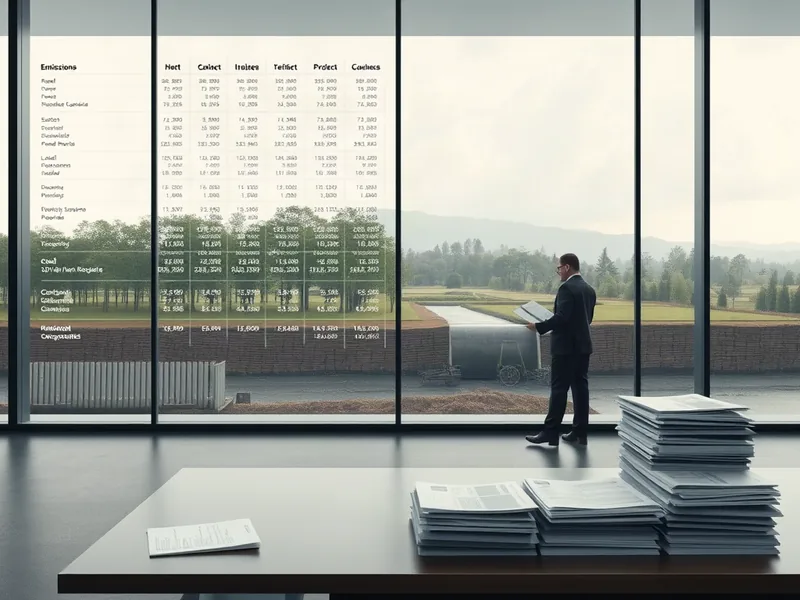
That's starting to change. A shift is underway that will require companies to show actual progress toward net zero emissions, not just announce a distant goal and hope nobody checks back. Think of it like the difference between a gym membership and a fitness plan with monthly weigh-ins. One is aspirational. The other demands results.
This matters because the stakes of climate inaction aren't abstract anymore. They show up in the air people breathe and the water that floods their homes. A new study has found that air quality in the United States tracks closely with racial segregation: the more segregated a community, the greater its residents' exposure to dangerous metals and particulate matter. Pollution, in other words, isn't distributed evenly. It follows patterns of inequality that have existed for generations, and corporate climate promises that lack teeth do nothing to disrupt that pattern.
Loose climate targets have been easy to make and hard to verify. A company could announce a net zero goal for 2050, bank the positive headlines, and face little scrutiny in the years between now and then. Critics have long called this out as a kind of carbon shell game, where offsets and distant promises substitute for the harder work of actually cutting emissions at the source.
The coming shift toward accountability aims to close that gap. Instead of a single far-off deadline, companies will likely need to demonstrate incremental, measurable progress: real reductions, tracked and reported, not just promised. It's a bit like requiring a student to show their work on a math problem rather than just writing down the final answer and hoping it's correct.
This kind of scrutiny matters especially for industries exploring alternatives that sound green on the surface but carry hidden costs. Bioplastics are a good example. In theory, crops grown specifically to make plastic could reduce the world's dependence on fossil fuels, and some proponents argue they could even help remove carbon from the atmosphere. But studies examining these claims have found a catch: the environmental cost of growing those crops, from land use to water consumption, can be enormous. A solution that looks clean in a press release may look very different once you account for the full lifecycle of the product.
That's the core problem with climate solutions evaluated only by their marketing copy. Bioplastics, like loose net zero targets, can create the appearance of progress while the underlying math remains murky. Rigorous, independent verification, the kind now being demanded of corporate carbon pledges, is exactly the tool needed to sort genuine solutions from well-intentioned detours.
Meanwhile, the tools for tracking environmental change are getting sharper. NASA's new SWOT satellite, short for Surface Water and Ocean Topography, is designed to create detailed maps measuring sea level rise. The spacecraft will photograph most of the planet every 21 days, tracking floods, droughts, and a host of other water-related problems. It's a reminder that measurement itself, whether of rising seas or corporate emissions, is becoming the frontline tool in the climate fight. You cannot manage what you do not measure, and for too long, climate progress has been measured loosely, if at all.
The parallel here is worth sitting with. Just as SWOT will give scientists hard data on sea level rise instead of estimates and models alone, new accountability standards aim to give the public hard data on whether companies are actually cutting emissions instead of merely claiming to. Both represent a shift from trust-based assumptions to verified reality. That shift is overdue in a field where the cost of getting it wrong isn't abstract, it's measured in flooded coastlines and polluted neighborhoods.
None of this means the transition will be smooth. Companies accustomed to vague, low-pressure targets will likely push back against tighter reporting requirements. Industries built around alternatives like bioplastics will need to reckon honestly with the environmental tradeoffs their products carry, rather than leaning on the feel-good narrative of being "plant-based" or "renewable." And communities already bearing the brunt of pollution, as the air quality study makes clear, need more than distant corporate promises. They need enforceable, near-term change.
The throughline across all of this is simple: accountability protects the people who have the least power to demand it themselves. Segregated communities exposed to toxic air don't get to wait for a company's 2050 roadmap. Coastal residents facing rising seas need accurate data now, not comforting projections later. And the planet's carbon budget doesn't care how good a pledge sounds in a sustainability report.
Tightening the rules around net zero claims, scrutinizing the real costs of green alternatives like bioplastics, and investing in better measurement tools like SWOT are all pieces of the same puzzle. They represent a move away from climate action as a branding exercise and toward climate action as a measurable, accountable practice. That shift won't fix everything overnight. But it's a necessary foundation, because promises alone have never lowered a single ton of carbon dioxide, and the communities most affected by climate change and pollution have waited long enough for proof instead of paperwork.
Tags
Original Sources
¿Un futuro más verde? Descubre cómo en WIRED
↗ https://es.wired.com/un-futuro-mas-verde?page=210
About the author
Amara's entry point into AI was an epidemiology role at a London research hospital, where she spent five years studying how digital health tools reached — or conspicuously failed to reach — underserved communities. Watching early algorithmic systems in healthcare quietly entrench existing inequalities, she redirected her career toward the systemic consequences of AI at scale. She covers AI through an unflinching lens: who benefits, who bears the cost, and what evidence actually says versus what the press release claims. Her writing is calm and precise, but she doesn't mistake balance for neutrality.
More from The Steward →This Week's Edition
9 October 2026
34 articles
Related Articles

Oracle Trucks In Natural Gas to Keep AI Data Centers Running Ahead of Pipelines
Environment & Climate · 5 min

MIT Technology Review's 2026 Climate Tech List Shows Where Capital Is Actually Flowing
Environment & Climate · 5 min

AI's Climate Ledger: Central Bank Researchers Weigh the Costs Against the Promise
Environment & Climate · 5 min
Related Articles
Oracle Trucks In Natural Gas to Keep AI Data Centers Running Ahead of Pipelines
Environment & Climate · 5 min
MIT Technology Review's 2026 Climate Tech List Shows Where Capital Is Actually Flowing
Environment & Climate · 5 min
AI's Climate Ledger: Central Bank Researchers Weigh the Costs Against the Promise
Environment & Climate · 5 min
More Stories
© 2026 Cedar & Bloom. All rights reserved.
