The Drum · Weekly AI news, freeSubscribe →

Share
With grid connections and pipelines lagging years behind AI's power appetite, Oracle is hauling gas by truck to its server farms, a stopgap that reveals just how strained America's energy infrastructure has become.
Picture a construction crew racing to finish a building, except the plumbing hasn't been installed yet. So instead of waiting, they truck in water by the tankful, day after day, just to keep the work going. That is essentially what Oracle Corp. is doing with natural gas at some of its newest data centers, and it says a lot about the pressure the AI boom is putting on the country's energy infrastructure.
According to people familiar with the work, Oracle has been trucking natural gas directly to a data center on the outskirts of Salt Lake City for more than a year. The company needed the fuel to keep construction and operations moving while it waited for a proper gas pipeline to be built and connected to its equipment. Oracle is using the same workaround at one of its campuses being built for OpenAI in Shackelford County, Texas, one of the people said.
It is an unusual fix, but not really a mysterious one once you understand the bottleneck. Building a data center for AI workloads takes months. Building the gas pipeline infrastructure to power it can take years. Utilities have to secure permits, negotiate right-of-way agreements, and physically lay pipe across often difficult terrain. Oracle, like much of the tech industry right now, does not have years to spare. The competition to stand up AI computing capacity is fierce, and delays translate directly into lost contracts and lost revenue.
What makes this moment notable is not that a company is improvising around a supply problem. Companies do that all the time. What's notable is the scale and the stakes. Data centers built for AI training and inference consume enormous amounts of electricity, often as much as a small city. When a company like Oracle cannot get pipeline gas fast enough, trucking it in becomes less of a creative solution and more of a necessity, a signal that the physical backbone of American energy delivery simply was not built with this kind of demand curve in mind.
Oracle has had a rough stretch lately on several fronts. Just weeks ago, the company disclosed that a 2025 healthcare data breach compromised the data of 20 million people. It also invoked force majeure, a legal term essentially meaning "circumstances beyond our control," to shield itself from obligations tied to a controversial data center project. Co-founder Larry Ellison has stepped back from the spotlight as the company navigates the AI era, and Oracle recently expanded its layoffs plan by $700 million. Against that backdrop, the gas-trucking strategy reads less like an isolated engineering choice and more like one symptom of a company stretched thin trying to keep pace with soaring AI demand while earnings continue to beat estimates on the back of cloud sales.
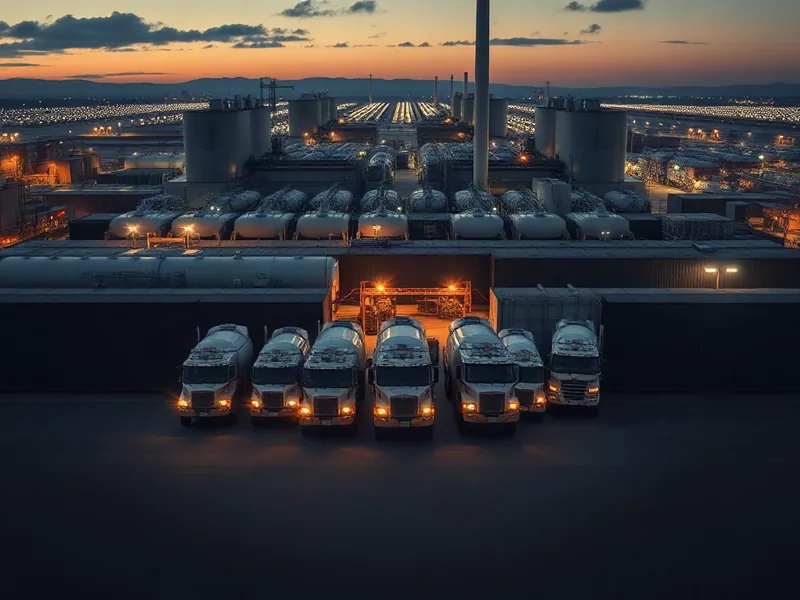
There's a real tension here worth sitting with. On one hand, trucking gas is a flexible, relatively quick fix. Tanker trucks can be rerouted, schedules adjusted, and the gas can be burned onsite in turbines or generators to produce power without waiting on a transmission line or a new pipeline segment. On the other hand, it is inefficient. Every truck trip burns its own fuel, adds wear to local roads, and increases emissions compared to pipeline delivery, which moves gas with far less energy loss and far fewer vehicles on the road. Think of it like choosing to deliver drinking water to a neighborhood by bottled truckloads instead of running municipal pipes: it works in a pinch, but nobody would call it sustainable as a long-term plan.
That inefficiency matters because data centers are already under scrutiny for their environmental footprint. Communities near proposed AI facilities have raised concerns about water use for cooling, strain on local power grids, and rising electricity costs for residents who end up sharing infrastructure with industrial-scale computing operations. Adding diesel-burning trucks hauling gas into that mix, even temporarily, does not help the optics or the actual emissions math. It is a reminder that the rush to build AI infrastructure is colliding with physical and environmental limits that cannot simply be engineered around with more capital or more urgency.
To be fair, Oracle is not alone in facing this squeeze. Across the industry, companies racing to build AI capacity are running into the same wall: power generation and delivery infrastructure that was designed for a different era of demand. Utilities are fielding requests for grid connections that would have seemed outlandish just a few years ago, and the queue for new pipeline and transmission projects has grown long. Trucking gas is one improvised answer. Other companies have explored onsite power generation, behind-the-meter deals with existing power plants, and even small modular nuclear reactors as longer-term solutions. None of these fixes are perfect, and all of them carry tradeoffs between speed, cost, and environmental impact.
The deeper story here is about mismatch. AI companies are moving at the speed of venture capital and competitive pressure. Energy infrastructure moves at the speed of permitting, construction, and physical engineering. That gap is not going to close on its own, and workarounds like trucking gas, however clever, are bandages rather than cures. If the AI buildout continues at its current pace, more companies will likely face the same choice Oracle did: wait for proper infrastructure and risk falling behind, or improvise with solutions that carry their own costs. For communities living near these projects, and for a climate already under pressure from rising emissions, the question of how that gap gets closed, and who bears the cost of closing it, deserves far more public attention than it has gotten so far.
Tags
Original Sources
Oracle Moves Gas by Trucks to Avoid Data Center Power Delays
↗ https://www.bloomberg.com/news/articles/2026-10-08/oracle-moves-gas-by-trucks-to-avoid-data-center-power-delays
About the author
Amara's entry point into AI was an epidemiology role at a London research hospital, where she spent five years studying how digital health tools reached — or conspicuously failed to reach — underserved communities. Watching early algorithmic systems in healthcare quietly entrench existing inequalities, she redirected her career toward the systemic consequences of AI at scale. She covers AI through an unflinching lens: who benefits, who bears the cost, and what evidence actually says versus what the press release claims. Her writing is calm and precise, but she doesn't mistake balance for neutrality.
More from The Steward →This Week's Edition
9 October 2026
34 articles
Related Articles

MIT Technology Review's 2026 Climate Tech List Shows Where Capital Is Actually Flowing
Environment & Climate · 5 min

Corporate Carbon Pledges Face a Reckoning as Accountability Rules Tighten
Environment & Climate · 5 min

AI's Climate Ledger: Central Bank Researchers Weigh the Costs Against the Promise
Environment & Climate · 5 min
Related Articles
MIT Technology Review's 2026 Climate Tech List Shows Where Capital Is Actually Flowing
Environment & Climate · 5 min
Corporate Carbon Pledges Face a Reckoning as Accountability Rules Tighten
Environment & Climate · 5 min
AI's Climate Ledger: Central Bank Researchers Weigh the Costs Against the Promise
Environment & Climate · 5 min
More Stories
© 2026 Cedar & Bloom. All rights reserved.
