The Drum · Weekly AI news, freeSubscribe →

Share
Scientists have uncovered that elephants use unique vocalizations to call each other by what sounds like "names," revealing unprecedented levels of cognitive sophistication in animal communication.
In a groundbreaking study, researchers have discovered that elephants use specific vocalizations to address and identify individual members of their herd. This finding marks the first time non-human animals have been observed using what can be considered "names" in their communication. The research, conducted by an international team of scientists and published in the journal Science Advances, offers profound insights into the cognitive and social complexity of elephants.
Understanding how other species communicate is not just a matter of scientific curiosity; it has significant implications for our relationship with wildlife and the environment. Elephants, being highly social and intelligent animals, have long been subjects of interest in animal behavior studies. The discovery that they use names to address each other adds another layer to their already impressive cognitive abilities and underscores the importance of protecting these majestic creatures.
Elephants communicate through a variety of sounds, including low-frequency rumbles that can travel several kilometers. These rumbles are used for various purposes, such as warning of danger, expressing emotions, and coordinating movements within the herd. The study focused on these vocalizations to determine if elephants use specific calls to identify individuals.
Using advanced AI algorithms, researchers analyzed thousands of hours of elephant vocalizations recorded in the wild. They found that certain rumbles were consistently used when addressing particular members of the herd. These unique vocalizations are analogous to human names, serving as a way to distinguish one individual from another.
To break it down in simpler terms, imagine you're at a crowded party where everyone is talking. You might call out someone's name to get their attention or to direct a message specifically to them. Elephants do something similar but with rumbles that are unique to each member of their group.
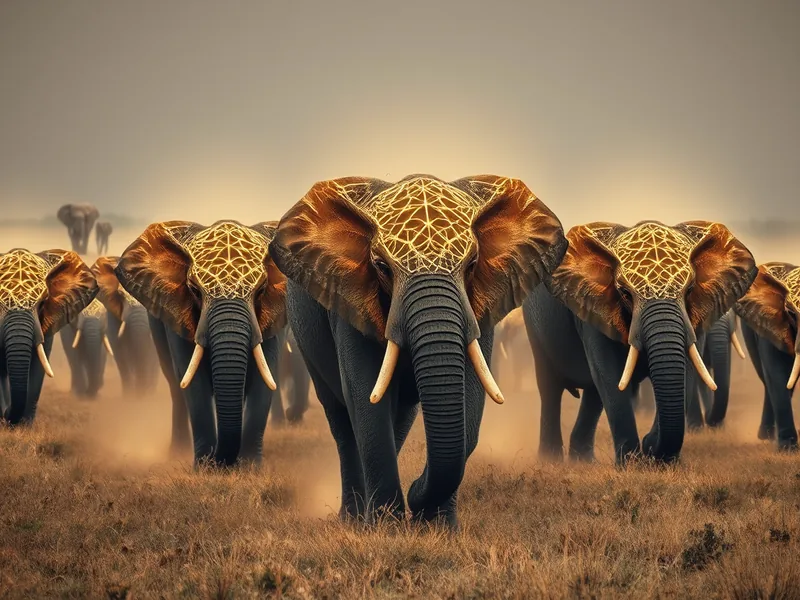
The AI algorithms used in the study were trained to recognize patterns in the vocalizations and match them to specific elephants. This process involved machine learning techniques that allowed the algorithms to "listen" to the sounds and identify which calls corresponded to which individuals. The researchers then validated these findings through observations in the field, confirming that elephants indeed use these unique rumbles to address each other.
This discovery has important implications for elephant conservation efforts. Understanding how elephants communicate can help in developing better strategies to protect them from threats such as poaching and habitat loss. It also highlights the need for more research into animal cognition and behavior, which can inform policies and practices that promote the well-being of wildlife.
The researchers are already planning follow-up studies to explore other aspects of elephant communication. They hope to uncover whether these unique vocalizations change over time or if they are influenced by factors such as age, sex, and social status within the herd. Additionally, they aim to investigate whether other species, particularly those known for their complex social structures, might also use similar forms of communication.
The finding that elephants use names in their communication is a remarkable step forward in our understanding of animal cognition. It not only enriches our knowledge of these incredible creatures but also serves as a reminder of the intricate and often surprising ways in which other species interact with each other. As we continue to explore the world of animal behavior, it's clear that there is still much to learn about the intelligence and social dynamics of non-human animals.
Tags
Original Sources
About the author
Amara's entry point into AI was an epidemiology role at a London research hospital, where she spent five years studying how digital health tools reached — or conspicuously failed to reach — underserved communities. Watching early algorithmic systems in healthcare quietly entrench existing inequalities, she redirected her career toward the systemic consequences of AI at scale. She covers AI through an unflinching lens: who benefits, who bears the cost, and what evidence actually says versus what the press release claims. Her writing is calm and precise, but she doesn't mistake balance for neutrality.
More from The Steward →This Week's Edition
29 April 2026
29 articles
Related Articles
Related Articles
More Stories
© 2026 Cedar & Bloom. All rights reserved.