The Drum · Weekly AI news, freeSubscribe →

Share
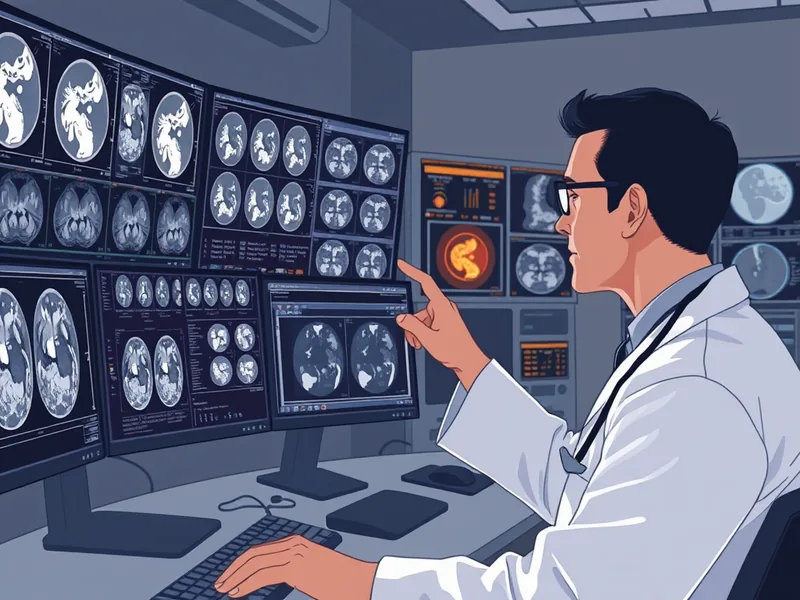
Eon, a healthcare tech company, is using AI to identify incidental findings in radiology reports and ensure timely follow-up, revolutionizing how health systems manage patient care.
Eon, a leading healthcare technology company, has developed an AI-enabled platform that significantly enhances the early detection of diseases and ensures patients receive timely follow-ups. By analyzing over 500 million radiology reports, Eon's system identifies incidental findings-unrelated but potentially significant medical issues-that might otherwise go unnoticed. This capability is crucial for ensuring that patients receive appropriate care and follow-up, reducing the risk of delayed treatment.
The platform leverages advanced machine learning algorithms to parse and interpret radiology reports, flagging potential issues that require further attention. Once identified, Eon pairs technology with dedicated navigators who support care coordination and patient outreach, ensuring a seamless transition from diagnosis to treatment. This approach has been adopted by more than 75 health systems across over 1,200 facilities, highlighting the platform's effectiveness and scalability.
One of the key challenges in healthcare is ensuring that incidental findings are not overlooked. These findings, often discovered during routine imaging for unrelated conditions, can indicate serious health issues such as lung nodules or early signs of cancer. Eon's AI platform addresses this by:
For example, Mobile Infirmary, a healthcare provider in Alabama, has partnered with Eon to manage lung nodule findings. According to the facility, thousands of potentially serious lung findings can go without follow-up each year. Eon's platform helps identify these concerning findings earlier and connects patients with specialists more quickly, improving patient outcomes.
Eon's approach not only enhances the efficiency of healthcare systems but also ensures that patients receive the care they need when they need it. As AI continues to evolve, platforms like Eon's will play a crucial role in transforming how healthcare is delivered, making early detection and follow-up more accessible and reliable.
Tags
Original Sources
About the author
Kai built ML infrastructure at a Bay Area startup before developing an obsession with transformer architectures and inference optimisation that eventually pulled him out of product work entirely. A stint at a compute research lab sharpened his instinct for what actually matters in a model release versus what is marketing. He writes from the inside — from the perspective of someone who has debugged the systems he is describing at three in the morning. He is allergic to hype and instinctively drawn to the unglamorous plumbing questions that everyone else skips over.
More from The Engineer →This Week's Edition
20 July 2026
29 articles
Related Articles

Iambic Therapeutics Raises $150 Million in IPO to Fund AI-Designed Cancer Drugs
Finance & Markets · 5 min

Biotech's Summer Glow Fades as XBI Slips 11% From August Highs
Finance & Markets · 5 min

States Race to Write the Rules for AI Sandboxes in Health Care, and Lobbyists Are Racing Right Alongside Them
Policy & Regulation · 5 min
Related Articles
Iambic Therapeutics Raises $150 Million in IPO to Fund AI-Designed Cancer Drugs
Finance & Markets · 5 min
Biotech's Summer Glow Fades as XBI Slips 11% From August Highs
Finance & Markets · 5 min
States Race to Write the Rules for AI Sandboxes in Health Care, and Lobbyists Are Racing Right Alongside Them
Policy & Regulation · 5 min
More Stories
© 2026 Cedar & Bloom. All rights reserved.
