The Drum · Weekly AI news, freeSubscribe →

Share
Exeter researchers have created AI to spot Asian hornets, crucial for saving native bees and protecting people from stings. The system aims to halt the invasive insects' spread before they cause severe ecological damage.
In a significant step towards safeguarding biodiversity and public health, researchers at the University of Exeter have developed an artificial intelligence (AI) system capable of detecting Asian hornets. These invasive insects pose a serious threat to native species and can also harm humans, making their early detection crucial.
Asian hornets are not just a nuisance; they are a formidable adversary for local ecosystems. Native bees, which are vital pollinators, are particularly at risk. When Asian hornets invade an area, they can decimate bee populations, leading to reduced crop yields and ecological imbalance. Moreover, these hornets can deliver painful stings that can be dangerous, especially to those with allergies.
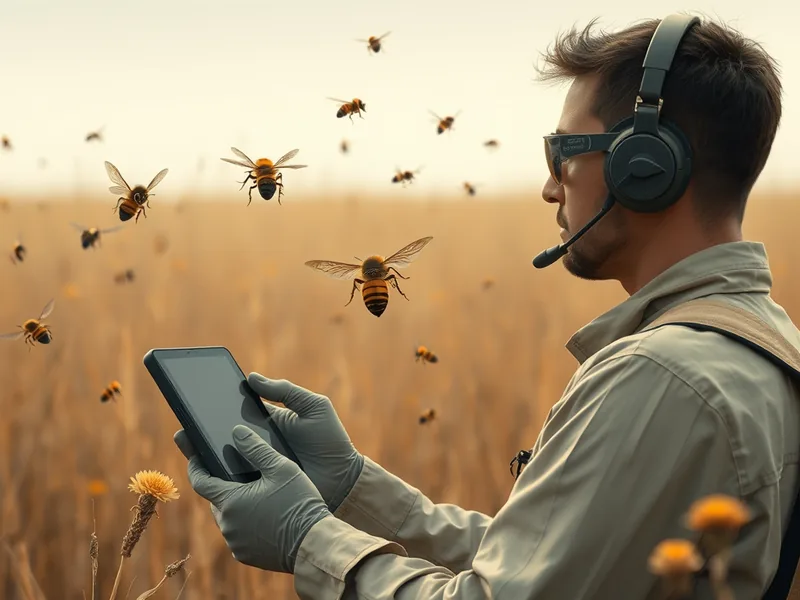
The AI system developed by Exeter University uses advanced image recognition technology to identify Asian hornets in real-time. The process involves training the AI on a vast dataset of images, allowing it to learn the distinct features of these invasive pests. Once trained, the AI can analyze photos and videos from various sources, such as citizen science projects, environmental monitoring cameras, and even social media.
Think of it like a highly specialized detective. Just as a detective uses clues to solve a case, this AI uses visual cues to spot Asian hornets among other insects. The system is designed to be accurate and efficient, minimizing false positives and ensuring that genuine threats are identified quickly.
The long-term consequences of this AI system are promising but require careful management. By enabling early and precise detection, the technology can play a crucial role in protecting native ecosystems and public health. However, it is essential to address potential risks and ensure that the benefits outweigh any drawbacks.
Community involvement is key to the success of this initiative. Citizens can contribute by using mobile apps equipped with the AI system to report suspected Asian hornet sightings. This grassroots approach not only enhances detection but also fosters a sense of shared responsibility in protecting local environments.
The development of an AI system to detect Asian hornets represents a significant advancement in environmental monitoring and public health protection. By leveraging technology, researchers at Exeter University are empowering communities to take proactive steps against invasive species. As with any new tool, it is important to balance the benefits with ethical considerations to ensure that this innovation serves both nature and humanity effectively.
Tags
Original Sources
About the author
Amara's entry point into AI was an epidemiology role at a London research hospital, where she spent five years studying how digital health tools reached — or conspicuously failed to reach — underserved communities. Watching early algorithmic systems in healthcare quietly entrench existing inequalities, she redirected her career toward the systemic consequences of AI at scale. She covers AI through an unflinching lens: who benefits, who bears the cost, and what evidence actually says versus what the press release claims. Her writing is calm and precise, but she doesn't mistake balance for neutrality.
More from The Steward →This Week's Edition
29 April 2026
29 articles
Related Articles
Related Articles
More Stories
© 2026 Cedar & Bloom. All rights reserved.