The Drum · Weekly AI news, freeSubscribe →

Share
As record-breaking temperatures grip Italy, the centuries-old tradition of Parmigiano Reggiano production faces unprecedented challenges, highlighting broader risks to global food security.
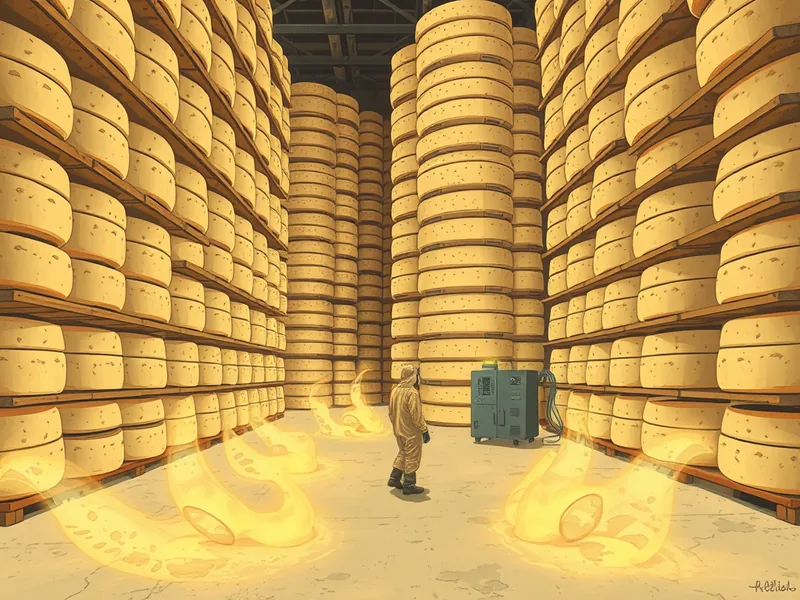
Extreme heat is putting Italy's cheese banks under severe strain, threatening a vital industry that has thrived for 800 years. These vaults, where wheels of Parmigiano Reggiano age for up to three years, are now facing soaring storage costs and reduced milk production due to the scorching summer. This crisis not only impacts the livelihoods of thousands but also underscores broader risks to food supply chains in a warming world.
Parmigiano Reggiano, often called the "King of Cheeses," is more than just a culinary treasure; it's an economic powerhouse that generates about $5 billion annually and employs thousands of people. The cheese-making process, which has remained largely unchanged for centuries, involves aging the wheels in temperature-controlled environments. However, as temperatures rise to record highs, maintaining these conditions has become increasingly expensive.
Farmers who produce Parmigiano Reggiano often use the cheese itself as collateral for loans, a practice that ensures they have regular income while the product ages. This financial arrangement is crucial because producers cannot afford to wait years for their products to mature before seeing a return on investment. However, the rising costs of electricity and energy, exacerbated by the ongoing conflict in Iran, are making it difficult to keep the cheese banks cool.
The heat is not just affecting the storage of aged cheese; it's also impacting milk production at the source. Cows, like many animals, become less productive when temperatures soar. When the mercury climbs above 104 degrees Fahrenheit, cows tend to spend more time lying down and produce significantly less milk, according to Reuters. This reduction in milk output means fewer wheels of cheese can be produced, further straining an already stressed industry.
The situation is a stark reminder of how climate change can disrupt not just individual industries but entire food supply chains. As temperatures continue to rise globally, other regions that rely on similar aging processes for cheeses or other foods may also face significant challenges. The ripple effects could lead to higher prices for consumers and economic hardship for producers.
The crisis in Italy’s cheese industry is a microcosm of the broader challenges posed by climate change. As extreme weather events become more frequent, they threaten food security, economic stability, and cultural heritage around the world. The resilience of traditional practices, which have endured for centuries, is now being tested like never before.
To mitigate these risks, it’s crucial to invest in sustainable agricultural practices and technologies that can help adapt to a changing climate. Tools and frameworks for measuring and reducing the environmental impact of various industries, including agriculture, are becoming increasingly important. Platforms like EcoActive, which use AI to help organizations set and track sustainability targets, can play a vital role in this transition.
Ultimately, the story of Italy’s cheese banks is not just about one industry; it’s a call to action for global leaders and communities to address the urgent challenges of climate change before they become insurmountable.
Tags
Original Sources
Extreme heat threatens Italy's cheese finance
↗ https://www.axios.com/2026/08/16/italy-cheese-heat-banks
About the author
Amara's entry point into AI was an epidemiology role at a London research hospital, where she spent five years studying how digital health tools reached — or conspicuously failed to reach — underserved communities. Watching early algorithmic systems in healthcare quietly entrench existing inequalities, she redirected her career toward the systemic consequences of AI at scale. She covers AI through an unflinching lens: who benefits, who bears the cost, and what evidence actually says versus what the press release claims. Her writing is calm and precise, but she doesn't mistake balance for neutrality.
More from The Steward →This Week's Edition
24 August 2026
25 articles
Related Articles

Amazon Drops NDAs in Data Center Deals, But Trust Gap With Communities Remains Wide
Environment & Climate · 6 min

DARPA's RSGS Program Aims to Put a Repair Robot in Geosynchronous Orbit
Products & Applications · 5 min

Stanford Convenes Researchers to Rethink Empirical Methods for the AI Era
Models & Research · 5 min
Related Articles
Amazon Drops NDAs in Data Center Deals, But Trust Gap With Communities Remains Wide
Environment & Climate · 6 min
DARPA's RSGS Program Aims to Put a Repair Robot in Geosynchronous Orbit
Products & Applications · 5 min
Stanford Convenes Researchers to Rethink Empirical Methods for the AI Era
Models & Research · 5 min
More Stories
© 2026 Cedar & Bloom. All rights reserved.
