The Drum · Weekly AI news, freeSubscribe →

Share
As AI's power appetite outpaces the grid, startup Petra Power is betting that fuel cells, not generators, can quietly reshape how data centers and military vehicles get their electricity.
Here's a number worth sitting with: data centers in the United States could consume as much electricity by 2030 as entire industrialized nations do today. That demand isn't abstract. It shows up in your utility bill, in local fights over new gas plants, and in the strain on power grids that were never built for this kind of load. Communities near proposed data center sites are already asking hard questions about who bears the cost of all this computing power, and whether it comes at the expense of clean air and affordable energy.
Petra Power thinks it has a piece of the answer, and it's not a new power plant. It's a fuel cell.
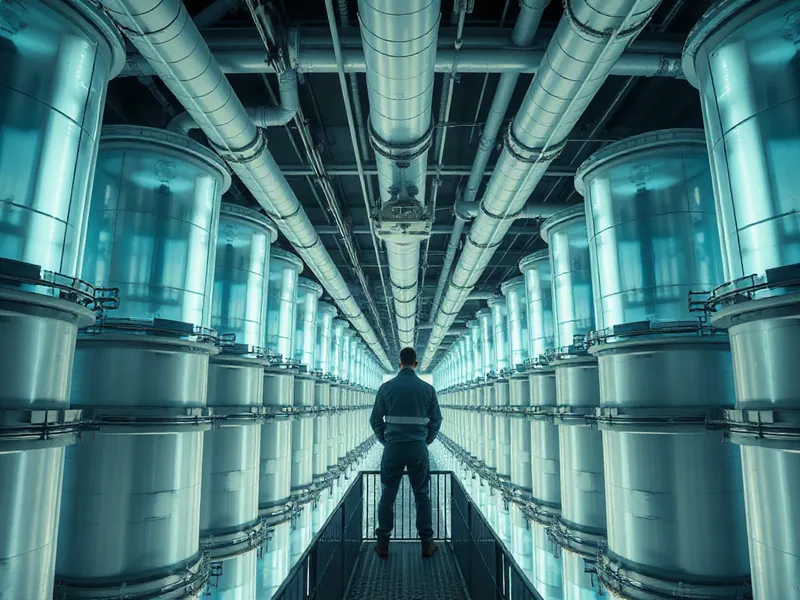
Founded in 2017, Petra sells what's known as a solid oxide fuel cell, a ceramic device that converts fuel, typically natural gas, into electricity without burning it. That distinction matters more than it might sound. Think of a traditional generator like a car engine: it ignites fuel, creates tiny explosions, and uses that violent burst of heat and motion to eventually spin a turbine and generate electricity. Every one of those steps bleeds energy as waste heat. A fuel cell skips nearly all of that. It strips electrons directly off the fuel molecules, producing electricity in what amounts to a single chemical step.
"Combustion takes fuel and creates explosions," Petra founder Aaron Goodman told TechCrunch. "Those explosions create heat. That heat creates motion. The motion powers an electromotive force, which eventually creates electricity. It's a lot of steps, and they all have so much loss in them that you end up with a really inefficient system." Fuel cells, by contrast, "take the electrons directly off of the fuel, so they strip the fuel of its electrons, which creates electricity. It's one step, no loss, and subsequently, in theory, at least, they're much, much more efficient."
That efficiency gap translates into real savings, Goodman said, both in fuel costs and in the physical footprint of the equipment. Fuel cells are smaller and lighter than the turbines and generators they could replace, which matters enormously for an industry racing to squeeze more computing capacity into limited real estate.
Petra is chasing two very different buyers: the data center industry and the Defense Department. Neither relationship has fully matured yet, which is worth keeping in mind before anyone declares this technology a done deal.
On the data center side, Goodman said Petra is currently working with neoclouds and infrastructure providers, essentially the tier of companies just below the giant hyperscalers like Amazon, Microsoft, and Google. Those hyperscaler deals haven't materialized yet. "Hyperscalers are an ICP for us, and we talk a lot to them, but we don't have anything firm with them yet," Goodman said, using industry shorthand for ideal customer profile. "Obviously, they're the largest consumers of power. They're the ones that we can make the biggest impact with, so that's where we'd like to go." First deployments with current customers are targeted for 2028, with full-scale production hoped for by 2029.
The defense application is a different animal entirely. The idea is to use fuel cells as auxiliary power for land vehicles, supplying electricity to onboard equipment even when the main engine is switched off. That's valuable for a military that increasingly runs on power-hungry sensors, communications gear, and electronics. But it's still a concept, not a deployed product. The fuel cells are in testing, and the Pentagon is deciding whether to move forward. So far, Petra has secured close to $9 million in Defense Department contracts, modest money in government terms, but a foothold the company hopes to expand.
Petra remains a small operation, about 15 people, though Goodman says it's growing. The company was recently selected for TechCrunch's Startup Battlefield 200, a cohort of 200 startups showcased at the publication's Disrupt conference in San Francisco this month.
It's worth noting that Petra isn't operating in a vacuum. The broader data center energy market is shifting fast, and not necessarily in the direction fuel cells need. A recent industry report found that four-hour battery storage systems are now cheaper than the small natural gas turbines many data center developers have favored as a quick fix for power shortages. That's a meaningful signal. If batteries keep getting cheaper, fuel cell makers like Petra will need to prove their efficiency advantage translates into real-world cost savings that beat an increasingly competitive field of alternatives.
The stakes here go beyond any one startup's balance sheet. How we power the AI boom will shape emissions trajectories, local air quality, and electricity prices for ordinary households for decades. Every inefficient generator that gets built instead of a cleaner alternative locks in waste and pollution for the lifetime of that equipment, often twenty years or more.
Fuel cells aren't a perfect climate solution. They typically still run on natural gas, a fossil fuel, so they're better understood as a bridge technology than a final destination. But if Petra's efficiency claims hold up at scale, cutting waste in how that gas gets converted to electricity would mean fewer emissions per unit of computing power, even before any shift to cleaner fuels.
The real test will be whether a 15-person startup can translate lab-tested promise into contracts with the hyperscalers that actually set the pace for this industry. Until then, Petra's pitch remains compelling in theory and unproven in practice, which is precisely the stage where a lot of climate technology lives or dies.
Tags
Original Sources
Petra Power looks to modernize energy for data centers and defense vehicles | TechCrunch
↗ https://techcrunch.com/2026/10/10/petra-power-looks-to-modernize-energy-for-data-centers-and-defense-vehicles
About the author
Amara's entry point into AI was an epidemiology role at a London research hospital, where she spent five years studying how digital health tools reached — or conspicuously failed to reach — underserved communities. Watching early algorithmic systems in healthcare quietly entrench existing inequalities, she redirected her career toward the systemic consequences of AI at scale. She covers AI through an unflinching lens: who benefits, who bears the cost, and what evidence actually says versus what the press release claims. Her writing is calm and precise, but she doesn't mistake balance for neutrality.
More from The Steward →This Week's Edition
11 October 2026
17 articles
Related Articles

Microsoft and AWS Push Agentic AI as the Next Layer of Industrial Software
Products & Applications · 5 min

Modular Data Centers Chase Solar Curtailment to Power GPUs
Tools & Engineering · 5 min

Stanford Launches Center for Decoding the Universe to Bring AI Methods to Astrophysics
Models & Research · 5 min
Related Articles
Microsoft and AWS Push Agentic AI as the Next Layer of Industrial Software
Products & Applications · 5 min
Modular Data Centers Chase Solar Curtailment to Power GPUs
Tools & Engineering · 5 min
Stanford Launches Center for Decoding the Universe to Bring AI Methods to Astrophysics
Models & Research · 5 min
More Stories
© 2026 Cedar & Bloom. All rights reserved.
