The Drum · Weekly AI news, freeSubscribe →

Share
A new Goldman Sachs report puts a number on what energy analysts have warned for years: grid capacity, not GPU supply, will determine how fast AI scales, and the mismatch could strain a debt-heavy buildout.
Data centers can be built in a matter of quarters. Power plants and transmission lines take years. That timing gap is now the central risk facing the AI industry, according to a new Goldman Sachs report shared exclusively with Axios, and it has implications well beyond engineering schedules.
Goldman's thesis is blunt. "Power is probably the forever bottleneck," said Jason Tofsky, the bank's global head of digital infrastructure investment banking. The firm projects global data center power demand will surge 170% between 2025 and 2030, with more than 60% of that growth concentrated in the U.S. Capital spending across computing, data centers and power infrastructure is expected to hit roughly $7.6 trillion between 2026 and 2031.
Those are staggering figures even by AI-era standards. They arrive at a moment when Wall Street is already nervous about the debt financing the boom. This report adds a new layer to that anxiety: even if the money is there, the electrons might not be.
The physical reality on the ground tells the story better than any dollar figure. The U.S. currently has roughly 2,600 gigawatts of proposed power generation and storage projects sitting in interconnection queues, waiting for approval to connect to the grid. That's more than twice the country's existing installed capacity. Many of those projects will never get built. But even the ones that do face a median wait of about five years between application and commercial operation.
Five years is an eternity in AI planning cycles. Model training runs, chip generations and hyperscaler capex plans move in 12 to 18 month increments. Grid interconnection does not. That mismatch is forcing a rethink of what the "AI race" actually is. Goldman argues it has less to do with frontier model breakthroughs and more to do with who can secure enough electricity to run the hardware at scale.
Local opposition is compounding the delay. Since January, 86 projects tied to the AI buildout have been canceled or significantly delayed, and Goldman attributes 76 of those directly to pushback from local communities. Permitting fights, water usage concerns and grid strain complaints are translating into real project cancellations, not just headlines.
The financing structure makes the stakes higher. Goldman projects $420 billion in global hyperscaler debt issuance in 2027, up more than 60% from its 2026 estimate. Debt is expected to cover roughly 35% of hyperscaler capital expenditures next year. Hyperscalers themselves account for just 40% of total AI ecosystem credit fundraising, which means the borrowing web extends far beyond the familiar names in Silicon Valley. A slower, less predictable construction timeline doesn't just delay revenue. It raises the cost of capital tied to projects that were underwritten on faster assumptions.
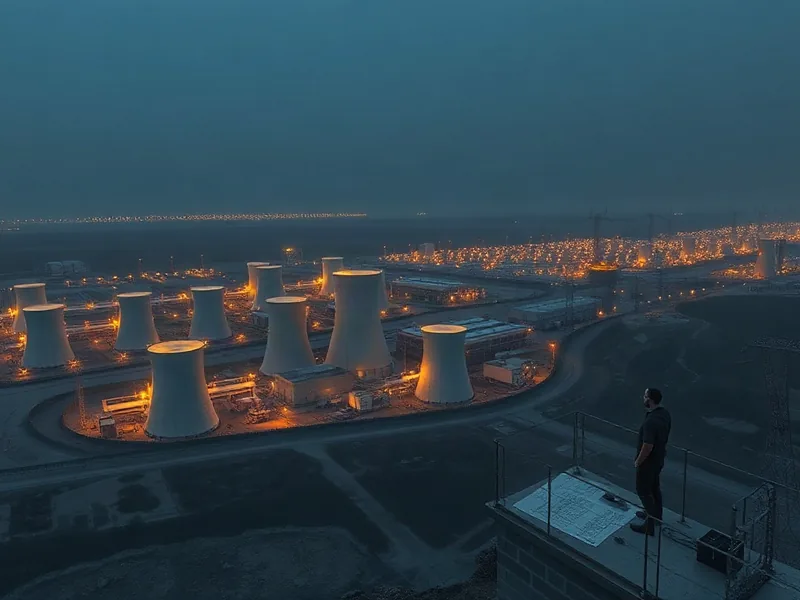
There's a counterargument worth taking seriously. Slower buildouts could act as a natural check on overinvestment, giving actual AI demand time to catch up with the spending commitments already made. Not every delay is a crisis. Some of this friction may simply be the market correcting its own pace.
Utilities are the clearest beneficiaries of this shift. An industry long known for single-digit growth and regulatory caution is suddenly central to the AI investment story. Goldman expects utility capital plans to reach $1.3 trillion between 2026 and 2030. Tech giants are increasingly exploring arrangements to directly fund power generation, transmission lines and the electrical infrastructure their data centers require, effectively becoming co-investors in the grid itself rather than passive customers waiting in a queue.
That shift matters for how investors should think about exposure to the AI trade. Capital that might have gone exclusively into chipmakers or hyperscaler equity is now flowing into regulated utilities, independent power producers and transmission infrastructure. It's a diversification of the AI bet, whether investors intended it that way or not.
The risk calculus here isn't theoretical. Companies that have committed capital to data center expansion before securing reliable power face a specific kind of exposure: assets that can't generate revenue because they can't draw sufficient electricity. That's a different failure mode than a bad model release or a product that underperforms. It's infrastructure risk, plain and simple, and it behaves more like a utility sector problem than a tech sector one.
Chip supply constraints dominated AI headlines for the better part of two years. Power is shaping up to be the longer-running constraint, and a much harder one to solve quickly. Goldman's numbers, 170% demand growth, a 2,600-gigawatt interconnection backlog, a five-year median wait, and $7.6 trillion in projected spending, describe an industry whose ambitions have outrun the physical systems meant to support them.
Investors watching the AI trade should pay closer attention to utility capex plans, interconnection queue data and local permitting fights than to the next model release. The debt load behind this buildout, with $420 billion in hyperscaler issuance projected for 2027 alone, means financing terms will tighten if construction slips further behind schedule. Power was always going to be the limiting factor in how fast AI could scale. Goldman's report simply puts numbers to what engineers have been saying for years: you can want unlimited compute, but the grid still has to agree.
Tags
Original Sources
"Power is probably the forever bottleneck": Grid delays threaten the AI race.
↗ https://www.axios.com/2026/10/20/goldman-ai-energy-infrastructure-bottleneck
About the author
Marcus began tracking AI's market implications in 2016, noticing AI-related patent filings accelerating ahead of earnings upgrades before most of the sell-side had caught on. A former fixed-income quantitative analyst, he spent two decades building models that priced risk across emerging markets before pivoting to cover the economic impact of AI full-time. His writing translates opaque technical developments into clear risk/reward terms — and he's rarely diplomatic about the gap between AI valuations and underlying fundamentals. He believes most market participants still underestimate AI's long-run deflationary effect on knowledge work.
More from The Analyst →This Week's Edition
21 October 2026
23 articles
Related Articles
Related Articles
More Stories
© 2026 Cedar & Bloom. All rights reserved.