The Drum · Weekly AI news, freeSubscribe →
Share
As hantavirus cases surge on a cruise ship off Africa's western coast, reminiscent of early COVID-19 outbreaks, health experts stress this localized event poses no threat of a new global pandemic.
The outbreak of hantavirus on a cruise ship off the western coast of Africa has sparked significant concern among passengers and public health officials. The situation evokes memories of the early days of the COVID-19 pandemic, when cruise ships became hotspots for disease spread. However, experts are quick to reassure that while this is a serious public health issue, it does not signal the beginning of another global pandemic.
Hantavirus is a family of viruses typically found in rodents, and human infections are rare but can be severe. The virus spreads through contact with rodent droppings, urine, or saliva, and occasionally through bites. While person-to-person transmission has been documented in some cases, it is not common.
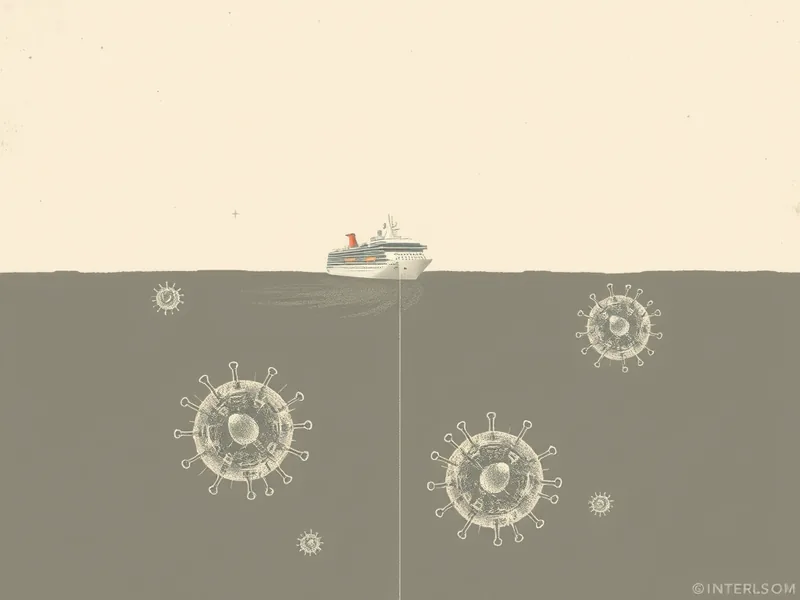
The cruise ship MV Hondius, currently moored off the coast of Africa, has reported several cases of hantavirus among its passengers and crew. An ambulance boat carrying crew members in hazmat suits was seen approaching the ship on Tuesday, underscoring the seriousness of the situation.
Michael Osterholm, director of the University of Minnesota’s Center for Infectious Diseases Research and Policy, emphasized that while the outbreak is concerning, it does not pose a pandemic risk. "It’s not the next pandemic," Osterholm stated. "We need to focus on containment and preventing further spread."
The hantavirus outbreak on the MV Hondius highlights several important public health issues. First, it underscores the ongoing need for robust infectious disease surveillance and response systems, especially in enclosed environments like cruise ships where close contact is common. Second, it draws attention to the relatively limited research on hantaviruses compared to other pathogens.
Public health experts are particularly concerned about the potential for more passengers to fall ill. Isolation and contact tracing are crucial steps to contain the outbreak. Dr. Maria Van Kerkhove, an infectious disease epidemiologist at the World Health Organization (WHO), stressed the importance of these measures: "We need to identify all close contacts and ensure they are monitored and isolated if necessary."
The outbreak also serves as a reminder of the unpredictable nature of infectious diseases. While hantavirus is not new, its appearance in this setting highlights the need for continuous vigilance and preparedness.
As public health officials work to contain the hantavirus outbreak on the MV Hondius, several steps will be critical in the coming days and weeks. First, comprehensive testing of all passengers and crew members is essential to identify additional cases early. Second, isolation facilities must be established to prevent further spread within the ship.
Long-term, this incident may spur increased research into hantaviruses and their transmission dynamics. Understanding how these viruses can spread in different environments and populations will be crucial for developing effective prevention strategies.
For now, the focus remains on ensuring the safety and well-being of those aboard the MV Hondius. Public health experts are working tirelessly to manage the situation, drawing on lessons learned from previous outbreaks to prevent a larger crisis.
In a world still recovering from the impacts of COVID-19, it is crucial to approach this hantavirus outbreak with both caution and calm. By taking proactive measures and staying informed, we can protect public health without succumbing to unnecessary panic.
Tags
Original Sources
Cruise ship hantavirus outbreak worries experts, though they discount pandemic fears
↗ https://www.statnews.com/2026/05/07/hantavirus-cruise-ship-outbreak-scientists-say-not-new-pandemic
About the author
Amara's entry point into AI was an epidemiology role at a London research hospital, where she spent five years studying how digital health tools reached — or conspicuously failed to reach — underserved communities. Watching early algorithmic systems in healthcare quietly entrench existing inequalities, she redirected her career toward the systemic consequences of AI at scale. She covers AI through an unflinching lens: who benefits, who bears the cost, and what evidence actually says versus what the press release claims. Her writing is calm and precise, but she doesn't mistake balance for neutrality.
More from The Steward →This Week's Edition
7 May 2026
29 articles
Related Articles
Related Articles
More Stories
© 2026 Cedar & Bloom. All rights reserved.