The Drum · Weekly AI news, freeSubscribe →
Share
Two Bell Labs engineers chasing a mysterious radio hiss in 1964 stumbled onto proof of the universe's fiery birth, a reminder that some of science's biggest breakthroughs arrive uninvited.
Sometimes the most profound discoveries in science don't come from someone chasing a grand theory. They come from someone trying to fix a persistent, annoying noise. That's essentially what happened in 1964, when two radio astronomers at Bell Labs in Holmdel, New Jersey, set out to troubleshoot a piece of equipment and ended up confirming how the universe itself began.
Arno Penzias and Robert Wilson were using a large horn antenna, originally built for satellite communications, to study radio waves from the Milky Way. But no matter where they pointed the instrument, they picked up a faint, steady hiss of microwave radiation. It didn't behave like any known source of interference. It wasn't localized to the galaxy, a satellite, or even the Earth. It came from every direction, uniformly, day and night, summer and winter.
Any engineer knows the instinct here: assume it's your equipment, not the cosmos. Penzias and Wilson spent months ruling out explanations. They checked for interference from nearby New York City. They inspected the antenna for physical defects. In a detail that has become one of the more charming footnotes in physics history, they even found pigeons nesting in the horn and cleaned out what they wryly called "a white dielectric material," pigeon droppings, in case that was somehow scattering the signal. It wasn't. The hiss remained.
What Penzias and Wilson had detected, without initially realizing it, was cosmic microwave background radiation: the faint afterglow of the Big Bang itself, cooled over roughly 13.8 billion years to just a few degrees above absolute zero. Think of it as the universe's baby picture, a snapshot of leftover heat from an unimaginably hot, dense infant cosmos, stretched and cooled as space itself expanded.
The theoretical groundwork for this had actually been laid decades earlier. Physicists including Ralph Alpher and Robert Herman had predicted in the 1940s that if the universe began in a hot, dense state, it should have left behind a detectable radiation signature, evenly spread across the sky. For years, that prediction sat largely unnoticed, a calculation on paper without a matching observation.
The connection came almost by accident. Researchers at Princeton University, led by Robert Dicke, were actively building equipment to search for exactly this kind of background radiation. When word reached them that a team at Bell Labs was puzzling over an unexplained microwave hiss, the pieces clicked into place. The Princeton group had the theory. Penzias and Wilson had the observation. Together, their findings offered strong, direct evidence supporting the Big Bang theory, the idea that the universe began as an extraordinarily hot, dense point and has been expanding and cooling ever since.
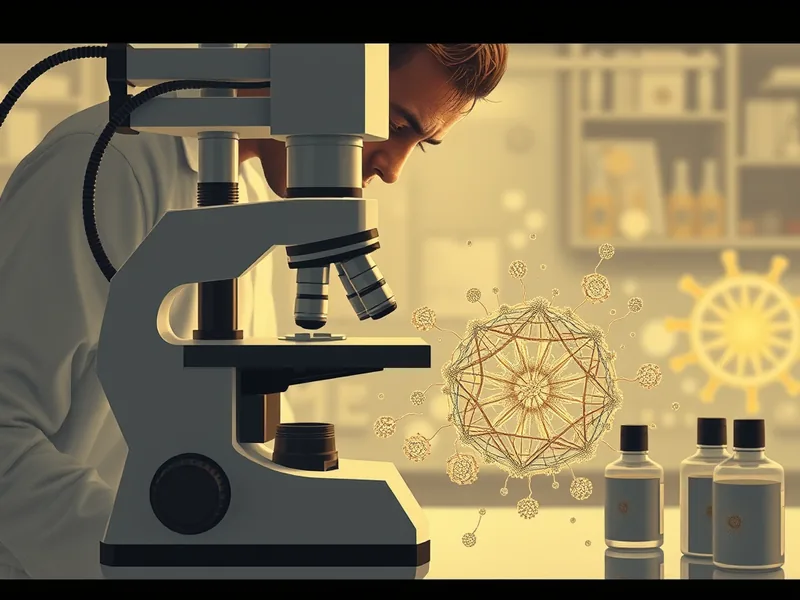
This is where the human element of science really shows itself. Penzias and Wilson weren't cosmologists. They didn't set out to test theories about the origin of the universe. They were engineers trying to make a communications antenna work properly, and their persistence in ruling out mundane explanations, rather than assuming they'd stumbled onto something extraordinary, is exactly what gave their eventual finding credibility. In 1978, that careful, unglamorous diligence earned them the Nobel Prize in Physics.
There's a lesson in that for how we talk about scientific discovery more broadly. Breakthroughs often arrive disguised as inconveniences. A signal that shouldn't be there. A result that doesn't match expectations. The scientific process only works because researchers are willing to sit with that discomfort, test it, retest it, and resist the urge to either dismiss it or oversell it prematurely.
Understandably, not everyone treats the Big Bang theory as settled science, and it's worth engaging with that honestly rather than brushing it aside. Some observers point to recent images from the James Webb Space Telescope, which has captured surprisingly mature-looking galaxies from less than a billion years after the Big Bang is thought to have occurred. Critics argue this timeline is too short for such structures to form, and see it as a challenge to the theory's core assumptions.
That's a legitimate area of active research, and cosmologists are indeed working to understand how galaxies formed so quickly in the early universe. But it's a different kind of question than the one Penzias and Wilson answered. Their discovery wasn't about the fine details of galaxy formation timelines. It was about whether the universe had a hot, dense beginning at all, and the cosmic microwave background remains one of the most robust, independently verified pieces of evidence that it did. New puzzles about early galaxy formation don't erase that foundational evidence. They add texture and complexity to a still-evolving picture, which is how science is supposed to work.
Understanding our cosmic origins isn't just an academic curiosity reserved for astrophysicists in observatories. It shapes how we think about our place in the universe, how we teach science to the next generation, and how we model the physical laws that eventually underpin technologies we rely on every day, from satellite communications to the very telescopes now generating new questions.
The story of Penzias and Wilson also offers something valuable in an era saturated with confident claims and rushed conclusions. Real discovery is often slow, humble, and cautious. It involves double checking, admitting uncertainty, and sometimes finding you were wrong before you're proven right. That kind of rigor matters just as much now, whether scientists are interpreting a faint microwave hiss from 1964 or a distant galaxy captured by a telescope in 2025. The universe rewards patience far more often than it rewards certainty.
Tags
Original Sources
The Accidental Discovery That Proved the Big Bang Theory
↗ https://spectrum.ieee.org/big-bang-theory-discovery/particle-1
About the author
Amara's entry point into AI was an epidemiology role at a London research hospital, where she spent five years studying how digital health tools reached — or conspicuously failed to reach — underserved communities. Watching early algorithmic systems in healthcare quietly entrench existing inequalities, she redirected her career toward the systemic consequences of AI at scale. She covers AI through an unflinching lens: who benefits, who bears the cost, and what evidence actually says versus what the press release claims. Her writing is calm and precise, but she doesn't mistake balance for neutrality.
More from The Steward →This Week's Edition
5 September 2026
24 articles
Related Articles
A Heart Without Friction: Maglev Technology Moves Into Cardiac Care
Health & Science · 6 min
How a Stubborn Hiss of Radio Noise Helped Confirm the Big Bang
Health & Science · 5 min
AI Can Predict Chemotherapy Response in Aggressive Breast Cancer, But Not Yet Reliably Enough for the Clinic
Health & Science · 5 min
Related Articles
A Heart Without Friction: Maglev Technology Moves Into Cardiac Care
Health & Science · 6 min
How a Stubborn Hiss of Radio Noise Helped Confirm the Big Bang
Health & Science · 5 min
AI Can Predict Chemotherapy Response in Aggressive Breast Cancer, But Not Yet Reliably Enough for the Clinic
Health & Science · 5 min
More Stories
© 2026 Cedar & Bloom. All rights reserved.
