The Drum · Weekly AI news, freeSubscribe →
Share
To crack the code of an ancient civilization that predates Egypt’s pyramids and Mesopotamian city-states, the Tamil Nadu governor stakes a modest million to decode its elusive script.
In a bold move to unlock the secrets of one of history's most enigmatic civilizations, the governor of Tamil Nadu, India, has announced a prize of 1 million rupees (approximately $12,000 USD) for anyone who can successfully decipher the ancient script of the Indus Valley Civilization. This civilization, which flourished in what is now Pakistan and northwest India from around 3300 to 1300 BCE, left behind a rich legacy of artifacts and writings that have puzzled scholars for decades.
The Indus Valley Civilization, also known as the Harappan Civilization, was one of the world's earliest urban cultures. It boasted sophisticated cities with planned streets, drainage systems, and public baths. Despite its advanced infrastructure, much about this civilization remains shrouded in mystery, particularly its writing system. The script, which has been found on seals, pottery, and other artifacts, consists of symbols that have yet to be fully understood.
The governor's offer is more than just a call for academic curiosity; it represents an opportunity to bridge the gap between ancient history and modern understanding. Deciphering this script could provide valuable insights into the social, economic, and cultural life of the Indus Valley people, potentially shedding light on their interactions with other ancient civilizations.
Dr. Asko Parpola, a leading expert in Indus Valley studies, has spent decades trying to crack the code. He notes that while there are over 400 distinct symbols in the script, the average length of inscriptions is only about five characters. This brevity makes it challenging to apply traditional methods used to decipher other ancient scripts, such as those from Egypt or Mesopotamia.
"Deciphering the Indus Valley script is like trying to solve a puzzle with missing pieces," Dr. Parpola explains. "Each symbol could represent a sound, an idea, or even a combination of both. The key lies in finding patterns and correlations that can help us piece together the language."
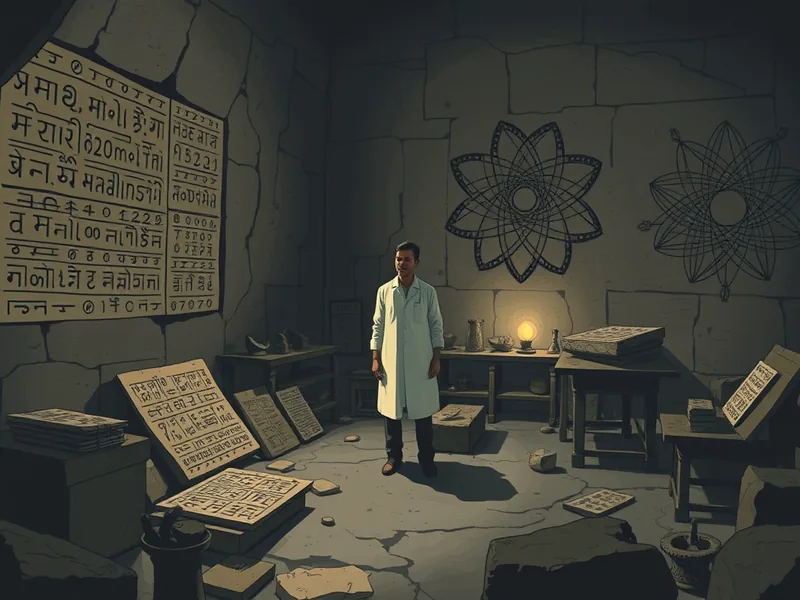
The governor's initiative is not just about solving a historical riddle; it also has broader implications for cultural heritage and identity. Tamil Nadu, one of India's southern states, has a deep connection to the Dravidian linguistic tradition, which some scholars believe may have roots in the Indus Valley Civilization. By encouraging the decipherment of this script, the governor is fostering a sense of pride and continuity with the region's ancient past.
Moreover, the prize could attract interdisciplinary collaboration, bringing together linguists, archaeologists, computer scientists, and AI researchers to tackle the challenge. Advances in artificial intelligence and machine learning have already shown promise in similar endeavors, such as the recent decipherment of Linear B, an ancient script from Crete.
Dr. Rajesh Jha, a computational linguist at the Indian Institute of Technology Madras, is optimistic about the role technology can play. "AI can help us process vast amounts of data and identify patterns that might be invisible to the human eye," he says. "By combining traditional methods with modern computational tools, we have a better chance of unlocking the secrets of this ancient script."
The potential benefits extend beyond academic circles. Understanding the Indus Valley Civilization could provide valuable insights into sustainable urban planning, water management, and social organization-lessons that are still relevant today. It could also inspire new approaches to language learning and cultural preservation.
For now, the challenge is open to anyone with a passion for history and a knack for solving puzzles. The governor's offer serves as a reminder that sometimes, the most significant discoveries come from unexpected places and people. As researchers and enthusiasts alike take up the call, the world waits with bated breath to see what secrets will be revealed.
Tags
Original Sources
About the author
Amara's entry point into AI was an epidemiology role at a London research hospital, where she spent five years studying how digital health tools reached — or conspicuously failed to reach — underserved communities. Watching early algorithmic systems in healthcare quietly entrench existing inequalities, she redirected her career toward the systemic consequences of AI at scale. She covers AI through an unflinching lens: who benefits, who bears the cost, and what evidence actually says versus what the press release claims. Her writing is calm and precise, but she doesn't mistake balance for neutrality.
More from The Steward →This Week's Edition
29 April 2026
29 articles
Related Articles
Related Articles
More Stories
© 2026 Cedar & Bloom. All rights reserved.