The Drum · Weekly AI news, freeSubscribe →
Share
A million rupees awaits the intrepid scholar who cracks the code of the Indus Valley script, an ancient enigma that could rewrite our understanding of early civilization in South Asia.
In a bold move to unlock the secrets of ancient history, the governor of Tamil Nadu, India, has announced a prize of one million rupees (approximately $12,000 USD) for anyone who can successfully decipher the Indus Valley script. This 5,300-year-old writing system remains one of the most intriguing mysteries in the field of archaeology and linguistics.
The Indus Valley civilization, which flourished from around 3300 to 1300 BCE, is known for its sophisticated urban planning, advanced drainage systems, and a culture that spanned much of what is now Pakistan and northwest India. Despite extensive archaeological excavations, the script used by this ancient society has eluded scholars for decades.
The governor's offer is not just a financial incentive but a call to action for linguists, archaeologists, and enthusiasts around the world. The stakes are high: deciphering the Indus Valley script could provide invaluable insights into the social, economic, and cultural life of one of the earliest urban civilizations in human history.
To understand why this challenge is so significant, consider it like solving a complex puzzle where the pieces are scattered across time and space. Imagine trying to read a book written in a language that no one has spoken for thousands of years. The Indus Valley script consists of symbols that have been found on seals, pottery, and other artifacts, but their meanings remain a mystery.
The process of deciphering an ancient script is akin to cracking a code. Scholars often rely on context clues, such as the location where inscriptions are found, the materials they are written on, and any known languages or scripts that might be related. For the Indus Valley script, this task is particularly challenging because there are no known bilingual texts-texts that provide translations in both the unknown language and a known one-that could serve as a Rosetta Stone.
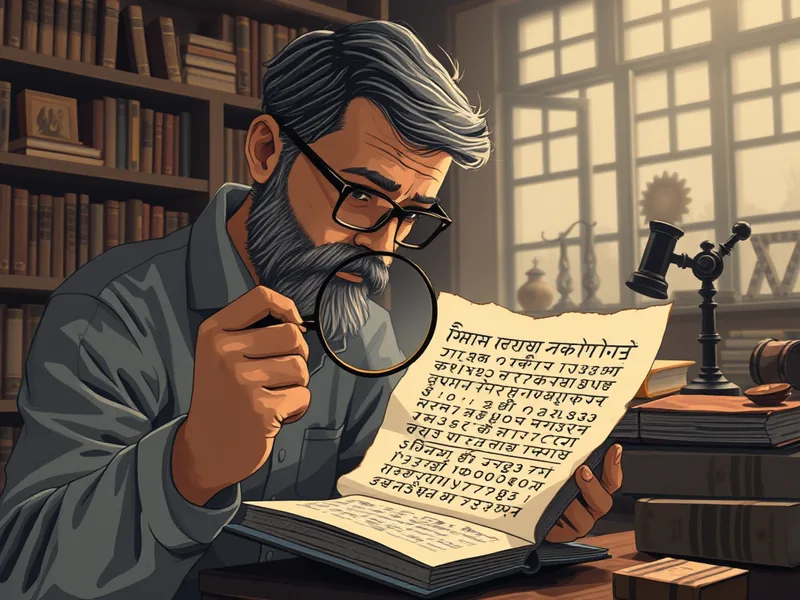
The governor's initiative aims to galvanize interest and collaboration among experts from various disciplines. It also highlights the importance of cultural heritage and the role it plays in shaping our understanding of human history. By offering this prize, the government hopes to encourage new approaches and technologies that might finally unlock the secrets of the Indus Valley script.
The potential benefits are vast. Deciphering the script could shed light on the trade networks, religious practices, and governance structures of the ancient civilization. It could also provide a deeper understanding of how early societies developed writing systems and what they valued enough to record.
However, there are risks associated with such high-profile challenges. The allure of a substantial prize might attract fraudulent claims or speculative interpretations that lack rigorous academic backing. To mitigate this, any successful decipherment will need to be peer-reviewed and validated by a panel of experts in the field.
The Indus Valley script is not the only ancient writing system that remains undeciphered. Others include the Linear A script from Crete and the Rongorongo script from Easter Island. Each of these scripts represents a piece of human history waiting to be uncovered, and each offers a unique opportunity to learn more about our past.
For now, the challenge stands open to anyone with the passion and expertise to take it on. Whether you are a seasoned linguist or an amateur enthusiast, this is a rare chance to contribute to one of the most significant puzzles in human history.
Tags
Original Sources
About the author
Amara's entry point into AI was an epidemiology role at a London research hospital, where she spent five years studying how digital health tools reached — or conspicuously failed to reach — underserved communities. Watching early algorithmic systems in healthcare quietly entrench existing inequalities, she redirected her career toward the systemic consequences of AI at scale. She covers AI through an unflinching lens: who benefits, who bears the cost, and what evidence actually says versus what the press release claims. Her writing is calm and precise, but she doesn't mistake balance for neutrality.
More from The Steward →This Week's Edition
29 April 2026
24 articles
Related Articles

A Heart Without Friction: Maglev Technology Moves Into Cardiac Care
Health & Science · 6 min

How a Stubborn Hiss of Radio Noise Helped Confirm the Big Bang
Health & Science · 5 min
AI Can Predict Chemotherapy Response in Aggressive Breast Cancer, But Not Yet Reliably Enough for the Clinic
Health & Science · 5 min
Related Articles
A Heart Without Friction: Maglev Technology Moves Into Cardiac Care
Health & Science · 6 min
How a Stubborn Hiss of Radio Noise Helped Confirm the Big Bang
Health & Science · 5 min
AI Can Predict Chemotherapy Response in Aggressive Breast Cancer, But Not Yet Reliably Enough for the Clinic
Health & Science · 5 min
More Stories
© 2026 Cedar & Bloom. All rights reserved.
