The Drum · Weekly AI news, freeSubscribe →
Share
Solid-state lighting has moved past novelty status into mainstream deployment, reshaping everything from residential bulbs to architectural installations. Here's a look at where the technology actually stands and why the efficiency gains matter more than the hype.
LEDs stopped being a niche curiosity a while back. What started as blinking indicator lights on electronics has turned into a full-scale replacement technology for incandescent and fluorescent lighting, and the shift is happening for reasons that go beyond "it's the shiny new thing."
The core appeal is efficiency. Traditional incandescent bulbs waste most of their energy as heat, converting only a small fraction of input power into visible light. LEDs (light-emitting diodes, semiconductor devices that emit photons when current passes through them) flip that ratio. They run cooler, last longer, and draw less power for comparable light output. That's not marketing spin, it's basic solid-state physics: LEDs generate light through electron-hole recombination in a semiconductor junction rather than through resistive heating of a filament, so there's inherently less energy lost to waste heat.
That efficiency story is why utilities, city planners, and hardware manufacturers have all leaned into LED adoption at scale. Street lighting retrofits, commercial building upgrades, and consumer bulb replacements aren't just about brightness anymore. They're about total cost of ownership over years of operation, and LEDs win that math comfortably once you factor in bulb longevity and reduced power draw.
The interesting part isn't just that LEDs exist, it's where they're showing up and how the form factor keeps expanding.
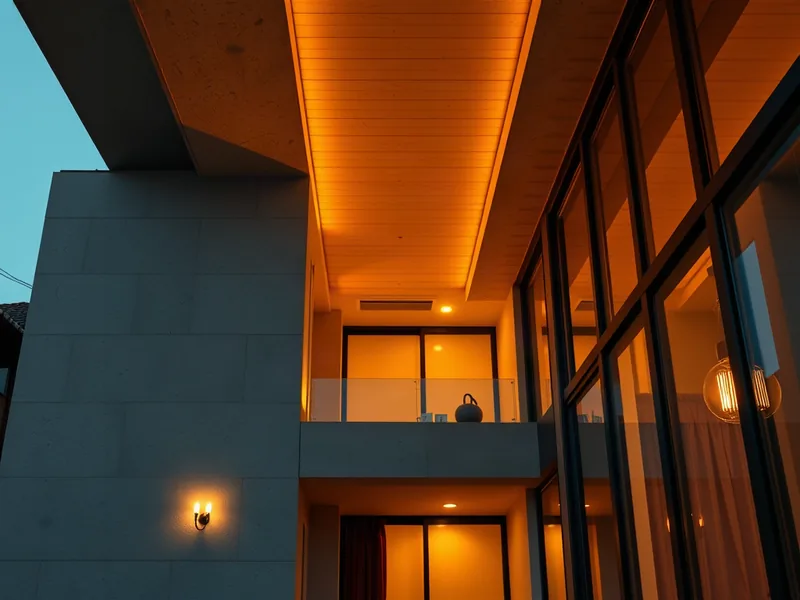
Each of these use cases stresses a slightly different part of the technology. Decorative and architectural work cares about color rendering and form factor flexibility. Consumer retrofits care about drop-in compatibility and price point. Municipal and commercial deployments care most about lifecycle cost and maintenance intervals, since swapping bulbs across a large installation is itself a nontrivial operating expense.
That's part of why LED adoption didn't happen instantly despite the efficiency advantage being well understood for years. Manufacturing had to catch up on cost, color quality, and dimmability before LEDs could credibly compete across all these use cases at once. Early LED lighting had a reputation for harsh, cold color temperatures and inconsistent dimming behavior, both of which needed real engineering work to fix rather than just marketing polish.
None of this means LEDs are a solved problem with zero tradeoffs.
Heat management still matters, just at a different scale than incandescent bulbs. LEDs run cooler than filament bulbs, but they're still sensitive to thermal buildup, and poor heat sinking in a fixture can shorten diode lifespan or cause premature dimming. That's a real engineering constraint for anyone designing enclosed fixtures or high-density installations.
Driver circuitry is another underappreciated piece. LEDs need current-regulating drivers to operate properly, unlike incandescent bulbs which just take raw AC voltage. Cheap or poorly designed drivers are a common failure point in budget LED products, and they're often the actual reason a "long-lasting" LED bulb dies early, not the diode itself.
Color consistency across a batch of diodes is also a manufacturing challenge that's easy to overlook. Because LEDs are semiconductor devices, there's natural variation in output between individual units, which is why serious lighting manufacturers bin diodes by color and brightness output to keep installations visually consistent, especially in architectural and commercial contexts where mismatched color temperature across fixtures is immediately noticeable.
None of these are reasons to doubt the technology. They're just the kind of practical engineering details that separate a good LED product from a mediocre one, and they explain why not every LED bulb on the shelf performs the same despite similar specs on the box.
LED lighting's real story isn't a single dramatic breakthrough, it's a steady accumulation of engineering improvements in efficiency, manufacturing consistency, and driver design that eventually made solid-state lighting the default choice rather than the alternative one.
For practitioners working anywhere near hardware deployment, the takeaway is that the underlying diode technology matured a while ago, but the systems around it, drivers, heat sinking, color binning, are where the real differentiation still happens. If you're specifying LED lighting for a project, that's where the engineering attention should go. The diodes themselves are largely a solved problem. The system integration around them is not, and that's exactly where product quality still varies wildly across the market.
Tags
Original Sources
Slideshow: LEDs Rock the House
↗ https://spectrum.ieee.org/slideshow-leds-rock-the-house/particle-4?itm_source=summaries&itm_medium=ieee-spectrum&itm_campaign=summary-particle-4&itm_content=summary-reduce
About the author
Kai built ML infrastructure at a Bay Area startup before developing an obsession with transformer architectures and inference optimisation that eventually pulled him out of product work entirely. A stint at a compute research lab sharpened his instinct for what actually matters in a model release versus what is marketing. He writes from the inside — from the perspective of someone who has debugged the systems he is describing at three in the morning. He is allergic to hype and instinctively drawn to the unglamorous plumbing questions that everyone else skips over.
More from The Engineer →This Week's Edition
5 September 2026
24 articles
Related Articles
xAI Launches Grok Bot, an Autonomous Agent That Logs Into Your Tools and Does the Work
Products & Applications · 5 min
Robotics Experts Pour Cold Water on Tesla's Optimus Debut
Products & Applications · 5 min

Replit Swaps Anthropic for OpenAI as Default Model, Muddying a Lucrative Partnership
Products & Applications · 5 min
Related Articles
xAI Launches Grok Bot, an Autonomous Agent That Logs Into Your Tools and Does the Work
Products & Applications · 5 min
Robotics Experts Pour Cold Water on Tesla's Optimus Debut
Products & Applications · 5 min
Replit Swaps Anthropic for OpenAI as Default Model, Muddying a Lucrative Partnership
Products & Applications · 5 min
More Stories
© 2026 Cedar & Bloom. All rights reserved.
