The Drum · Weekly AI news, freeSubscribe →

Share
A new annual list of ten climate tech companies spans flood barriers, batteries, and nuclear, but the real story is how AI data center demand is rewriting the investment case for clean energy infrastructure.
MIT Technology Review has released its annual roundup of ten climate tech companies worth watching, and the framing this year carries more urgency than usual. The world is on pace for one of its hottest years on record. Climate-fueled disasters are costing billions and claiming lives. Political shifts and international conflict have slowed the broader push to cut emissions. Against that backdrop, the publication's editors argue these ten firms represent where meaningful progress is still happening.
The technologies span a wide range. Mobile flood barriers. Semi-solid-state batteries. Compressed-CO2 energy storage. Next-generation nuclear reactors. What ties them together, according to the report, is that they reflect the biggest structural shifts now reshaping climate tech, chief among them the surging energy appetite of AI data centers.
That connection between AI and energy infrastructure is not incidental. It is becoming the defining tension in climate tech investment. Data centers need enormous and increasingly reliable power, and that need is pulling capital toward technologies that can deliver it: advanced nuclear, grid-scale storage, and next-generation solar. Climate tech is no longer solely a story about decarbonization targets. It is increasingly a story about who can power the AI buildout without blowing through emissions budgets.
One concrete example of this shift showed up elsewhere in the same news cycle. Tandem solar panels, which stack multiple light-absorbing layers to capture more of the solar spectrum, could produce 25% more electricity from sunlight than conventional panels, according to reporting from the New York Times. That efficiency gain matters because the US has fallen behind China in solar manufacturing and deployment, and tandem technology is being positioned as one lever to close that gap.
The efficiency math here is straightforward and worth sitting with. A 25% improvement in output per panel changes the economics of every solar project that adopts it, from utility-scale farms to rooftop installations. It also compounds with falling balcony solar costs, a trend MIT Technology Review has separately tracked as a boom taking hold in the US residential market. For investors, the signal is that incremental efficiency gains in mature technologies can still unlock outsized returns when demand for electrons is this strong.
Nuclear fits a similar logic. Advanced reactor designs are attractive to data center operators precisely because they offer dispatchable, round-the-clock power without the emissions profile of natural gas. Compressed-CO2 storage addresses a related problem: how to bank renewable energy when the sun isn't shining or the wind isn't blowing, a question that becomes more urgent as grid operators try to serve AI workloads that don't pause for weather.
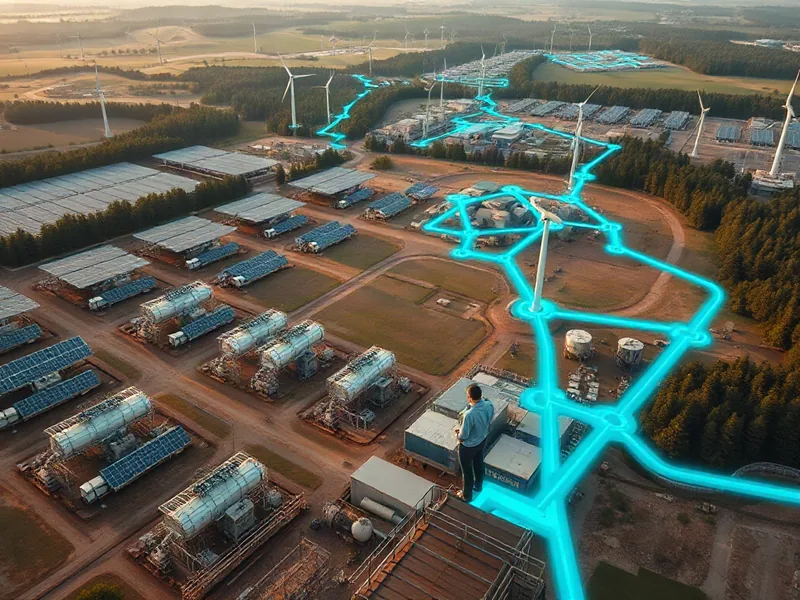
Battery chemistry is the third pillar. Semi-solid-state batteries promise better energy density and safety characteristics than conventional lithium-ion cells, which matters both for grid storage and for the broader electrification push. None of these technologies are new concepts in isolation. What's changed is the scale of demand pulling them toward commercial viability faster than climate policy alone would have driven.
The risk, and it is a real one, is that AI-driven energy demand could just as easily entrench fossil fuel generation if clean alternatives can't scale fast enough. Data center operators have shown they will contract for whatever power is available, including natural gas peaker plants and even coal in some jurisdictions. The climate tech companies on this list are making a bet that cleaner alternatives can win on cost and reliability before that lock-in happens. It is not a guaranteed outcome.
There's also a financing question worth flagging. Climate tech has historically relied on a mix of venture capital, government subsidy, and project finance, each with different risk tolerances and time horizons. The current AI capital cycle is injecting a fourth source: hyperscaler balance sheets looking to secure long-term power purchase agreements. That changes the negotiating dynamics for early-stage companies in nuclear and storage, potentially giving them faster paths to commercial contracts than previous climate tech cohorts enjoyed. It also means their fortunes are now more tightly coupled to AI capital spending cycles, which introduces a new form of correlation risk that didn't exist five years ago.
Broader market signals reinforce how concentrated capital has become around technology more generally. Tech fortunes now account for 36% of total billionaire wealth, according to Bloomberg's latest billionaire index, and Nvidia is reportedly on the verge of becoming the first company to reach a $6 trillion valuation, per CNBC. That concentration of wealth and capital in AI-adjacent businesses is precisely the pool that climate tech companies serving data center demand are now trying to tap.
The ten companies on this year's list won't be fully named until MIT Technology Review's subscriber-only feature rolls out its profiles over the coming days, but the categories they represent are already instructive. Watch for how quickly tandem solar manufacturing scales in the US relative to China's existing lead. Watch for power purchase agreements between data center operators and advanced nuclear developers, since those contracts will reveal whether hyperscalers are willing to underwrite first-of-a-kind reactor projects. And watch storage economics closely: compressed-CO2 and semi-solid-state battery costs need to fall meaningfully to compete with lithium-ion at grid scale.
The thesis for climate tech in 2026 is less about standalone decarbonization and more about whether clean technologies can ride the AI infrastructure wave rather than get crowded out by it. Companies that can position themselves as the default power and storage solution for data center operators have a credible path to rapid scale. Those that can't risk being sidelined by a market that is, for now, prioritizing speed and reliability over emissions intensity. The next several days of profiles should clarify which of these ten companies are positioned to capture that opportunity and which face steeper execution risk.
Tags
Original Sources
The Download: 10 climate tech companies to watch
↗ https://www.technologyreview.com/2026/10/06/1145796/the-download-10-climate-tech-companies-to-watch
About the author
Marcus began tracking AI's market implications in 2016, noticing AI-related patent filings accelerating ahead of earnings upgrades before most of the sell-side had caught on. A former fixed-income quantitative analyst, he spent two decades building models that priced risk across emerging markets before pivoting to cover the economic impact of AI full-time. His writing translates opaque technical developments into clear risk/reward terms — and he's rarely diplomatic about the gap between AI valuations and underlying fundamentals. He believes most market participants still underestimate AI's long-run deflationary effect on knowledge work.
More from The Analyst →This Week's Edition
7 October 2026
34 articles
Related Articles

Oracle Trucks In Natural Gas to Keep AI Data Centers Running Ahead of Pipelines
Environment & Climate · 5 min

MIT Technology Review's 2026 Climate Tech List Shows Where Capital Is Actually Flowing
Environment & Climate · 5 min

Corporate Carbon Pledges Face a Reckoning as Accountability Rules Tighten
Environment & Climate · 5 min
Related Articles
Oracle Trucks In Natural Gas to Keep AI Data Centers Running Ahead of Pipelines
Environment & Climate · 5 min
MIT Technology Review's 2026 Climate Tech List Shows Where Capital Is Actually Flowing
Environment & Climate · 5 min
Corporate Carbon Pledges Face a Reckoning as Accountability Rules Tighten
Environment & Climate · 5 min
More Stories
© 2026 Cedar & Bloom. All rights reserved.
