The Drum · Weekly AI news, freeSubscribe →

Share
Researchers have crafted an AI framework that improves diabetic retinopathy detection across diverse populations, overcoming limitations posed by varying ethnicities and diagnostic criteria in training datasets.
Diabetic retinopathy (DR), a serious complication of diabetes, is a leading cause of visual impairment and blindness. Early detection and accurate grading are crucial for effective treatment. However, current AI models often struggle when applied to new patient groups or settings due to what’s known as "domain shifts." These shifts can be caused by differences in ethnicity, age, and diagnostic criteria, which are not always accounted for in the data used to train these models.
A team of researchers from various institutions has developed a novel framework that addresses this challenge. By disentangling the visual features of retinal images into semantic content and domain-specific noise, their method aims to create more robust and generalizable AI models for DR detection. This approach not only enhances accuracy but also ensures that the model performs well across diverse patient populations.
To understand why this new framework is important, let's consider a simple analogy. Imagine you're training a dog to recognize different breeds of cats. If all your training images come from one neighborhood where the cats are mostly Siamese, your dog might perform poorly when it encounters a Persian cat in another part of the city. This is similar to domain shifts in AI models for medical imaging.
In the context of DR, domain shifts can occur because different clinics or regions may use slightly different imaging techniques, patient demographics, and diagnostic standards. These variations can lead to significant performance drops when an AI model trained on one set of data is applied to a new, unseen dataset.
The researchers propose a method that disentangles the visual features of retinal images into two components: semantic content (the actual medical information) and domain-specific noise (factors like imaging techniques and patient demographics). This disentanglement allows the model to focus on the relevant medical information while being robust to the variations caused by different domains.
Here’s how it works:
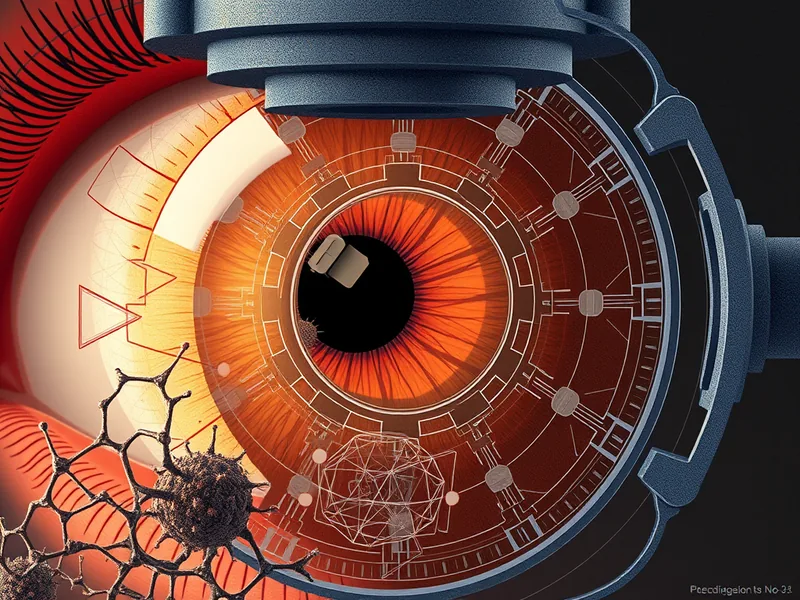
Decoupling Representations: The framework takes paired data from different domains and separates them into semantic features (the meaningful part of the image) and domain noise (the variability). This separation ensures that the model can focus on the essential medical details without being confused by irrelevant variations.
Augmented Representations: By combining the original retinal semantics with domain noise from other sources, the framework creates enhanced representations that are more aligned with real-world clinical needs. This process enriches the data with diverse information, making the model more versatile and reliable.
Robustness Improvement: To further enhance robustness, the researchers use class and domain prototypes to interpolate the disentangled representations. They also introduce data-aware weights to give more attention to rare classes and domains, ensuring that the model performs well even for less common scenarios.
Semantic Alignment Loss: Finally, a robust pixel-level semantic alignment loss is applied to align the retinal semantics decoupled from features. This ensures a balance between intra-class diversity (differences within the same class) and dense class features (distinct characteristics of different classes).
The researchers tested their framework on multiple benchmarks and found that it significantly outperformed existing methods in detecting DR across unseen domains. This is a crucial step towards developing AI models that can be reliably deployed in diverse clinical settings, improving the accuracy of early detection and treatment.
While this new framework shows promising results, there are still challenges to overcome. Ensuring that the model remains effective as it encounters even more varied data will require ongoing research and validation. However, the potential impact on public health is significant. By making AI models for DR detection more robust and generalizable, we can improve early diagnosis and treatment, ultimately reducing the burden of diabetic retinopathy on individuals and healthcare systems.
Tags
Original Sources
About the author
Amara's entry point into AI was an epidemiology role at a London research hospital, where she spent five years studying how digital health tools reached — or conspicuously failed to reach — underserved communities. Watching early algorithmic systems in healthcare quietly entrench existing inequalities, she redirected her career toward the systemic consequences of AI at scale. She covers AI through an unflinching lens: who benefits, who bears the cost, and what evidence actually says versus what the press release claims. Her writing is calm and precise, but she doesn't mistake balance for neutrality.
More from The Steward →This Week's Edition
12 June 2024
29 articles
Related Articles
Related Articles
More Stories
© 2026 Cedar & Bloom. All rights reserved.