The Drum · Weekly AI news, freeSubscribe →
Share
This year's Nobel laureates have unlocked new possibilities in protein design and prediction, paving the way for innovations in medicine, biotechnology, and our understanding of life itself.
On October 9, 2024, the Royal Swedish Academy of Sciences announced the recipients of the Nobel Prize in Chemistry for this year. The prize is shared between David Baker from the University of Washington, Seattle, and the team of Demis Hassabis and John Jumper from Google DeepMind in London. Their groundbreaking work has revolutionized our understanding and manipulation of proteins, which are essential chemical tools that underpin all life processes.
Proteins play a crucial role in nearly every biological function, from catalyzing chemical reactions to defending the body against diseases. They act as hormones, signal substances, antibodies, and even structural components of tissues. The ability to design new proteins and predict their structures opens up vast possibilities for medical treatments, vaccine development, and materials science.
One half of the Nobel Prize in Chemistry 2024 goes to David Baker for his work on computational protein design. In 2003, Baker achieved what many considered impossible: he designed a new protein that had no known counterpart in nature. Since then, his research group has continued to innovate, creating a wide array of proteins with potential applications in pharmaceuticals, vaccines, nanomaterials, and tiny sensors.
Baker's approach involves using the 20 different amino acids-life's building blocks-to construct proteins from scratch. This process is akin to an architect designing a new type of building material that can be used to create structures with unique properties. By understanding how these amino acids fold into specific shapes, Baker and his team have been able to engineer proteins that can perform novel functions.
The other half of the prize is shared by Demis Hassabis and John Jumper for their development of an AI model called AlphaFold2. This achievement solves a 50-year-old problem in biology: predicting the three-dimensional structure of proteins from their amino acid sequences.
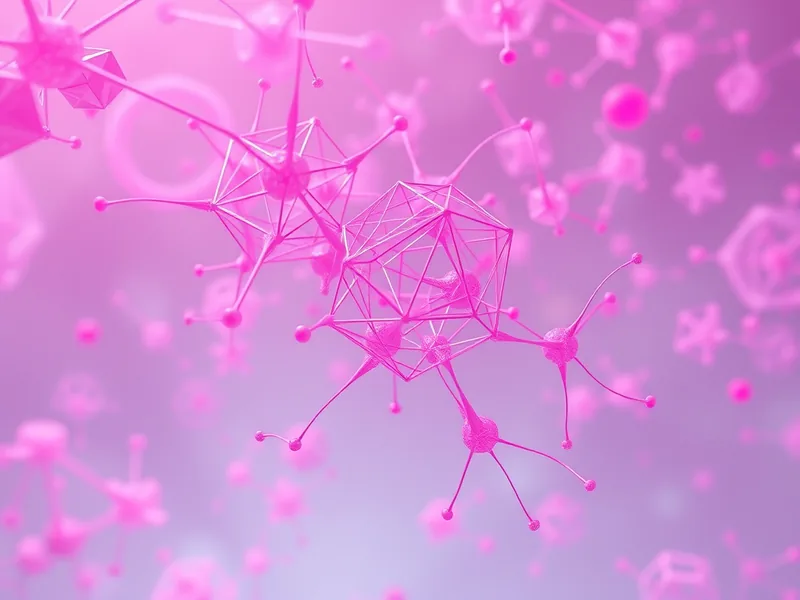
Proteins are made up of long chains of amino acids that fold into complex shapes, which determine their function. For decades, scientists have struggled to predict these structures accurately, as even small changes in the sequence can lead to vastly different shapes. However, in 2020, Hassabis and Jumper introduced AlphaFold2, an AI model that has achieved unprecedented accuracy in predicting protein structures.
The development of AlphaFold2 is a significant milestone because it allows researchers to bypass the time-consuming and costly process of determining protein structures through experimental methods. This breakthrough can accelerate drug discovery, improve our understanding of diseases, and even help design new materials with specific properties.
Both discoveries recognized by this year's Nobel Prize in Chemistry hold enormous potential for advancing science and improving human health. David Baker's work on computational protein design could lead to the development of new drugs and vaccines that are more effective and tailored to individual needs. Meanwhile, the predictive power of AlphaFold2 can streamline the process of drug discovery and help researchers understand how proteins function in both healthy and diseased states.
Heiner Linke, Chair of the Nobel Committee for Chemistry, emphasized the significance of these achievements: "One of the discoveries being recognized this year concerns the construction of spectacular proteins. The other is about fulfilling a 50-year-old dream: predicting protein structures from their amino acid sequences. Both of these discoveries open up vast possibilities."
The Nobel Prize in Chemistry 2024 highlights the intersection of biology, computer science, and engineering. David Baker's innovative protein designs and Demis Hassabis and John Jumper's groundbreaking AI model are not just scientific achievements; they are stepping stones towards a future where we can better understand and manipulate the building blocks of life.
Tags
Original Sources
About the author
Amara's entry point into AI was an epidemiology role at a London research hospital, where she spent five years studying how digital health tools reached — or conspicuously failed to reach — underserved communities. Watching early algorithmic systems in healthcare quietly entrench existing inequalities, she redirected her career toward the systemic consequences of AI at scale. She covers AI through an unflinching lens: who benefits, who bears the cost, and what evidence actually says versus what the press release claims. Her writing is calm and precise, but she doesn't mistake balance for neutrality.
More from The Steward →This Week's Edition
10 October 2024
24 articles
Related Articles
A Heart Without Friction: Maglev Technology Moves Into Cardiac Care
Health & Science · 6 min
How a Stubborn Hiss of Radio Noise Helped Confirm the Big Bang
Health & Science · 5 min
AI Can Predict Chemotherapy Response in Aggressive Breast Cancer, But Not Yet Reliably Enough for the Clinic
Health & Science · 5 min
Related Articles
A Heart Without Friction: Maglev Technology Moves Into Cardiac Care
Health & Science · 6 min
How a Stubborn Hiss of Radio Noise Helped Confirm the Big Bang
Health & Science · 5 min
AI Can Predict Chemotherapy Response in Aggressive Breast Cancer, But Not Yet Reliably Enough for the Clinic
Health & Science · 5 min
More Stories
© 2026 Cedar & Bloom. All rights reserved.
