The Drum · Weekly AI news, freeSubscribe →

Share
Nvidia and Hoppr join forces to build an AI foundry aimed at bridging the gap between cutting-edge technology and practical healthcare applications, tackling deployment hurdles head-on.
The promise of artificial intelligence (AI) in healthcare is immense, from improving diagnostic accuracy to personalizing treatments. However, the path to realizing these benefits is fraught with challenges, particularly when it comes to deployment and scaling. According to leaders at tech giants Nvidia and Hoppr, the real barriers holding back healthcare AI are not just about building sophisticated models but ensuring they can be effectively used in clinical practice.
To address this, Nvidia and Hoppr have partnered to create an AI foundry that leverages Nvidia’s advanced computing capabilities and foundation models. This collaboration aims to provide developers with the tools needed to launch medical imaging AI solutions more easily at scale. According to Khan Siddiqui, CEO of Hoppr, the foundry is designed to help providers develop, validate, and deploy their own AI models without starting from scratch.
“The platform we’ve built allows health systems, radiology practices, and medical device companies to quickly build and deploy fine-tuned AI models in their practice or products,” Siddiqui explained. “This means hospitals no longer need massive amounts of data or infrastructure to create their own models.”
Traditionally, providers had to purchase large datasets containing about 100,000 patient records to train AI models. This was a significant barrier for many smaller healthcare facilities. However, with pre-trained foundation models from Hoppr and Nvidia, hospitals can now shape these models using much smaller datasets, sometimes as few as a few hundred records. This democratizes access to AI technology, making it more feasible for a wider range of providers.
The focus on custom, localized AI development is crucial. One-size-fits-all solutions often fall short in addressing the specific needs and contexts of different healthcare settings. By enabling providers to fine-tune models for their particular environments, the foundry aims to increase the relevance and effectiveness of AI tools. For example, a rural hospital might have different imaging requirements than an urban trauma center, and being able to tailor AI solutions can make a significant difference in patient outcomes.
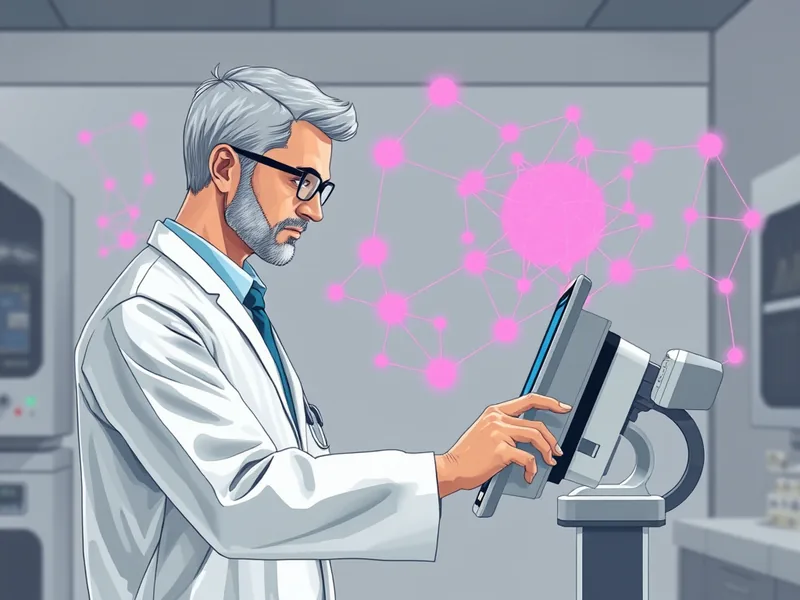
Siddiqui emphasized that the goal is to embed specialized AI tools directly into radiology and diagnostic workflows. This integration ensures that clinicians can use these tools seamlessly as part of their daily routines, rather than having to navigate cumbersome additional steps. “By making custom AI development more accessible, we’re helping providers enhance their capabilities without overburdening them,” he said.
The benefits of this approach are multifaceted. For patients, it means more accurate and timely diagnoses, leading to better treatment outcomes. For healthcare providers, it reduces the administrative burden associated with data management and model training, allowing them to focus more on patient care. And for the broader healthcare system, it promotes innovation and efficiency, potentially lowering costs and improving overall quality of care.
However, the journey to widespread adoption is not without its challenges. Technical issues such as interoperability, data privacy, and regulatory compliance remain significant hurdles. Siddiqui acknowledged these concerns but expressed confidence in the partnership’s ability to navigate them. “We’re committed to working closely with healthcare providers and regulators to ensure that our solutions meet the highest standards of safety and efficacy,” he stated.
As AI continues to evolve, the collaboration between Nvidia and Hoppr represents a promising step toward making advanced medical technologies more accessible and effective. By addressing the real-world challenges of deployment and scaling, they are paving the way for a future where AI can truly transform healthcare delivery.
Tags
Original Sources
About the author
Amara's entry point into AI was an epidemiology role at a London research hospital, where she spent five years studying how digital health tools reached — or conspicuously failed to reach — underserved communities. Watching early algorithmic systems in healthcare quietly entrench existing inequalities, she redirected her career toward the systemic consequences of AI at scale. She covers AI through an unflinching lens: who benefits, who bears the cost, and what evidence actually says versus what the press release claims. Her writing is calm and precise, but she doesn't mistake balance for neutrality.
More from The Steward →This Week's Edition
30 April 2026
29 articles
Related Articles
Related Articles
More Stories
© 2026 Cedar & Bloom. All rights reserved.