The Drum · Weekly AI news, freeSubscribe →
Share
As medical imaging technology advances, a new challenge emerges: ensuring patients truly understand their test results and what they mean for their health.
In the world of radiology, the conversation often centers on whether artificial intelligence (AI) can outperform human specialists, making imaging faster and more accurate. But this technical debate overlooks a critical issue: patient comprehension. While we've made strides in transparency-legally mandating that patients have access to their medical data-we've fallen short in providing true clarity.
For many patients, the right to see their data is hollow if they can't understand what it means for their lives. Imagine being handed a complex document filled with dense medical jargon and acronyms. Without context or explanation, this information can be more distressing than empowering. Radiology reports, historically written by specialists for other specialists, are often impenetrable to the average person.
The 21st Century Cures Act has accelerated patient access to their results, a move supported by 96% of patients according to a recent survey in JAMA Network Open. Patients want immediate access to their test results, even before a doctor's review. However, transparency alone is not enough. Radiology reports are often overloaded with technical physics, complex anatomy, and incidental findings that assume years of medical training.
The challenge is compounded by advanced imaging technologies like CT and MRI. These scans produce detailed images that require sophisticated interpretation. For patients, the result can be a "Google-search" spiral of confusion and anxiety as they try to make sense of their results on their own.
Enter AI, which may offer a solution by creating a "translation layer" designed to help patients understand the complex information they receive. This approach is not about replacing human radiologists but augmenting their work to ensure that patients can grasp the implications of their test results.
AI's role in medical diagnostics has been rapidly evolving. According to AI Simplified in Plain English, AI is transforming diagnostic processes, especially in imaging and predictive analysis. However, it won't fully replace doctors by 2025 due to key limitations such as ethical considerations and the need for human judgment in complex cases.
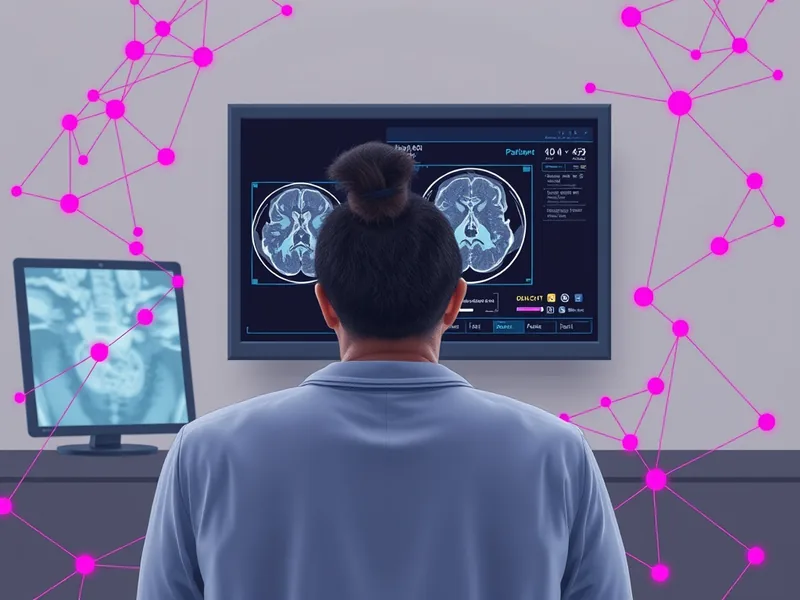
The European Radiology Society emphasizes that AI's true potential lies in augmenting radiologists' abilities, allowing them to focus on interpreting more challenging cases. By automating routine tasks and providing clear, patient-friendly explanations, AI can bridge the gap between data access and data understanding.
This "translation layer" could take various forms, such as simplified summaries, visual aids, or interactive tools that explain medical terms and their implications in plain language. For example, an AI system might generate a summary that translates technical jargon into everyday language, highlighting key points and potential next steps.
The stakes are high. Health literacy is crucial for patient autonomy-the legal and moral right to make informed decisions about one's own body. Without this understanding, the promise of transparency becomes an empty gesture. Patients who can't interpret their results may delay necessary treatments, experience unnecessary anxiety, or make uninformed decisions.
Improving patient comprehension has broader public health implications. Empowered patients are more likely to engage in their care, follow treatment plans, and communicate effectively with their healthcare providers. This can lead to better health outcomes and a more efficient healthcare system overall.
As we continue to advance medical imaging technology, it's essential to prioritize the human element. AI has the potential to transform radiology not just by making it faster or more accurate but by ensuring that patients truly understand what their results mean for their lives. By bridging this comprehension gap, we can create a healthcare system that is both transparent and meaningful for everyone.
Tags
Original Sources
The Next Useful Layer in Radiology AI is Patient Comprehension - MedCity News
↗ https://medcitynews.com/2026/05/the-next-useful-layer-in-radiology-ai-is-patient-comprehension
About the author
Amara's entry point into AI was an epidemiology role at a London research hospital, where she spent five years studying how digital health tools reached — or conspicuously failed to reach — underserved communities. Watching early algorithmic systems in healthcare quietly entrench existing inequalities, she redirected her career toward the systemic consequences of AI at scale. She covers AI through an unflinching lens: who benefits, who bears the cost, and what evidence actually says versus what the press release claims. Her writing is calm and precise, but she doesn't mistake balance for neutrality.
More from The Steward →This Week's Edition
3 June 2026
29 articles
Related Articles
Related Articles
More Stories
© 2026 Cedar & Bloom. All rights reserved.