The Drum · Weekly AI news, freeSubscribe →
Share
A surprising discovery shows that severed parts of a sea cucumber can survive indefinitely in natural seawater, opening new avenues for medical research and regenerative therapies.
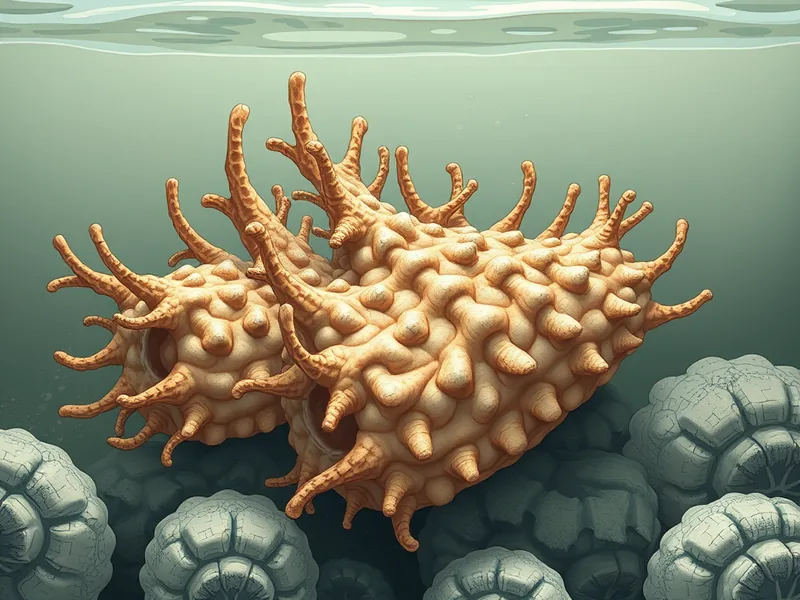
In the vast, cold waters of the Atlantic and Arctic oceans, a humble creature known as Psolus fabricii, a species of sea cucumber, is making waves in the scientific community. Researchers have discovered that when parts of this sea cucumber are severed, they don’t just survive; they thrive indefinitely in ordinary seawater. This finding could have profound implications for medical research and regenerative medicine.
"Having tissues that can survive so easily outside the body is unprecedented," said Sara Jobson, a researcher at Memorial University of Newfoundland and lead author of the study. "We’ve never seen anything like this before."
The discovery was not part of a planned experiment but rather an accidental observation that sparked curiosity. Jobson’s lab focuses on sea cucumbers, and P. Fabricii has been a subject of interest in other studies. One day, a collaborator noticed something unusual: the amputated tissue from this sea cucumber continued to live and even heal without any special treatment.
"We didn’t set out to find immortal tissues," Jobson explained. "One of my collaborators was working with these sea cucumbers and observed that their severed parts just kept living and healing on their own. It was a fortuitous discovery."
To investigate this phenomenon further, the researchers conducted a series of experiments. They excised tube feet, groups of tube feet called ambulacra, and tentacles from P. Fabricii and placed them in natural, non-sterile seawater. All of these tissues survived, and some even showed signs of healing.
"When we first severed the tube feet, the wound margin was a mess of missing or fragmented epidermal and connective tissue," Jobson said. "But within two days, the damaged tissue began to shed. Internally, a large influx of coelomocytes, the sea cucumber’s immune cells, rushed toward the damaged spot."
By day six, the healthy tissue had curled inward, completing the initial stages of healing. This process is remarkable because it typically requires a sterile environment and nutrient-rich mediums filled with growth factors to keep tissues alive outside the body.
The ability of P. Fabricii tissues to survive and heal in ordinary seawater opens up new possibilities for medical research and regenerative therapies. In human medicine, keeping tissues alive outside the body is crucial for organ transplants and other procedures. However, this usually requires stringent conditions that are difficult to maintain.
"Sea cucumbers have evolved a unique mechanism that allows their tissues to survive in a natural, non-sterile environment," Jobson said. "Understanding this mechanism could help us develop new methods for preserving human tissues and organs."
This discovery is not just about sea cucumbers; it has broader implications for our understanding of biological processes and regenerative medicine. Sea cucumbers inhabit harsh environments where their appendages are frequently injured or lost. Evolution has endowed these sites with a high capacity for regeneration, but the exact mechanisms remain a mystery.
"By studying P. Fabricii, we can gain insights into how tissues can survive and regenerate in challenging conditions," Jobson said. "This could lead to breakthroughs in treatments for injuries and diseases where tissue damage is a major issue."
The next steps for the research team include delving deeper into the molecular and cellular mechanisms that enable this remarkable survival and healing. They hope to identify specific genes and proteins involved and explore how these findings can be applied to human medical practices.
In a world where regenerative medicine holds the promise of restoring damaged tissues and organs, the humble sea cucumber may just hold some of the answers we’ve been looking for.
Tags
Original Sources
Severed sea cucumber appendages don't seem to die
↗ https://arstechnica.com/science/2026/05/severed-sea-cucumber-appendages-dont-seem-to-die
About the author
Amara's entry point into AI was an epidemiology role at a London research hospital, where she spent five years studying how digital health tools reached — or conspicuously failed to reach — underserved communities. Watching early algorithmic systems in healthcare quietly entrench existing inequalities, she redirected her career toward the systemic consequences of AI at scale. She covers AI through an unflinching lens: who benefits, who bears the cost, and what evidence actually says versus what the press release claims. Her writing is calm and precise, but she doesn't mistake balance for neutrality.
More from The Steward →This Week's Edition
3 June 2026
29 articles
Related Articles
Related Articles
More Stories
© 2026 Cedar & Bloom. All rights reserved.