The Drum · Weekly AI news, freeSubscribe →

Share
As healthcare relies more on digital systems, self-driving networks promise seamless operation and reliability, addressing the critical need for constant connectivity in patient care.
In an era where healthcare delivery is increasingly dependent on digital systems, the network has become a critical component of patient care. From clinical communication tools to remote monitoring devices, these technologies are transforming how we provide and receive medical services. However, with this transformation comes a new set of challenges: ensuring that these networks operate seamlessly and reliably in highly dynamic environments.
Healthcare IT teams face mounting pressure to maintain not just network uptime but also consistent performance across a wide range of applications and devices. Minor disruptions can have immediate downstream effects on clinical workflows, patient experience, and operational efficiency. As healthcare organizations contend with expanding device ecosystems, stricter regulatory requirements, and more distributed care models, the complexity is overwhelming legacy network approaches.
To address these challenges, a new operational model is emerging: one that moves network management from reactive troubleshooting to predictive and ultimately autonomous operations. This shift is driven by advancements in artificial intelligence (AI) and machine learning (ML), which enable networks to self-manage and optimize performance in real-time.
Self-driving networks, as they are often called, use AI algorithms to monitor and analyze network traffic, detect anomalies, and automatically make adjustments to ensure optimal performance. For example, these systems can dynamically allocate bandwidth to mission-critical applications during peak usage times, ensuring that essential services like patient monitoring and telehealth consultations remain uninterrupted.
Consider a hospital where thousands of mobile devices, latency-sensitive clinical applications, and always-on patient monitoring systems are in constant use. Traditional network management approaches struggle to handle such unpredictable traffic patterns while maintaining consistent performance. Self-driving networks, however, can adapt on the fly, ensuring that critical applications receive the resources they need when they need them.
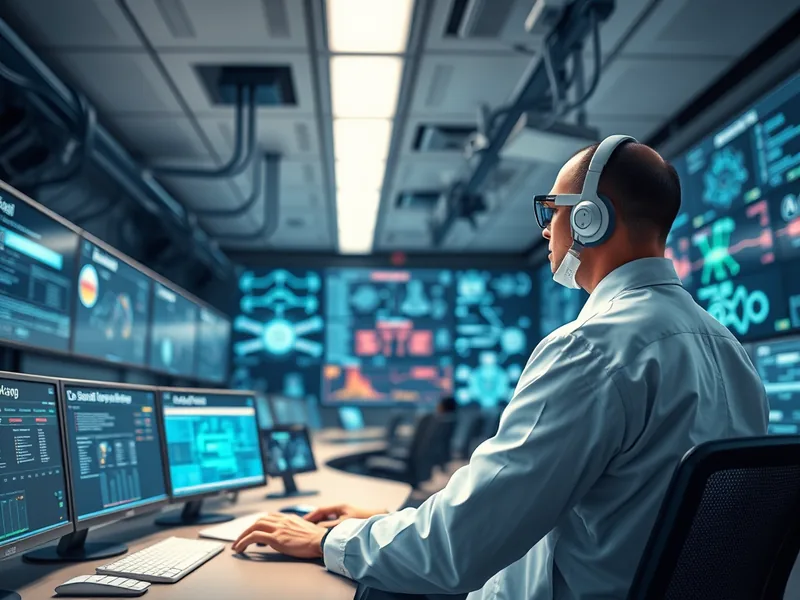
This is particularly important in a healthcare setting where delays or disruptions can have serious consequences for patient care. By automating these processes, IT teams can focus on strategic initiatives rather than constant firefighting, leading to more efficient and effective network management.
The adoption of self-driving networks represents a significant step forward in healthcare technology, but it is just the beginning. As AI and ML continue to evolve, we can expect even more sophisticated capabilities that will further enhance the reliability and performance of healthcare IT systems.
One potential area of development is the integration of self-driving networks with other AI-driven technologies, such as predictive analytics and automated decision-making tools. For instance, a network could not only optimize bandwidth but also proactively identify and mitigate potential security threats, ensuring that sensitive patient data remains protected.
The benefits of self-driving networks extend beyond technical performance. By reducing the burden on IT teams, these systems can help healthcare organizations allocate resources more effectively, leading to cost savings and improved patient outcomes. In a sector where every second counts, the ability to rely on a network that operates seamlessly and intelligently is invaluable.
As healthcare continues to embrace digital transformation, self-driving networks will play a crucial role in ensuring that technology supports, rather than hinders, the delivery of high-quality care. The future of healthcare IT is bright, and it is being shaped by the autonomous networks that are redefining what is possible.
Tags
Original Sources
How self-driving networks are reshaping healthcare
↗ https://www.healthcareitnews.com/news/how-self-driving-networks-are-reshaping-healthcare
About the author
Amara's entry point into AI was an epidemiology role at a London research hospital, where she spent five years studying how digital health tools reached — or conspicuously failed to reach — underserved communities. Watching early algorithmic systems in healthcare quietly entrench existing inequalities, she redirected her career toward the systemic consequences of AI at scale. She covers AI through an unflinching lens: who benefits, who bears the cost, and what evidence actually says versus what the press release claims. Her writing is calm and precise, but she doesn't mistake balance for neutrality.
More from The Steward →This Week's Edition
14 May 2026
29 articles
Related Articles
Related Articles
More Stories
© 2026 Cedar & Bloom. All rights reserved.