The Drum · Weekly AI news, freeSubscribe →

Share
Synchron's new brain-computer interface, powered by NVIDIA AI and Apple Vision Pro, enables ALS patients to control devices with their thoughts alone, restoring a sense of autonomy to those losing physical capabilities.
In a groundbreaking development, neurotechnology company Synchron has unveiled an advanced brain-computer interface (BCI) that leverages NVIDIA's AI technology and the Apple Vision Pro to transform the lives of individuals with paralysis. This new system allows users to control their digital and physical environments simply by thinking, offering unprecedented independence and quality of life.
The human stakes are profound: for people like Rodney Gorham, who has amyotrophic lateral sclerosis (ALS), this technology represents a lifeline. ALS is a degenerative disease that weakens muscles over time, eventually leading to paralysis. In 2020, Gorham received Synchron’s implantable BCI, which initially allowed him to type on computers and mobile devices. Now, with the integration of NVIDIA's Holoscan AI platform and the Apple Vision Pro, he can perform a wide range of tasks in his home environment.
In a video demonstration at the NVIDIA GTC conference in San Jose, California, Gorham showcased how he uses his BCI to control various devices in his Melbourne, Australia home. From playing music on a smart speaker to adjusting lighting, turning on a fan, activating an automatic pet feeder, and running a robotic vacuum, Gorham can manage these tasks with just his thoughts.
The technology behind this breakthrough is complex but can be understood through simple analogies. A BCI works by decoding signals from brain activity and translating them into commands for output devices. Think of it like a translator that converts the language of your brain into actions in the real world. NVIDIA’s Holoscan, an AI sensor-processing platform, significantly enhances this process by improving the speed and accuracy of signal decoding. This means there's less delay between when Gorham thinks about performing an action and when the system executes it, leading to more precise control.
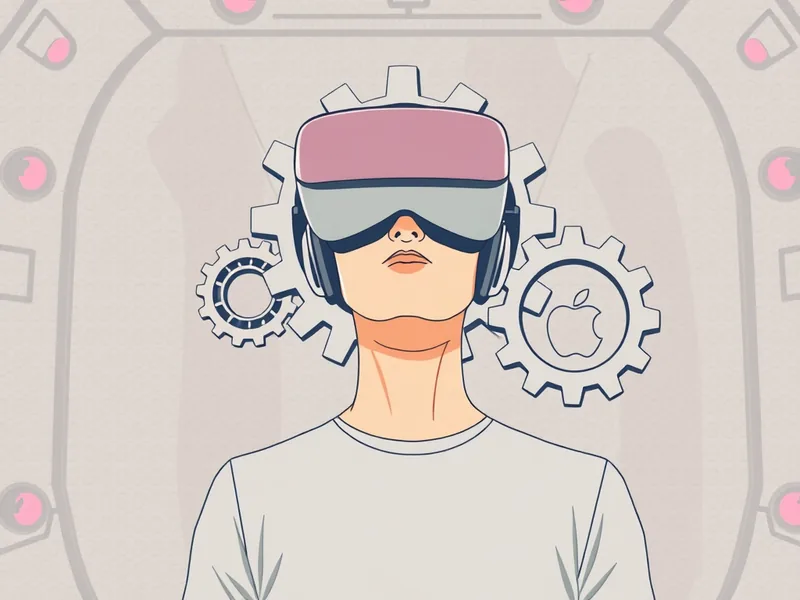
The integration of the Apple Vision Pro further enhances user experience. The device overlays a drop-down menu on the physical environment, allowing Gorham to see various devices in his home and select actions from a list. For example, he can adjust the temperature on his air-conditioning unit just by focusing on it and thinking about the desired action.
BCIs have been a topic of excitement in recent years as companies like Elon Musk’s Neuralink have pushed the boundaries of what was once experimental technology used primarily in academic labs. While these devices are still in the experimental phase, they show great promise in restoring lost functionalities to people with paralysis. However, most demonstrations have focused on one-off capabilities, such as playing video games or moving robotic arms.
Synchron aims to change that by developing a BCI system capable of performing a wide range of tasks seamlessly in a real-world environment. “It’s running in real time, in a real environment 24/7, making predictions where context really matters,” said Tom Oxley, Synchron’s CEO, in an exclusive interview with WIRED.
The potential benefits of this technology are immense. For individuals like Gorham, it means regaining control over their daily lives and reducing dependence on caregivers. However, as with any emerging technology, there are also risks and long-term consequences to consider. These include issues related to data privacy, the potential for misuse, and the need for ongoing support and maintenance of the devices.
Despite these challenges, the advancements in BCI technology represent a significant step forward in neurotech innovation. They offer hope and practical solutions for people living with conditions like ALS, making it clear that the future of assistive technology is here, and it's changing lives.
Tags
Original Sources
About the author
Amara's entry point into AI was an epidemiology role at a London research hospital, where she spent five years studying how digital health tools reached — or conspicuously failed to reach — underserved communities. Watching early algorithmic systems in healthcare quietly entrench existing inequalities, she redirected her career toward the systemic consequences of AI at scale. She covers AI through an unflinching lens: who benefits, who bears the cost, and what evidence actually says versus what the press release claims. Her writing is calm and precise, but she doesn't mistake balance for neutrality.
More from The Steward →This Week's Edition
21 March 2025
29 articles
Related Articles
Related Articles
More Stories
© 2026 Cedar & Bloom. All rights reserved.