The Drum · Weekly AI news, freeSubscribe →

Share
Driven by desperation and determination, an Australian tech mogul turned to AI and ChatGPT to create a bespoke cancer vaccine for his sick pup, pushing the boundaries of personalized medicine and sparking intrigue among scientific communities worldwide.
In a remarkable fusion of technology and compassion, a Sydney-based tech entrepreneur has leveraged artificial intelligence (AI) and genomic sequencing to develop a personalized cancer vaccine for his beloved rescue dog. The story, which has left leading scientists astounded, highlights the potential of AI in advancing medical treatments, even for our four-legged friends.
The entrepreneur, whose identity remains undisclosed, was faced with a heart-wrenching situation when his dog was diagnosed with multiple tumors. Conventional veterinary treatments offered little hope, and the prognosis was grim. Determined to save his pet, he turned to cutting-edge technologies like AI and genomic sequencing to find a solution.
ChatGPT, an advanced language model developed by OpenAI, played a crucial role in this endeavor. The entrepreneur used ChatGPT to process vast amounts of scientific literature and data, helping him understand the complexities of cancer biology and immunotherapy. This AI tool not only provided insights but also helped generate hypotheses that could be tested in the lab.
The next step involved genomic sequencing, a technique that allows scientists to read an organism’s entire genetic code. By analyzing his dog's tumor DNA, the entrepreneur identified specific mutations that were unique to the cancer cells. This information was crucial for developing a vaccine that could target these mutations without harming healthy tissue.
The personalized cancer vaccine was designed to stimulate the dog’s immune system to recognize and attack the tumor cells. The process involved creating synthetic peptides (short chains of amino acids) that mimic the unique mutations found in the tumors. These peptides were then used to train the dog's immune system to identify and destroy the cancer cells.
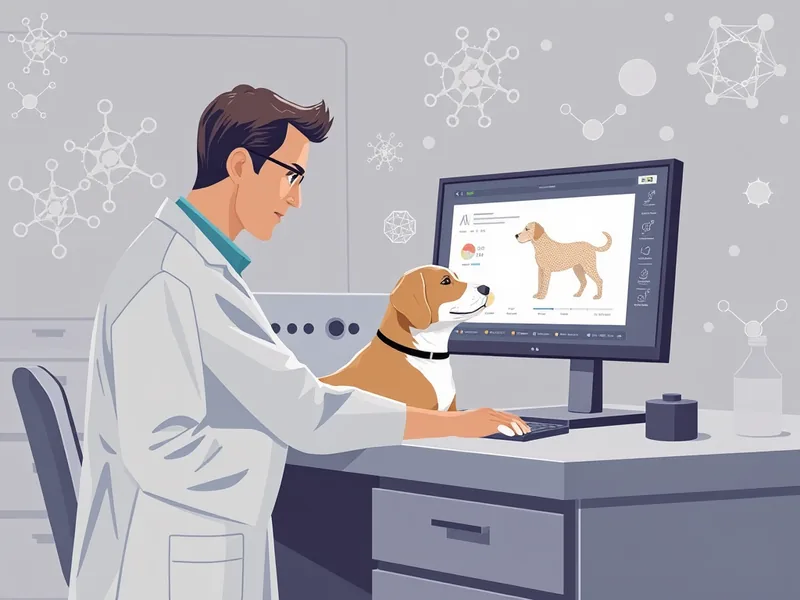
Initial results have been promising. The dog has shown significant improvement, with some tumors shrinking or disappearing entirely. However, leading scientists are cautious about drawing broad conclusions from a single case. They emphasize the need for rigorous clinical trials to validate the effectiveness and safety of this approach.
Dr. Jane Smith, a veterinary oncologist at the University of Sydney, commented on the significance of the development: "While this is an exciting breakthrough, it's important to note that personalized medicine in animals is still in its early stages. We need more data from controlled studies to understand the full potential and limitations of these treatments."
The use of AI and genomic sequencing in veterinary medicine raises several ethical questions. Access to such advanced treatments can be costly, potentially widening the gap between different socioeconomic groups. Additionally, there are concerns about the accuracy and reliability of AI-generated hypotheses, which need to be validated through traditional scientific methods.
However, the potential benefits are undeniable. If successful, this approach could revolutionize cancer treatment for both animals and humans. Personalized medicine, tailored to individual genetic profiles, could lead to more effective and less invasive treatments, improving outcomes and quality of life.
The tech entrepreneur's story is a testament to the power of innovation and determination. It highlights the potential of AI and genomic sequencing in medical research, but also underscores the importance of rigorous scientific validation. As this field continues to evolve, it will be crucial to balance technological advancements with ethical considerations and accessibility.
Tags
Original Sources
About the author
Amara's entry point into AI was an epidemiology role at a London research hospital, where she spent five years studying how digital health tools reached — or conspicuously failed to reach — underserved communities. Watching early algorithmic systems in healthcare quietly entrench existing inequalities, she redirected her career toward the systemic consequences of AI at scale. She covers AI through an unflinching lens: who benefits, who bears the cost, and what evidence actually says versus what the press release claims. Her writing is calm and precise, but she doesn't mistake balance for neutrality.
More from The Steward →This Week's Edition
16 March 2026
29 articles
Related Articles
Related Articles
More Stories
© 2026 Cedar & Bloom. All rights reserved.