The Drum · Weekly AI news, freeSubscribe →

Share
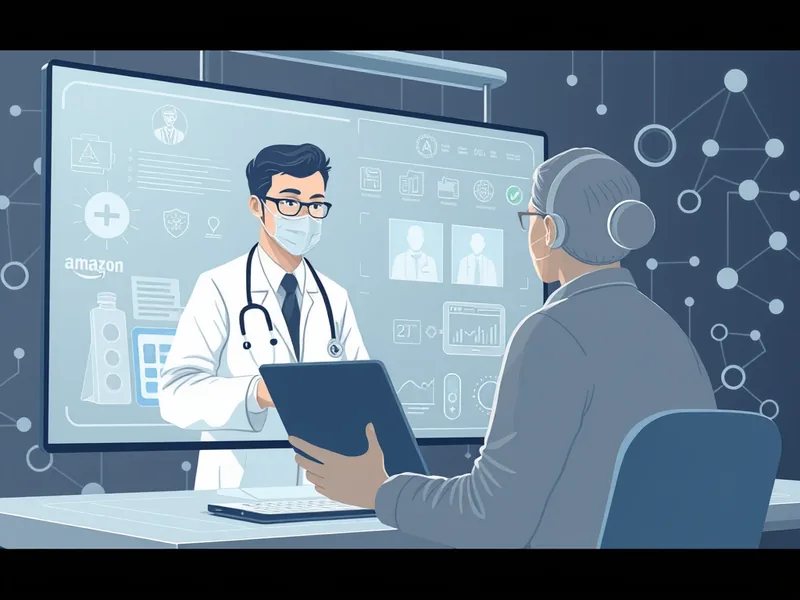
As telehealth continues to reshape healthcare delivery, major players like Amazon and Walmart are making strategic moves to enhance their digital health offerings.
Telehealth is no longer a niche service; it's becoming an integral part of modern healthcare. This week saw significant developments as tech giants and healthcare providers alike made moves to expand and improve remote care options. Amazon announced the hiring of Dr. Roy Schoenberg, founder of Amwell, to lead its Health Services division, while Walmart integrated Teladoc’s virtual care technology into its platform.
Schoenberg, who has been a pioneer in telehealth for over two decades, will join Amazon on July 1. His appointment signals a commitment from the tech giant to deepen its involvement in healthcare, a sector that is rapidly evolving with the rise of digital solutions. Meanwhile, Walmart’s integration of Teladoc services aims to make virtual care more accessible to its vast customer base.
Dr. Roy Schoenberg’s journey in telehealth began in 2006 when he cofounded Amwell with his brother Ido. Over the years, Amwell has become a leader in virtual care, offering services that range from urgent care to chronic disease management. Schoenberg’s expertise and vision are expected to bring significant advancements to Amazon Health Services.
In a message on the Amazon blog, Doug Herrington, CEO of Worldwide Amazon Stores, expressed gratitude for Neil Lindsay, who is stepping down after 15 years at Amazon. Herrington highlighted Lindsay’s contributions to Kindle and Prime services and his role in laying the groundwork for an AI-enabled healthcare business. "Under his leadership, we went from early experiments in healthcare to a business serving millions of customers through Amazon Pharmacy," Herrington wrote.
Walmart’s integration of Teladoc Health services into its Better Care Services platform is another significant step in expanding telehealth access. The partnership will connect Walmart customers with third-party providers, offering a wide range of virtual care options. This move aligns with Walmart’s broader strategy to enhance its healthcare offerings and improve the health outcomes of its community.
GoodRx, known for its medication price comparison tools, has also launched a new subscription service for generic medications. The program aims to lower out-of-pocket costs for patients, making essential drugs more affordable. These initiatives reflect a growing trend in the industry: leveraging technology to make healthcare more accessible and cost-effective.
The telehealth landscape is rapidly evolving, driven by advances in technology and increasing demand from consumers. Dr. Roy Schoenberg’s leadership at Amazon Health Services could catalyze further innovation, potentially leading to new services that integrate AI and machine learning to enhance patient care.
Walmart’s collaboration with Teladoc is likely to set a precedent for other retail giants looking to expand their healthcare offerings. The integration of virtual care into everyday shopping experiences could normalize telehealth and make it a standard part of healthcare routines.
As these developments unfold, it’s crucial to monitor the impact on patient outcomes and healthcare equity. While telehealth offers promising benefits, such as increased access and convenience, there are also concerns about ensuring that all populations, including those in rural and underserved areas, can benefit equally from these advancements.
The future of telehealth is bright, but it will require ongoing collaboration between tech companies, healthcare providers, and policymakers to ensure that the digital health revolution truly serves everyone.
Tags
Original Sources
Telehealth roundup: Amazon hires Amwell founder, Teladoc expands access and more
↗ https://www.healthcareitnews.com/news/telehealth-roundup-amazon-hires-amwell-founder-teladoc-expands-access-and-more
About the author
Amara's entry point into AI was an epidemiology role at a London research hospital, where she spent five years studying how digital health tools reached — or conspicuously failed to reach — underserved communities. Watching early algorithmic systems in healthcare quietly entrench existing inequalities, she redirected her career toward the systemic consequences of AI at scale. She covers AI through an unflinching lens: who benefits, who bears the cost, and what evidence actually says versus what the press release claims. Her writing is calm and precise, but she doesn't mistake balance for neutrality.
More from The Steward →This Week's Edition
3 June 2026
29 articles
Related Articles
Related Articles
More Stories
© 2026 Cedar & Bloom. All rights reserved.