The Drum · Weekly AI news, freeSubscribe →
Share
Tesla finally revealed its thruster-equipped Roadster with SpaceX, nearly a decade late. The demo dazzled crowds, but with production four years out, the real test lands with Q3 earnings next week.
Tesla unveiled a redesigned Roadster on Thursday that drove upside down, flipped in midair, and landed using rocket-style thrusters developed with Elon Musk's SpaceX. Production won't begin until 2028, more than a decade after Tesla first teased a next-generation version of its electric sports car back in 2017.
The thesis here is straightforward: this was a marketing event, not a product launch with near-term revenue implications. Tesla shares rose 5% in premarket trading Friday, a reaction to spectacle rather than fundamentals. The company reports third-quarter earnings on October 21, and that date matters far more to the investment case than anything shown at the SpaceX test site in McGregor, Texas.
The numbers Tesla did share are notable on their own terms. The Roadster hits zero to 60 mph in under one second, with a top speed above 230 mph. Musk pushed further during the event, suggesting the car could go "much faster," claiming it might reach "halfway to the speed of sound." Range comes in at over 300 miles on a single charge, less than half the figure Musk originally promised in 2017.
Pricing wasn't formally announced, though Tesla's reservation page now lists three tiers. A "Performance" version requires a $50,000 deposit. A "Thrust" variant with acceleration thrusters requires $250,000. A single-seat "Rocket" model with a "full flight system" is invite-only. Tesla had quoted a $200,000 base price nearly a decade ago, so the reservation structure suggests costs have climbed well beyond that original figure.
Musk himself has downplayed the car's financial relevance. In 2023, he called it a "small potato situation" that wouldn't "move the needle in a major way financially." That framing hasn't changed, and it shouldn't be ignored by investors tempted to read too much into Thursday's theatrics.
Gene Munster, managing partner at Tesla investor Deepwater Asset Management, was blunt on social media, calling the reveal "an engineering flex with no commercial value beyond embarrassing traditional car makers." He went further, suggesting the event served a different purpose entirely: building momentum for a potential merger between Tesla and SpaceX, an idea Musk has floated by discussing overlap between the two companies he controls.
That interpretation carries weight. Pairing SpaceX's propulsion engineering with Tesla's consumer brand in a splashy public event is the kind of move that primes investor sentiment for a larger corporate combination, whether or not one materializes soon.
There's a counterargument worth considering too. Morningstar analyst Seth Goldstein noted last month that Tesla "does not currently have a halo car, or high-performance luxury vehicle designed to showcase an automaker's best engineering and technology," and argued the Roadster would fill that gap. Halo cars rarely drive volume or margin, but they do shape brand perception, and brand perception isn't worthless. It's just not what moves quarterly numbers.
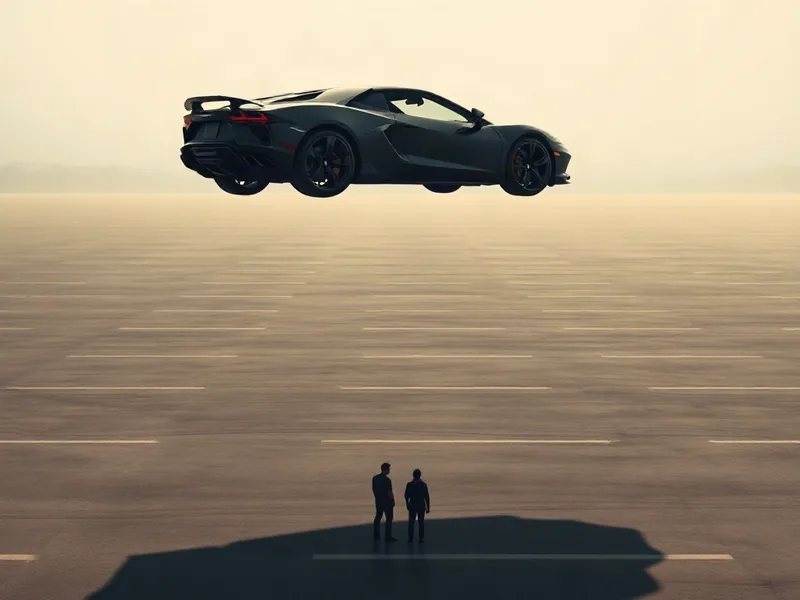
The crowd reaction supports the brand argument. Tesla investor Sawyer Merritt called it "the most insane product demo I've ever seen," adding he was "still asking how this wasn't AI" after watching in person. That kind of visceral response generates media coverage and social buzz, both of which Tesla has leaned on heavily in place of traditional advertising for years.
The Roadster reveal lands at an odd moment for Tesla's core business. The company has been pivoting hard toward AI-driven self-driving technology and robotics, stepping away from its traditional identity as a volume car manufacturer. This year, Tesla stopped selling Model S and Model X vehicles entirely to free up production capacity for its Optimus humanoid robots. It also launched the Cybercab, a two-seat robotaxi built without a steering wheel, pedals, or mirrors.
Against that backdrop, a sports car with a four-year runway to production looks almost like a throwback. The original Roadster, sold from 2008 to 2012 on a Lotus Elise chassis, was Tesla's first vehicle and helped reshape public perception of what an EV could be. Reviving that halo status now, while the company's actual sales lineup ages and deliveries have declined over the past two years, is a curious sequencing choice. Higher gas prices did help lift third-quarter deliveries, a short-term tailwind unrelated to the Roadster news.
Josh Gilbert, lead analyst for Asia-Pacific at trading platform eToro, put the priority question plainly: "The margin and cash flow numbers will carry far more weight with investors than anything they saw at the reveal." That's the line that should anchor how this story gets read heading into earnings.
The Roadster reveal was effective theater, delivering dramatic music, smoke, and a countdown worthy of a rocket launch rather than a car unveiling. But theater doesn't show up on an income statement. With production four years away and pricing still undisclosed beyond deposit tiers, there's no near-term revenue impact to model.
The more consequential date is October 21, when Tesla reports third-quarter results. Watch gross margin trends on the existing EV lineup, delivery volumes against an aging product range, and any management commentary on the Roadster's eventual production costs or the speculated SpaceX merger. Until there's clarity on pricing and unit economics, the Roadster belongs in the brand-marketing column, not the earnings model. Investors chasing the stock's premarket pop should separate the spectacle from the fundamentals before the next print lands.
Tags
Original Sources
Tesla's new Roadster turns in air with SpaceX thrusters, won't land until 2028
↗ https://www.reuters.com/business/autos-transportation/tesla-set-unveil-next-generation-roadster-sports-ev-after-years-delay-2026-10-15
About the author
Marcus began tracking AI's market implications in 2016, noticing AI-related patent filings accelerating ahead of earnings upgrades before most of the sell-side had caught on. A former fixed-income quantitative analyst, he spent two decades building models that priced risk across emerging markets before pivoting to cover the economic impact of AI full-time. His writing translates opaque technical developments into clear risk/reward terms — and he's rarely diplomatic about the gap between AI valuations and underlying fundamentals. He believes most market participants still underestimate AI's long-run deflationary effect on knowledge work.
More from The Analyst →This Week's Edition
18 October 2026
24 articles
Related Articles
xAI Launches Grok Bot, an Autonomous Agent That Logs Into Your Tools and Does the Work
Products & Applications · 5 min
Robotics Experts Pour Cold Water on Tesla's Optimus Debut
Products & Applications · 5 min

Replit Swaps Anthropic for OpenAI as Default Model, Muddying a Lucrative Partnership
Products & Applications · 5 min
Related Articles
xAI Launches Grok Bot, an Autonomous Agent That Logs Into Your Tools and Does the Work
Products & Applications · 5 min
Robotics Experts Pour Cold Water on Tesla's Optimus Debut
Products & Applications · 5 min
Replit Swaps Anthropic for OpenAI as Default Model, Muddying a Lucrative Partnership
Products & Applications · 5 min
More Stories
© 2026 Cedar & Bloom. All rights reserved.
