The Drum · Weekly AI news, freeSubscribe →

Share
As Texas races to build data centers that guzzle water and electricity, state law offers residents no formal notice, no mailing list, and little recourse before construction begins near their homes.
Imagine finding out your new neighbor is a building the size of several football fields, one that runs around the clock, drinks millions of gallons of water, and pulls enough electricity to power a small city. Now imagine finding out only after the bulldozers show up.
That's the reality facing communities across Texas as data centers, the massive facilities that store and process the information powering everything from streaming video to artificial intelligence, spread rapidly across the state. There's no mailing list. No formal notification requirement. No guaranteed seat at the table for the people who will live beside these facilities for decades to come.
Texas has become one of the fastest-growing hubs for data center construction in the country, driven largely by the explosion of AI technology. These facilities need enormous amounts of electricity to run their servers and enormous amounts of water to keep those servers cool. A single large data center campus can use as much water in a day as tens of thousands of households, and its electricity demand can rival that of a mid-sized city.
That growth is landing in communities that often have little warning and even less say. Local governments in Texas typically handle land use decisions through zoning and permitting processes that vary widely from one city or county to the next. Some municipalities require public hearings before approving large industrial developments. Others don't. And unlike some other types of infrastructure projects, there's no statewide requirement that residents living near a proposed data center be individually notified before it breaks ground.
That gap matters because data centers aren't quiet, invisible boxes sitting harmlessly on the edge of town. They hum with industrial cooling equipment. They can strain local water systems already stretched thin by drought and population growth. They can draw so much power that utilities have to build new transmission lines or, in some cases, new power plants just to keep up. All of that has real consequences for the people who live nearby, whether it's a spike in their water bill, a change in the reliability of their electric grid, or the noise and traffic that comes with round-the-clock industrial operations.
Texas isn't unique in facing this challenge, but the scale of its data center boom makes the stakes especially high. The state has emerged as a top destination for tech companies looking to build new server farms, thanks in part to relatively cheap land, a deregulated electricity market, and local governments eager to offer tax incentives in exchange for jobs and investment.
But the same regulatory flexibility that attracts developers can leave residents in the dark. Without a centralized system for tracking proposed data center projects statewide, people often learn about a new facility through word of mouth, a local news story, or the sudden appearance of construction equipment down the road. By the time many residents realize what's happening, permits have already been approved and contracts have already been signed.
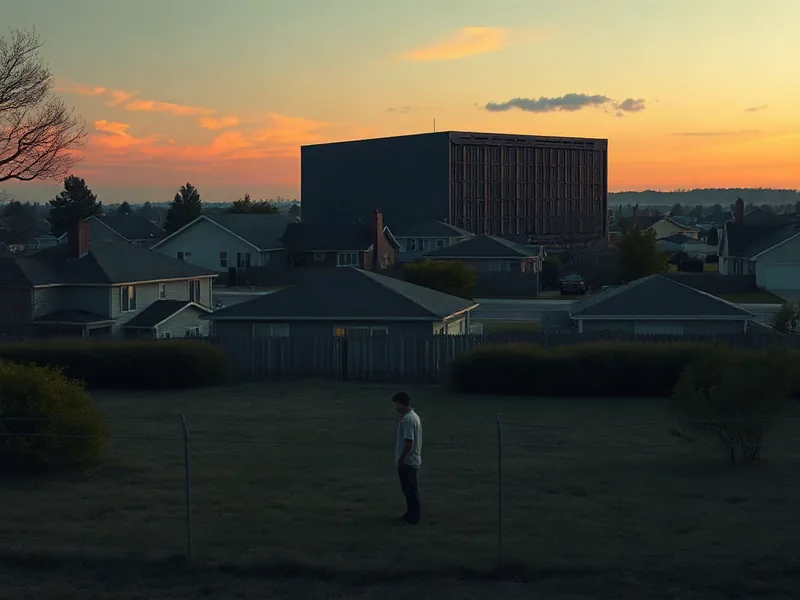
This isn't just an inconvenience. It's a structural imbalance. Developers arrive with teams of lawyers, engineers, and consultants who understand exactly how to navigate local permitting rules. Residents, meanwhile, are often working from a position of near-total information deficit, trying to piece together what a project will mean for their water supply, their electric bills, and their property values with little more than rumor and speculation to go on.
Some Texas communities have pushed back once they learned about proposed projects, raising concerns about water usage in drought-prone regions or asking utilities to explain how new electricity demand will be met without driving up costs for existing customers. But those fights tend to start late in the process, after key decisions have already been made. Advocates for stronger public notification rules argue that residents deserve the chance to weigh in before a project is approved, not after the concrete is poured.
The stakes extend beyond any single neighborhood. Texas's electric grid, operated independently from the rest of the country, has faced periodic strain during extreme weather events in recent years. Adding large new sources of electricity demand without adequate planning or public input raises questions about grid reliability for everyone, not just the people living closest to a new facility. Water is an even more immediate concern in a state where extended droughts have become increasingly common and where many rural water systems already operate with thin margins.
None of this means data centers are inherently bad for Texas. They bring jobs, tax revenue, and investment, and they're the backbone of technologies that many people rely on daily. The tension isn't over whether these facilities should exist. It's over whether the people who live closest to them get a fair chance to understand what's coming and to have a voice in how it's built.
The absence of a formal notification system for data centers in Texas reflects a broader pattern seen across the country as new industrial technologies outpace the regulatory frameworks meant to manage them. Communities are often left to react to development rather than help shape it, a dynamic that can erode public trust and deepen resentment even toward projects that might otherwise bring economic benefits.
For residents, the fix isn't complicated in principle: clear notice, meaningful public hearings, and a real opportunity to ask questions before approvals are finalized. Whether Texas lawmakers or local governments choose to close that gap will shape not just how data centers get built, but how much say ordinary people have over the infrastructure quietly reshaping their communities.
Tags
Original Sources
Republish This Story - Inside Climate News
↗ https://insideclimatenews.org/republish?article=texas-no-mailing-list-for-data-centers
About the author
Amara's entry point into AI was an epidemiology role at a London research hospital, where she spent five years studying how digital health tools reached — or conspicuously failed to reach — underserved communities. Watching early algorithmic systems in healthcare quietly entrench existing inequalities, she redirected her career toward the systemic consequences of AI at scale. She covers AI through an unflinching lens: who benefits, who bears the cost, and what evidence actually says versus what the press release claims. Her writing is calm and precise, but she doesn't mistake balance for neutrality.
More from The Steward →This Week's Edition
8 September 2026
23 articles
Related Articles
Related Articles
More Stories
© 2026 Cedar & Bloom. All rights reserved.