The Drum · Weekly AI news, freeSubscribe →

Share
The Arc Virtual Cell Challenge uses AI to simulate cellular reactions, potentially revolutionizing drug discovery by reducing the need for time-consuming laboratory experiments and cutting costs.
In the world of drug development, every small step forward can mean years of work in a laboratory. But what if we could accelerate this process by simulating how cells respond to changes at a molecular level? This is precisely the goal of the Arc Virtual Cell Challenge, a groundbreaking initiative that aims to harness the power of artificial intelligence (AI) to predict cellular responses without ever touching a petri dish.
Drug development is an arduous and expensive process. Traditional methods involve extensive lab work to test how cells react when specific genes are altered or silenced. This can take years and cost millions of dollars. By creating a virtual model that accurately simulates these changes, researchers could test thousands of potential drug candidates quickly and efficiently. This not only speeds up the discovery process but also reduces costs and minimizes errors.
The Arc Virtual Cell Challenge, organized by the Arc Institute, tasks participants with developing an AI model capable of predicting how a cell will respond when a specific gene is silenced using CRISPR technology. This process, known as "context generalization," involves training the model to make accurate predictions for cell types that it has not seen before.
To understand the challenge, let's break down some key concepts:
The challenge provides a rich dataset of approximately 300,000 single-cell RNA sequencing profiles. Each profile represents a cell's transcriptome, which is essentially a list of all the RNA molecules (or transcripts) present in the cell. This data is organized into a sparse matrix, where each row corresponds to a cell and each column to a gene.
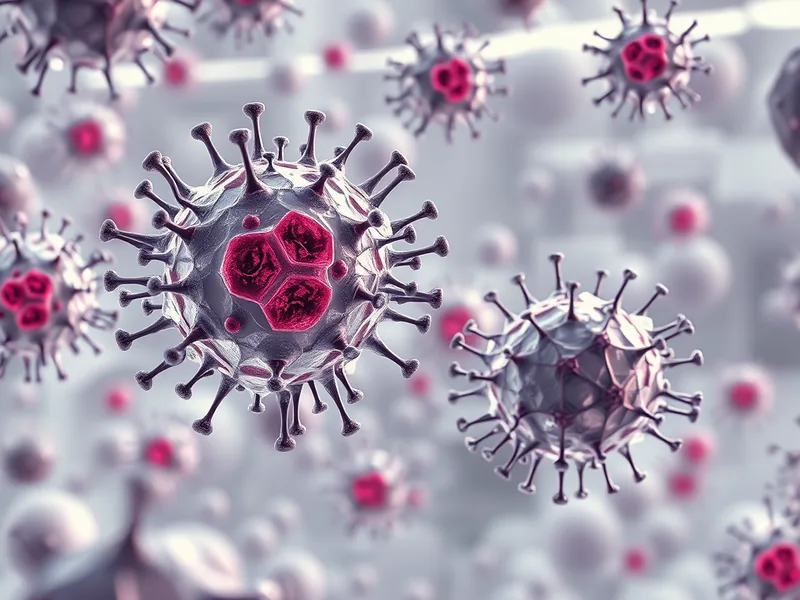
To build an effective model, participants need to understand the basics of gene expression and cellular biology. Here’s a simplified analogy:
Imagine a city (the cell) with various buildings (genes). Each building produces different goods (RNA molecules). By observing which goods are produced in normal conditions (unperturbed cells), you can predict how the city will function if certain buildings stop producing their goods (gene silencing).
The model, likely a neural network, will be trained on this dataset to learn these patterns. The goal is to create a system that can accurately predict the changes in gene expression when any given gene is silenced.
For AI engineers and data scientists, this challenge offers a unique opportunity to apply their skills to a real-world problem with significant societal impact. No prior knowledge of biology is required, as the challenge provides all the necessary context and resources. By participating, you can contribute to advancements in drug discovery that could lead to new treatments for various diseases.
The Arc Virtual Cell Challenge represents a promising intersection of AI and biological research. By developing models that can accurately simulate cellular responses, we can revolutionize how drugs are developed, making the process faster, cheaper, and more efficient. If you're an engineer or data scientist looking for a meaningful project, this challenge is a perfect fit.
Tags
Original Sources
About the author
Amara's entry point into AI was an epidemiology role at a London research hospital, where she spent five years studying how digital health tools reached — or conspicuously failed to reach — underserved communities. Watching early algorithmic systems in healthcare quietly entrench existing inequalities, she redirected her career toward the systemic consequences of AI at scale. She covers AI through an unflinching lens: who benefits, who bears the cost, and what evidence actually says versus what the press release claims. Her writing is calm and precise, but she doesn't mistake balance for neutrality.
More from The Steward →This Week's Edition
21 July 2025
29 articles
Related Articles
Related Articles
More Stories
© 2026 Cedar & Bloom. All rights reserved.