The Drum · Weekly AI news, freeSubscribe →

Share
In a world increasingly driven by technology, it’s hard to overstate the impact of the microprocessor. But how did this tiny chip become the heart of modern computing? Let’s dive into the story of its inventor, Ted Hoff.
In 1968, the semiconductor industry was on the cusp of a revolution that would change the world forever. The invention of the microprocessor by Ted Hoff and his team at Intel marked the beginning of an era where computing power could be miniaturized and integrated into countless devices. This innovation not only transformed computers but also laid the groundwork for advancements in fields ranging from consumer electronics to space exploration.
Ted Hoff, a young electrical engineer with a Ph.D. From Stanford University, joined Intel in 1968 as one of its first employees. At the time, Intel was primarily focused on developing memory chips, which were essential components for storing data in computers. However, a project with the Japanese company Busicom presented an opportunity that would redefine the future of computing.
Busicom had approached Intel to design a set of custom chips for their new line of calculators. The initial plan involved creating multiple specialized chips to handle different functions, which would have been complex and expensive. Hoff saw this as a chance to develop something more versatile and efficient. He proposed designing a single chip that could be programmed to perform various tasks, effectively acting as the brain of the calculator.
This idea was revolutionary because it challenged the prevailing approach in the industry, which relied on hardwired logic circuits for specific functions. Hoff’s concept of a programmable microprocessor would allow a single chip to handle multiple operations by following instructions stored in memory. This flexibility and scalability were key advantages that would soon become apparent.
In 1971, after several years of development and collaboration with Federico Faggin and Masatoshi Shima, Intel released the first commercial microprocessor, the Intel 4004. This tiny chip contained 2,300 transistors and could perform about 60,000 operations per second. While this may seem modest by today’s standards, it was a significant leap forward at the time.
The 4004 opened up new possibilities for computing. It allowed manufacturers to create smaller, more affordable devices that could perform complex calculations. This innovation quickly found applications beyond calculators, including industrial controls, traffic light systems, and early personal computers. The microprocessor became the cornerstone of the digital revolution, enabling the development of smartphones, tablets, and other smart devices we rely on today.
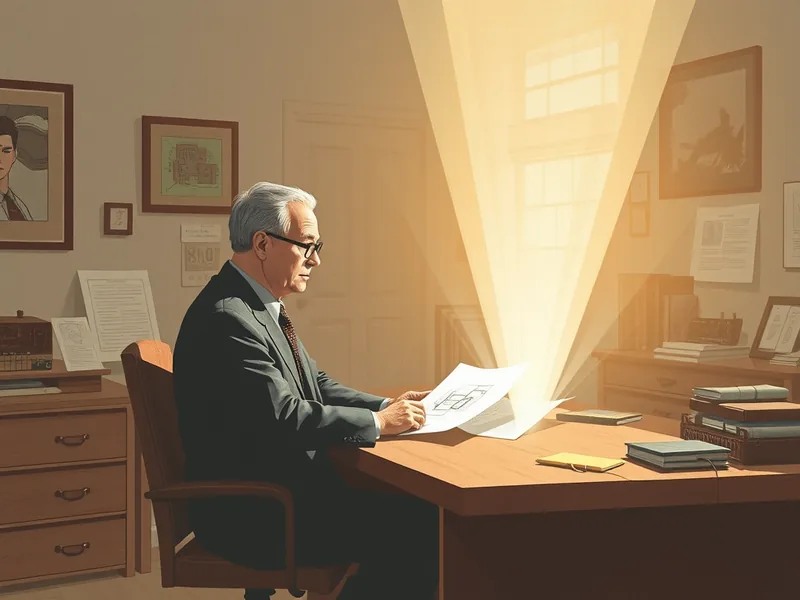
The success of the 4004 led to further advancements in microprocessor technology. Intel continued to improve its designs, introducing more powerful chips like the 8008 and 8086, which laid the foundation for modern personal computers. Other companies also entered the market, driving competition and innovation that accelerated the pace of technological progress.
While the microprocessor has brought about countless benefits, it’s important to acknowledge the human and environmental costs associated with its production and use. The manufacturing process for semiconductors is resource-intensive and can have significant environmental impacts. Extracting raw materials like silicon and rare earth elements often involves destructive mining practices that can lead to soil erosion, water pollution, and habitat destruction.
The rapid obsolescence of electronic devices contributes to a growing e-waste problem. Many of these discarded devices end up in landfills or are improperly disposed of in developing countries, where they pose health risks to local communities due to toxic chemicals like lead and mercury.
As we continue to innovate and push the boundaries of technology, it’s crucial to address these challenges. Sustainable practices in semiconductor manufacturing, such as using recycled materials and reducing energy consumption, can help mitigate environmental impacts. Improving e-waste management and promoting the repair and reuse of electronic devices can reduce the human cost associated with our reliance on microprocessors.
The story of Ted Hoff and the invention of the microprocessor is a testament to the power of innovation and its potential to transform society. As we look to the future, it’s essential that we continue to innovate responsibly, ensuring that the benefits of technology are balanced with the well-being of people and the planet.
Tags
Original Sources
How Ted Hoff Invented the First Microprocessor
↗ https://spectrum.ieee.org/ted-hoff/particle-3
About the author
Amara's entry point into AI was an epidemiology role at a London research hospital, where she spent five years studying how digital health tools reached — or conspicuously failed to reach — underserved communities. Watching early algorithmic systems in healthcare quietly entrench existing inequalities, she redirected her career toward the systemic consequences of AI at scale. She covers AI through an unflinching lens: who benefits, who bears the cost, and what evidence actually says versus what the press release claims. Her writing is calm and precise, but she doesn't mistake balance for neutrality.
More from The Steward →This Week's Edition
3 June 2026
29 articles
Related Articles

Iambic Therapeutics Raises $150 Million in IPO to Fund AI-Designed Cancer Drugs
Finance & Markets · 5 min

Biotech's Summer Glow Fades as XBI Slips 11% From August Highs
Finance & Markets · 5 min
States Race to Write the Rules for AI Sandboxes in Health Care, and Lobbyists Are Racing Right Alongside Them
Policy & Regulation · 5 min
Related Articles
Iambic Therapeutics Raises $150 Million in IPO to Fund AI-Designed Cancer Drugs
Finance & Markets · 5 min
Biotech's Summer Glow Fades as XBI Slips 11% From August Highs
Finance & Markets · 5 min
States Race to Write the Rules for AI Sandboxes in Health Care, and Lobbyists Are Racing Right Alongside Them
Policy & Regulation · 5 min
More Stories
© 2026 Cedar & Bloom. All rights reserved.
