The Drum · Weekly AI news, freeSubscribe →

Share
As industries increasingly rely on weather forecasts for critical decisions, the risk of data manipulation looms large, with potential consequences that could ripple through economies and communities.
Every morning, airline dispatchers, grid operators, and farmers around the world make decisions based on a single piece of information: the weather forecast. For most people, these predictions are a quick glance at their phone or TV, but for many industries, they are the foundation of major strategic choices that affect livelihoods and safety.
Farmers use weather forecasts to decide which crops to plant, when to fertilize, and how much to invest in irrigation. Utilities rely on them to determine where to build solar and wind farms and how to price wholesale electricity. Emergency managers use predictions to warn people about extreme weather events and coordinate response efforts. More recently, these forecasts have even become a key element in prediction markets, where people bet on real-world events, including the weather.
However, as the importance of weather data grows, so does the risk of sabotage. The temptation to manipulate this data for financial gain, combined with the increasing reliance on AI-driven forecasting models, is putting the accuracy and integrity of weather predictions at risk. While these risks are currently manageable, experts warn that they could escalate into significant systemic problems.
To develop accurate weather predictions, we need reliable observations of current conditions. These data points come from various sources, including weather stations at airports, utilities, and transport services. Traditional operational systems like the Weather Research and Forecasting (WRF) model and the European Centre for Medium-Range Weather Forecast (ECMWF) Integrated Forecasting System use these observations along with numerical approximations to estimate future weather patterns.
Sometimes, issues arise due to instrument failures or upgrades, which can temporarily affect data quality. However, a more pressing concern is the potential for intentional manipulation. Cybersecurity experts have identified vulnerabilities in the systems that collect and transmit weather data, making them susceptible to hacking and sabotage.
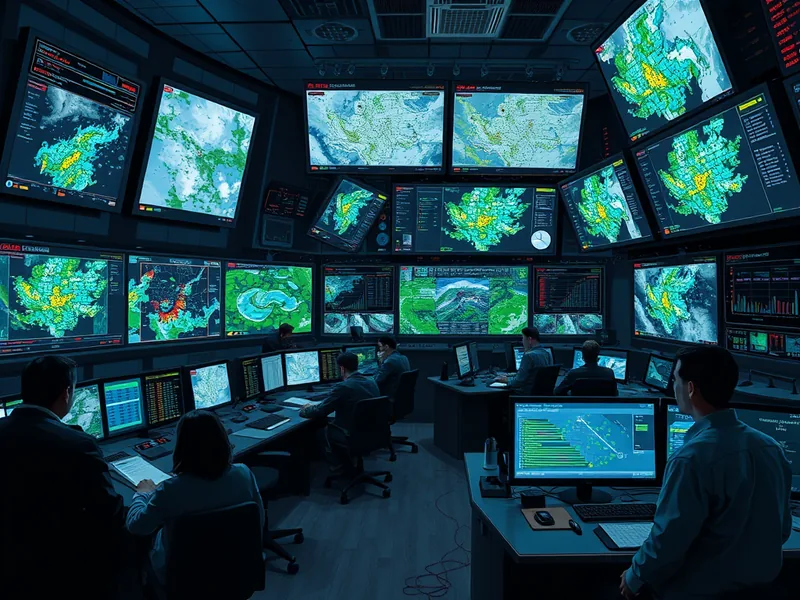
For instance, if a hacker could alter temperature readings at key weather stations, it could lead to inaccurate predictions that might cause airlines to cancel flights unnecessarily, utilities to misallocate resources, or farmers to make costly mistakes. In prediction markets, such manipulation could result in significant financial losses for those who rely on the integrity of these forecasts.
The implications of weather data sabotage extend far beyond individual industries. Accurate and reliable weather predictions are crucial for climate resilience, particularly as the world faces more frequent and severe weather events due to climate change. Emergency response teams need trustworthy data to prepare for and respond to disasters effectively. If this data is compromised, it could lead to delayed or inadequate responses, putting lives at risk.
The economic impact of unreliable weather forecasts can be substantial. According to a study published in the Agricultural and Forest Meteorology journal, farmers who rely on inaccurate weather predictions may suffer significant financial losses due to crop failures or over-investment in unnecessary resources. Similarly, utilities that misallocate energy resources based on faulty data could face higher operational costs and potential blackouts.
In prediction markets, where the stakes are often high, the consequences of manipulated data can be even more severe. Participants who bet on weather outcomes based on tampered predictions may lose large sums of money, leading to financial instability for individuals and potentially destabilizing entire markets.
The growing threat of weather data sabotage underscores the need for robust cybersecurity measures and transparent data integrity protocols. As industries continue to integrate AI-driven forecasting models, it is essential to prioritize the security and reliability of the data that feeds these systems. Only by addressing these vulnerabilities can we ensure that weather predictions remain a trusted tool for decision-making and climate resilience.
Tags
Original Sources
The risk of weather data sabotage is rising
↗ https://www.technologyreview.com/2026/07/17/1140622/weather-data-sabotage
About the author
Amara's entry point into AI was an epidemiology role at a London research hospital, where she spent five years studying how digital health tools reached — or conspicuously failed to reach — underserved communities. Watching early algorithmic systems in healthcare quietly entrench existing inequalities, she redirected her career toward the systemic consequences of AI at scale. She covers AI through an unflinching lens: who benefits, who bears the cost, and what evidence actually says versus what the press release claims. Her writing is calm and precise, but she doesn't mistake balance for neutrality.
More from The Steward →This Week's Edition
27 July 2026
23 articles
Related Articles
Related Articles
More Stories
© 2026 Cedar & Bloom. All rights reserved.