The Drum · Weekly AI news, freeSubscribe →

Share
As companies increasingly integrate AI into team structures, a new study reveals that treating these tools as human colleagues can lead to significant errors and unrealistic expectations.
Imagine walking into your office one morning and being introduced to Alex, your new “coworker.” But Alex isn’t a person; it’s an artificial intelligence (AI) tool. Your company has given it a name, a title, and even defined responsibilities. It might sound like a futuristic dream, but this scenario is becoming more common-and it could be detrimental to both you and the organization.
Emma Wiles, a business professor at Boston University, recently conducted a study that sheds light on the potential pitfalls of treating AI agents as human coworkers. Her research found that when people believe they are working with an “AI employee” rather than a software tool, their performance suffers. Specifically, managers caught 18% fewer errors in tasks attributed to these so-called AI employees compared to those assigned to chatbots.
This finding is particularly alarming given the rapid pace of technological advancement and the growing trend of framing AI as digital colleagues. Last year, Jensen Huang, CEO of Nvidia, spoke about workplaces populated by “digital humans.” Since April, major tech companies like Microsoft, OpenAI, Anthropic, and Google have all released new tools designed to manage teams of AI agents, often marketed as having the cognitive flexibility and capabilities of real human employees.
The implications of this shift are significant. Nearly a third of the 1,261 managers surveyed in Wiles’s study reported that their companies already refer to AI agents as employees, with some even listing them on organizational charts. This framing can set unrealistic expectations and lead to a decrease in human performance.
As an IT tutor once advised, it’s crucial to shift our mindset: AI lacks the accountability and agency of human colleagues. Treating these tools as sophisticated software rather than teammates can help maintain realistic expectations and improve overall team effectiveness. When managers view AI agents as tools, they are more likely to recognize their limitations and use them appropriately.
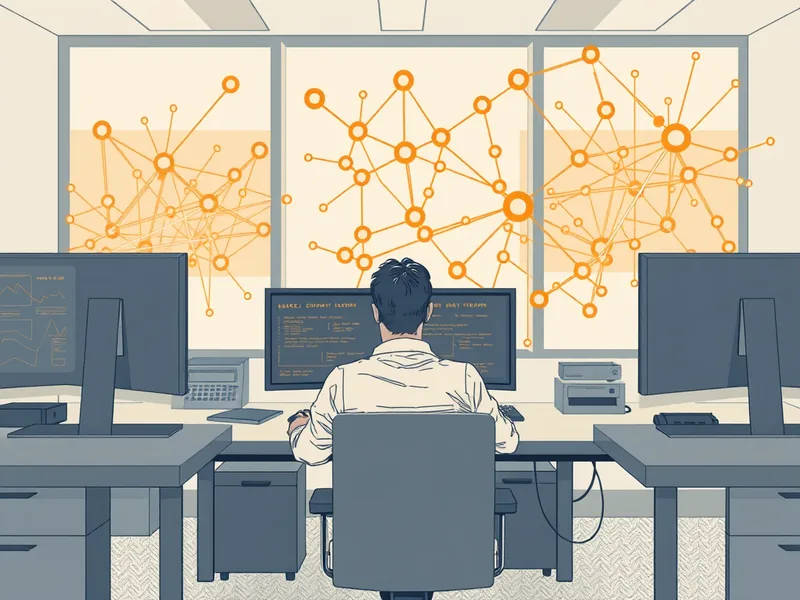
The technical progress in agentic AI is undeniable. These agents, which work in a loop until they achieve a goal, have become measurably better at handling complex tasks. However, the leap from sophisticated tool to digital coworker is a significant one. It’s essential to understand that while AI can augment human capabilities, it cannot replace the nuanced judgment and ethical decision-making of real people.
The consequences of treating AI as a coworker extend beyond individual performance. They can impact team dynamics, organizational culture, and even ethical standards. When managers and employees believe they are working alongside digital humans, they may rely too heavily on these tools, leading to a decrease in critical thinking and problem-solving skills.
Framing AI as an employee can blur the lines between human and machine responsibilities. This can lead to accountability issues when errors occur. If something goes wrong, who is held responsible-the AI tool or the human overseeing it? Clear guidelines and realistic expectations are necessary to ensure that both humans and AI work effectively together.
As we continue to integrate AI into our workplaces, it’s crucial to approach these tools with a balanced perspective. While they can enhance productivity and efficiency, they should be treated as what they are: powerful software designed to support human efforts, not replace them. By doing so, we can foster a more collaborative and effective work environment for everyone involved.
Tags
Original Sources
AI agents are not your “coworkers”
↗ https://www.technologyreview.com/2026/06/29/1139849/ai-agents-are-not-your-coworkers
About the author
Amara's entry point into AI was an epidemiology role at a London research hospital, where she spent five years studying how digital health tools reached — or conspicuously failed to reach — underserved communities. Watching early algorithmic systems in healthcare quietly entrench existing inequalities, she redirected her career toward the systemic consequences of AI at scale. She covers AI through an unflinching lens: who benefits, who bears the cost, and what evidence actually says versus what the press release claims. Her writing is calm and precise, but she doesn't mistake balance for neutrality.
More from The Steward →This Week's Edition
6 July 2026
28 articles
Related Articles

When AI Helps Students Practice But Hurts Them on Test Day
Job Market & Society · 5 min

County Officials Get a Crash Course in AI, But Questions Remain About Who Gets Left Behind
Job Market & Society · 5 min

The All of Us Data Gap Isn't About Trust. It's About Turning Records Into Usable Data
Job Market & Society · 6 min
Related Articles
When AI Helps Students Practice But Hurts Them on Test Day
Job Market & Society · 5 min
County Officials Get a Crash Course in AI, But Questions Remain About Who Gets Left Behind
Job Market & Society · 5 min
The All of Us Data Gap Isn't About Trust. It's About Turning Records Into Usable Data
Job Market & Society · 6 min
More Stories
© 2026 Cedar & Bloom. All rights reserved.
