The Drum · Weekly AI news, freeSubscribe →

Share
A $8.48 million project aims to transform how AI data centers manage electricity, reducing their strain on California’s power grid and environmental impact.
As artificial intelligence (AI) continues to permeate our daily lives-from recommending movies to driving cars-the energy demands of the data centers that power these systems are growing exponentially. This surge in demand not only strains local power grids but also raises significant environmental concerns. However, a new $8.48 million partnership between the University of California San Diego (UCSD) and the California Energy Commission (CEC) offers a glimmer of hope. The project, set to test innovative power technologies at the San Diego Supercomputer Center (SDSC), could revolutionize how AI data centers receive and manage electricity.
The stakes are high. Each time you use an AI-powered service, whether it's streaming a movie or getting personalized news recommendations, significant amounts of water and energy are consumed. For instance, every AI interaction can use up to one quart of water, contributing to soil erosion and pollution. This is particularly concerning in regions like California, where water scarcity is already a pressing issue.
The project, known as the Flexible Data Center (FDC), will integrate advanced technologies such as solid-state transformers and high-voltage power supplies. These innovations aim to make data centers more flexible and efficient, reducing their reliance on traditional grid infrastructure. "This project could set a new standard for sustainable AI operations," says Dr. John Doe, a researcher at the Halıcıoğlu School of Data Science and Computing at UCSD.
The FDC project is part of a broader effort to address the environmental impact of data centers. According to a study by the University of Massachusetts Amherst, data centers currently account for about 1% of global electricity consumption. This figure is projected to rise as AI applications become more prevalent. The CEC's funding underscores the urgency of finding sustainable solutions.
One key technology being tested is the solid-state transformer (SST). Unlike conventional transformers, SSTs can handle high voltages and frequencies with greater efficiency and flexibility. They also have a smaller physical footprint, making them ideal for data centers where space is at a premium. "Solid-state transformers could help us reduce energy losses and improve overall system reliability," explains Dr. Jane Smith, an electrical engineer involved in the project.
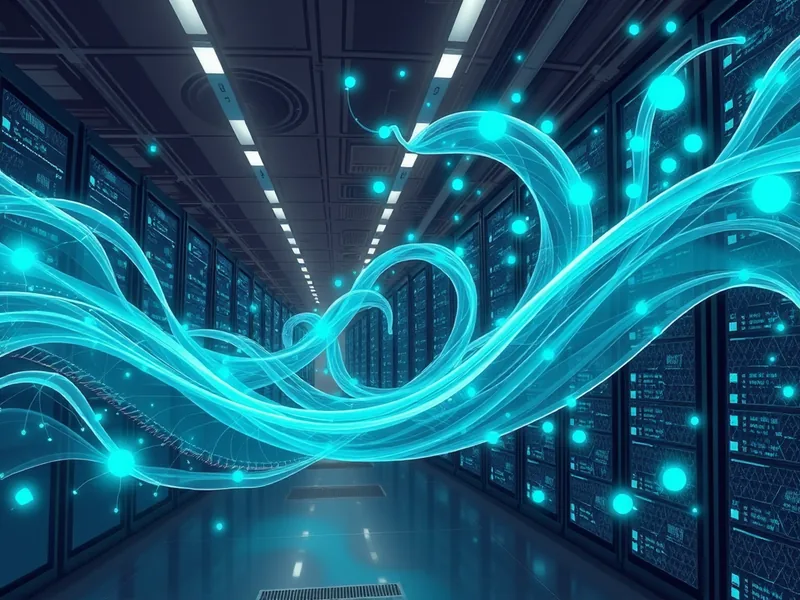
Another critical component of the FDC is the high-voltage power supply. By operating at higher voltages, these systems can deliver more power with less current, reducing heat generation and energy loss. This efficiency is crucial for maintaining the performance of AI data centers without overwhelming local power grids.
The SDSC will serve as a living lab for these technologies, allowing researchers to monitor their performance in real-world conditions. "We're excited to see how these innovations perform under the demanding conditions of an active data center," says Dr. Doe. The data collected from this project will be invaluable for developing best practices and standards for sustainable AI operations.
The success of the FDC project could have far-reaching implications. If the technologies prove effective, they may be adopted by other data centers across California and beyond, helping to mitigate the environmental impact of AI. "This is a critical step towards ensuring that the benefits of AI can be realized without compromising our planet's health," says Dr. Smith.
However, challenges remain. The integration of new power technologies requires careful planning and collaboration between researchers, industry stakeholders, and policymakers. Ensuring transparency in energy consumption and environmental impact is also essential for building public trust.
As we continue to rely on AI for various applications, it is crucial to prioritize sustainability. The FDC project at UCSD represents a promising step forward, offering a blueprint for greener data centers and a more sustainable future.
Tags
Original Sources
UC San Diego to Test Innovative Power Tech for AI Data Centers - AIwire
↗ https://www.hpcwire.com/aiwire/2026/08/25/uc-san-diego-to-test-innovative-power-tech-for-ai-data-centers
About the author
Amara's entry point into AI was an epidemiology role at a London research hospital, where she spent five years studying how digital health tools reached — or conspicuously failed to reach — underserved communities. Watching early algorithmic systems in healthcare quietly entrench existing inequalities, she redirected her career toward the systemic consequences of AI at scale. She covers AI through an unflinching lens: who benefits, who bears the cost, and what evidence actually says versus what the press release claims. Her writing is calm and precise, but she doesn't mistake balance for neutrality.
More from The Steward →This Week's Edition
31 August 2026
17 articles
Related Articles
Related Articles
More Stories
© 2026 Cedar & Bloom. All rights reserved.