The Drum · Weekly AI news, freeSubscribe →

Share
Healthcare waiting rooms offer a unique opportunity to engage patients deeply with relevant ads, yet digital out-of-home screens in clinics remain underutilized by advertisers.
Imagine this scenario: You’re at a cardiology follow-up appointment, sitting in the waiting room. For the next 20 minutes, you are fully present, focused on your health, and thinking about the upcoming conversation with your doctor. There’s no second screen to distract you, no way to skip the content playing on the digital displays around you. This is a captive audience at its best.
Now, consider this: Despite the obvious value of such an engaged and health-focused audience, these clinical Digital Out-of-Home (DOOH) displays are often undervalued. They’re being paid for at roughly the same Cost per Mille (CPM) as other advertising channels that can’t even guarantee a human is in the room. This discrepancy isn’t just a minor pricing inefficiency; it’s a significant oversight that could change the entire landscape of healthcare advertising.
What makes clinical DOOH so unique? It offers something no other channel can: a guaranteed, attentive audience in a specific context. When a patient checks in for an appointment, they are likely to spend time in a waiting room where digital displays are prominent. For those 20-plus minutes, the patient is not just present; they are actively thinking about their health and the upcoming clinical conversation that could influence their treatment.
This environment stands in stark contrast to other advertising channels. According to industry data, nearly 29% of television commercials air to empty rooms, and close to 40% of digital budgets miss their intended audience entirely. These figures are not anomalies; they are widely accepted as the cost of doing business in advertising.
Point-of-care advertising, on the other hand, operates under different conditions. Patients are not just present; they are engaged and receptive to information that is directly relevant to their health concerns. This makes clinical DOOH an incredibly powerful tool for pharmaceutical brands and healthcare providers looking to reach their target audience effectively.
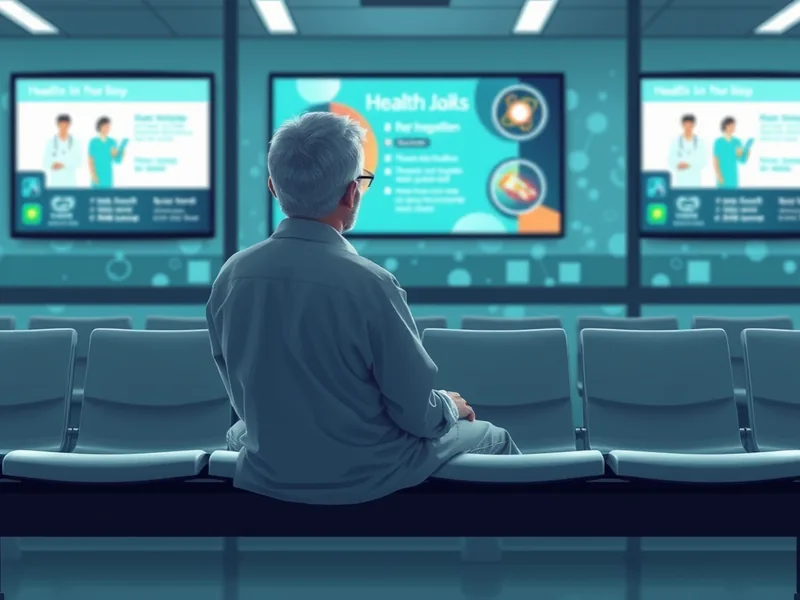
The gap between the value of clinical DOOH and its current pricing is closing, and when it does, the entire category will be reevaluated. As the infrastructure to measure and prove this value improves, we can expect a significant shift in how these displays are valued and utilized.
For healthcare providers, this means more effective ways to communicate important health information directly to patients at critical moments. For pharmaceutical companies, it offers a more reliable and efficient method of reaching their target audience with relevant messages. And for patients, it could mean better access to the information they need to make informed decisions about their health.
The potential is vast, but realizing it will require collaboration between screen owners, advertisers, and healthcare providers. By working together to develop robust metrics and standards, we can unlock the full potential of clinical DOOH and create a more effective, patient-centered advertising ecosystem.
In a world where every dollar counts, especially in healthcare, leveraging the unique value of clinical DOOH could be a game-changer. It’s not just about reaching an audience; it’s about making a meaningful impact on health outcomes.
Tags
Original Sources
Why Clinical Digital Out-of-Home Displays Are Healthcare's Most Untapped Advertising Opportunity - MedCity News
↗ https://medcitynews.com/2026/05/why-clinical-digital-out-of-home-displays-are-healthcares-most-untapped-advertising-opportunity
About the author
Amara's entry point into AI was an epidemiology role at a London research hospital, where she spent five years studying how digital health tools reached — or conspicuously failed to reach — underserved communities. Watching early algorithmic systems in healthcare quietly entrench existing inequalities, she redirected her career toward the systemic consequences of AI at scale. She covers AI through an unflinching lens: who benefits, who bears the cost, and what evidence actually says versus what the press release claims. Her writing is calm and precise, but she doesn't mistake balance for neutrality.
More from The Steward →This Week's Edition
7 May 2026
29 articles
Related Articles
Related Articles
More Stories
© 2026 Cedar & Bloom. All rights reserved.