The Drum · Weekly AI news, freeSubscribe →

Share
Behind the sparks and shattered chassis, BattleBots competitors are running a masterclass in damage management and rapid iteration, discipline that translates directly to how real-world autonomous systems get built and hardened.
The BattleBots arena is a brutal proving ground. Robots are hit with hammers, flipped by pneumatic launchers, and shredded by spinning blades, often within the first 30 seconds of a match. What separates a team that survives a season from one that gets eliminated in the first round isn't raw weapon power. It's how well the machine tolerates damage and how fast the team can repair it between fights.
This is the core thesis worth extracting from BattleBots for anyone tracking robotics and autonomous systems more broadly: competitive success is rarely about peak performance under ideal conditions. It's about degraded performance under adversarial ones. That's a lesson with direct application well beyond a televised combat sport.
Why it matters
BattleBots teams operate under constraints that mirror, in compressed form, the engineering tradeoffs facing companies building autonomous vehicles, industrial robots, and field-deployed hardware. Matches last three minutes. Teams typically get only a short window, often measured in minutes, to make repairs between bouts. There is no luxury of redesigning a system from scratch mid-tournament. Whatever architecture a team brings into the arena has to be resilient enough to survive repeated, unpredictable structural assault and repairable enough to fight again quickly.
That combination of resilience and rapid serviceability is precisely what separates prototype robotics from deployable robotics in commercial and industrial settings. A warehouse robot or an autonomous delivery vehicle doesn't face hammers and spinning blades, but it does face potholes, weather, component fatigue, and unpredictable collisions. Systems that are optimized purely for peak-condition performance tend to fail expensively and unpredictably once they leave the lab. Systems designed around graceful degradation, modularity, and fast field repair tend to survive contact with the real world.
The most successful BattleBots teams treat damage as an expected input, not an exception. That shapes decisions at every level of the build: which components are load-bearing versus sacrificial, how quickly a damaged part can be swapped without full disassembly, and how much redundancy is built into critical subsystems like drive motors and control electronics.
This is not a new idea in engineering, but BattleBots makes it visible in a way most industries don't. In aerospace and automotive design, damage tolerance is baked in through redundant systems and fail-safes, but the consequences of failure play out slowly, over years of fleet operation. In the BattleBots arena, the feedback loop is immediate. A design flaw that would take months to surface in a commercial fleet gets exposed in three minutes, in front of a live audience.
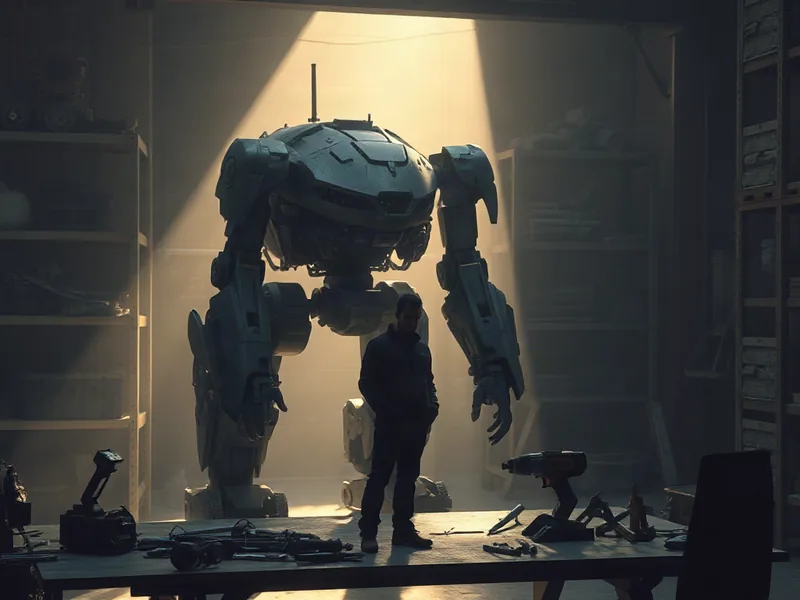
That compressed feedback loop is arguably the most transferable insight here. Autonomous systems companies spend enormous resources on simulation and lab testing precisely because they can't get real-world failure data quickly enough otherwise. Competitive robotics, whether it's BattleBots or DARPA-style challenges, offers a rare environment where systems are pushed to genuine failure repeatedly, and where teams are forced to iterate on damage response in near real time. The strategic value isn't the entertainment. It's the accelerated failure data.
There's also a resource allocation lesson embedded in how teams prepare. Building a single knockout weapon is the flashy part of BattleBots design, and it gets the highlight reels. But teams that consistently perform well tend to allocate a disproportionate share of engineering time to chassis integrity, weight distribution, and modular repair architecture rather than weapon output alone. Offense wins matches. Durability and repairability win seasons.
That distinction maps closely onto how mature technology companies think about product reliability versus feature velocity. A flashy capability that fails under real-world stress conditions generates short-term attention and long-term reputational cost. A less glamorous but more robust system compounds in value over repeated deployment cycles. The teams that understand this in BattleBots are, functionally, running the same tradeoff analysis that a hardware startup runs when deciding whether to ship a feature-rich but brittle product or a more conservative, field-tested one.
The operational constraints are the numbers that matter here: matches run three minutes, repair windows between bouts are similarly compressed, and a single mistimed hit can end a robot's run in seconds rather than minutes. Those tight timeframes force the same prioritization decisions that field engineers make when a fleet vehicle or industrial robot needs rapid diagnosis and repair rather than a full teardown.
None of this is presented as investable in the traditional sense. BattleBots is entertainment, not a commercial robotics platform, and no ticker symbol attaches to it. But the underlying engineering discipline, designing for degraded performance, prioritizing modularity over peak output, and compressing the feedback loop between failure and iteration, is exactly the kind of capability that separates durable robotics and autonomous systems companies from ones that look impressive in a controlled demo and struggle once deployed at scale.
Investors and operators evaluating robotics and autonomous systems companies would do well to ask the BattleBots question of any hardware roadmap: what happens when this system takes damage it wasn't specifically designed to survive, and how quickly can it get back into service. Companies that can answer that clearly, with data rather than assurances, are the ones more likely to translate lab performance into field reliability. That's not a flashy metric. It rarely shows up in a product launch deck. But it's the difference between a system that performs once and one that performs repeatedly, which is ultimately the only performance that matters in commercial deployment.
Tags
Original Sources
Strategy Session
↗ https://spectrum.ieee.org/battlebot-carnage/strategy-session
About the author
Marcus began tracking AI's market implications in 2016, noticing AI-related patent filings accelerating ahead of earnings upgrades before most of the sell-side had caught on. A former fixed-income quantitative analyst, he spent two decades building models that priced risk across emerging markets before pivoting to cover the economic impact of AI full-time. His writing translates opaque technical developments into clear risk/reward terms — and he's rarely diplomatic about the gap between AI valuations and underlying fundamentals. He believes most market participants still underestimate AI's long-run deflationary effect on knowledge work.
More from The Analyst →This Week's Edition
30 September 2026
28 articles
Related Articles

Payerset Bets on AI Research Assistant to Make Price Transparency Data Usable
Products & Applications · 6 min

Prime Therapeutics Links Medical and Pharmacy Benefits to Tame Specialty Drug Costs
Products & Applications · 5 min

Neighbours Goes Vertical: RoseBerry's Microdrama Bet Tests Whether Legacy TV Fits a Cheap New Format
Products & Applications · 5 min
Related Articles
Payerset Bets on AI Research Assistant to Make Price Transparency Data Usable
Products & Applications · 6 min
Prime Therapeutics Links Medical and Pharmacy Benefits to Tame Specialty Drug Costs
Products & Applications · 5 min
Neighbours Goes Vertical: RoseBerry's Microdrama Bet Tests Whether Legacy TV Fits a Cheap New Format
Products & Applications · 5 min
More Stories
© 2026 Cedar & Bloom. All rights reserved.
