The Drum · Weekly AI news, freeSubscribe →
Share
A robotic dentist using AI has conducted its first human procedure, blending sci-fi with reality to offer faster and more accurate dental care, potentially transforming how we view medical robotics in healthcare.
In a groundbreaking moment for dental healthcare, an AI-controlled autonomous robot has successfully performed its first procedure on a human patient. The historic event marks a significant step forward in the integration of robotics and artificial intelligence (AI) into medical practices, promising faster, more precise treatments that could revolutionize the field.
For many, the idea of a robot dentist might evoke images from science fiction or even nightmares. However, this world-first procedure was not just about pushing technological boundaries; it was also about addressing real human needs. Dental care can be expensive and access to skilled dentists is limited in many parts of the world. The potential for robotic dentistry to make treatments more accessible and efficient could have far-reaching benefits.
The robot dentist, developed by a team of researchers, completed an entire dental procedure on a human patient, working about eight times faster than a human dentist. This speed is not just a matter of convenience; it can also reduce the time patients spend in discomfort and lower the risk of complications that might arise from prolonged procedures.
To understand how this works, think of the robot as a highly skilled assistant that has been trained to perform specific tasks with incredible precision. The AI system uses advanced sensors and imaging technology to navigate the intricate environment inside a patient's mouth. It can make adjustments in real-time based on the patient's movements, ensuring a safe and accurate procedure.
One of the most striking aspects of this robot is its compact design. Unlike a human dentist who might need to maneuver large instruments around a patient's mouth, the robotic system requires far less space. This not only makes the procedure more comfortable for the patient but also reduces the risk of accidental injuries.
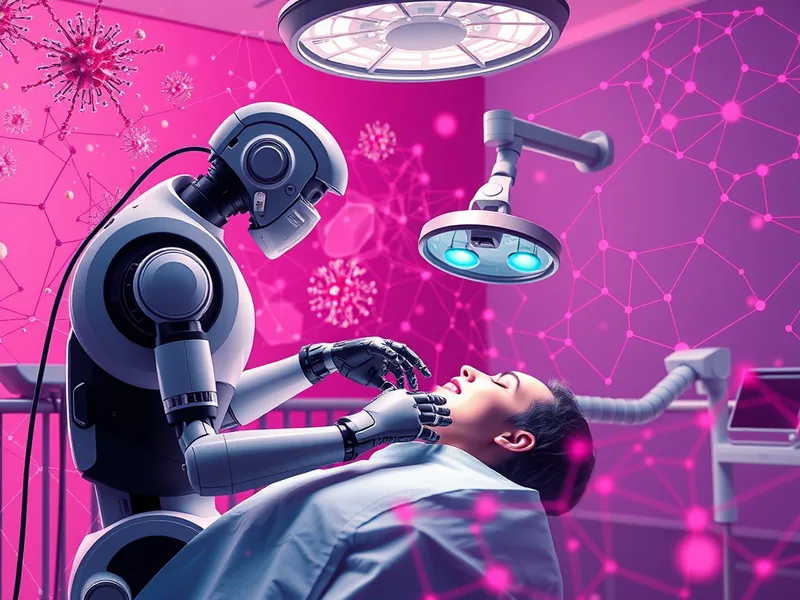
The benefits of robotic dentistry extend beyond speed and precision. The technology can help address the shortage of dental professionals in underserved areas. In regions where access to skilled dentists is limited, a robot dentist could provide much-needed care, potentially improving oral health outcomes for entire communities.
However, with any new technology, there are also concerns about safety and ethics. Critics might worry about the potential for errors or the loss of the human touch that many patients value in their healthcare. It's important to note that while this procedure was fully autonomous, it was still conducted under strict supervision. The researchers involved have emphasized the importance of rigorous testing and continuous monitoring to ensure patient safety.
Moreover, the transition to robotic dentistry will likely be gradual. Human dentists will continue to play a crucial role in diagnosis, planning, and complex procedures that require human judgment and empathy. The goal is not to replace human dentists but to enhance their capabilities and extend their reach.
As this technology advances, it will be essential to balance the benefits with ethical considerations. Regulatory bodies and healthcare providers must work together to establish guidelines that ensure the safe and responsible use of AI in dental care.
The world's first fully-automatic robot dentist procedure is a testament to what can be achieved when cutting-edge technology meets human ingenuity. It opens the door to new possibilities in healthcare, where precision, efficiency, and accessibility are no longer mutually exclusive. For patients around the world, this could mean better, faster, and more affordable dental care.
Tags
Original Sources
About the author
Amara's entry point into AI was an epidemiology role at a London research hospital, where she spent five years studying how digital health tools reached — or conspicuously failed to reach — underserved communities. Watching early algorithmic systems in healthcare quietly entrench existing inequalities, she redirected her career toward the systemic consequences of AI at scale. She covers AI through an unflinching lens: who benefits, who bears the cost, and what evidence actually says versus what the press release claims. Her writing is calm and precise, but she doesn't mistake balance for neutrality.
More from The Steward →This Week's Edition
9 August 2024
29 articles
Related Articles
Related Articles
More Stories
© 2026 Cedar & Bloom. All rights reserved.