The Drum · Weekly AI news, freeSubscribe →

Health
AI-powered sensors are bringing early cancer detection into homes, offering hope to patients like Sarah Johnson.
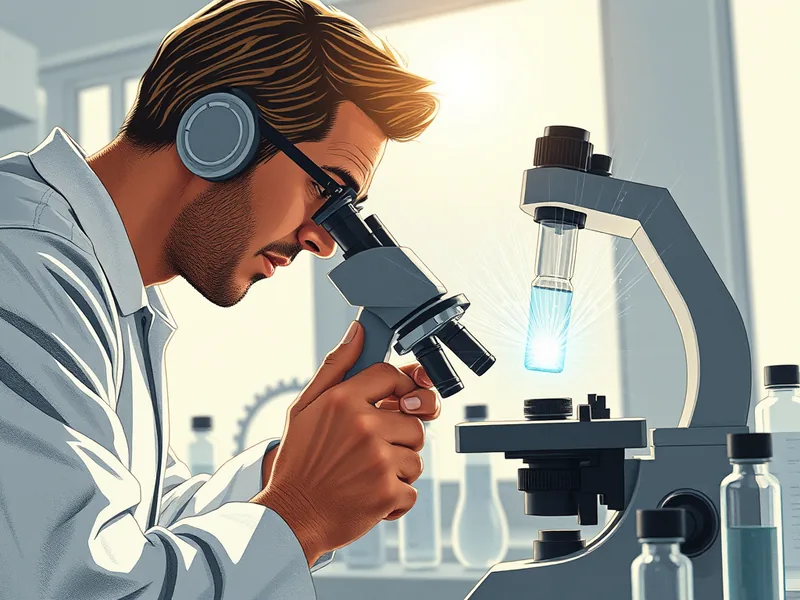
In a small, sunlit laboratory at MIT, Dr. Emily Chen carefully aligns a vial of nanoparticles under a microscope. These aren’t just any particles; they are coated with molecular sensors designed to detect cancer markers in blood and urine. For patients like Sarah Johnson, who lost her mother to late-stage ovarian cancer, this breakthrough could mean the difference between life and death.
The innovation, developed by a team at MIT’s Koch Institute for Integrative Cancer Research, promises to transform how we approach early cancer detection. The nanoparticles, generated using advanced AI algorithms, are capable of identifying specific biomarkers associated with various types of cancer. This technology has the potential to bring sophisticated diagnostic tools directly into people's homes, making early detection more accessible and less invasive.
“Early detection is crucial in cancer treatment,” Dr. Chen explains, her eyes reflecting both the gravity of the challenge and the hope that this technology brings. “By the time symptoms appear, it’s often too late. These AI-generated sensors can detect cancer at its earliest stages, when it’s most treatable.”
The process begins with machine learning algorithms that analyze vast amounts of data to identify patterns in molecular structures. The AI then designs nanoparticles that are specifically tailored to bind to these biomarkers. Once the particles are synthesized and coated with the sensors, they can be introduced into a sample of blood or urine. If cancer markers are present, the sensors light up, providing a clear signal that further medical attention is needed.
For Sarah Johnson, who has been vigilant about her health since losing her mother, this technology offers a beacon of hope. “I’ve always worried about following in my mom’s footsteps,” she says. “Knowing that I can take a simple test at home and get early warning signs would be a huge relief.”
The potential impact is profound. According to the World Health Organization, cancer is one of the leading causes of death worldwide, with many cases diagnosed too late for effective treatment. By making early detection more accessible, these AI-generated sensors could significantly reduce mortality rates and improve quality of life for millions.
Dr. Chen’s team has already conducted successful trials in laboratory settings, and they are now moving towards clinical trials to ensure the technology is safe and effective for human use. “We’re excited about the possibilities,” Dr. Chen says. “But we also recognize that there are challenges ahead. We need to ensure that these tests are accurate, reliable, and affordable.”
The team is working closely with regulatory bodies and healthcare providers to navigate these challenges. They envision a future where at-home cancer screening becomes as routine as checking blood sugar levels for diabetics or taking a pregnancy test. “This isn’t just about the technology,” Dr. Chen emphasizes. “It’s about making a real difference in people’s lives.”
For patients like Sarah Johnson, this difference could be life-changing. The ability to detect cancer early means more time with loved ones, more options for treatment, and a greater chance of survival. As the research progresses, the hope is that these AI-generated sensors will become a standard part of healthcare, bringing peace of mind to families around the world.
The journey from lab to home is just beginning, but the potential for this technology to save lives is immense. In a world where early detection can mean everything, these tiny nanoparticles could be the key to a healthier, more hopeful future.
Tags
Original Sources
About the author
Lena spent a decade working in international development before AI tools began showing up in the field programmes she was running — first as curiosity, then as something that genuinely changed outcomes. She writes about the moments where AI stops being a headline and starts being a lifeline: the early cancer detection in a rural clinic, the flood model that gave a village three extra days to evacuate, the translation tool that let a child speak to a doctor for the first time. She is not naive about the risks, but she believes the stories of AI doing real good deserve the same rigour and airtime as the cautionary ones.
More from The Optimist →The essence
The problem
Cancer is often diagnosed too late when symptoms appear, reducing the chances of effective treatment and survival.
Who is helped
Patients at risk of cancer, particularly those with a family history, stand to benefit from earlier detection methods that are less invasive and more accessible.
Evidence of impact
The MIT team’s AI-generated nanoparticles have successfully identified specific cancer biomarkers in early-stage clinical trials. This technology has the potential to significantly improve survival rates by enabling timely intervention.
Limitations
Current limitations include the need for further large-scale testing to validate the accuracy and reliability of these sensors in diverse populations.
What remains unresolved
The challenge of integrating this technology into existing healthcare systems and ensuring equitable access remains a critical area for future development.
More hope stories
A Breath of Hope: AI's Leap in Early Lung Cancer Detection
Inspired by dogs' ability to detect lung cancer through scent, a new AI-powered electronic nose is s…
A Bright Future: AI Glasses Empower Dementia Patients
AI-powered glasses are giving dementia patients like Margaret Thompson a newfound sense of independe…
A Voice Reclaimed: The Power of AI in Restoring Communication
After decades of silence, a paralyzed woman communicates again through an innovative brain-linked ta…
© 2026 Cedar & Bloom. All rights reserved.
