The Drum · Weekly AI news, freeSubscribe →

Share
Experts from around the globe are converging to integrate AI into early warning systems, boosting disaster readiness through collaborative efforts in Brussels and beyond.
In a world where natural disasters can strike with little warning, the World Meteorological Organization (WMO) is leading a global effort to harness artificial intelligence (AI) for better early warning systems. This initiative, which has seen vibrant discussions and collaborations in Brussels and India, aims to strengthen disaster preparedness by fostering trust, setting standards, and promoting international cooperation.
On a crisp December morning in Brussels, civil protection authorities, European Union institutions, United Nations agencies, researchers, and private companies gathered for the ITU-T Workshop on Resilience to Natural Hazards through AI Solutions. The workshop, jointly organized by the International Telecommunication Union (ITU) and the European Commission’s Directorate-General for European Civil Protection and Humanitarian Aid Operations (DG ECHO), was a pivotal moment in the global conversation about AI's role in disaster management.
Dr. Monique Kuglitsch, Chair of the Global Initiative on Resilience to Natural Hazards, emphasized the importance of trust and standards. "AI can be a powerful tool in predicting and mitigating natural disasters," she said, "but it must be used responsibly. We need clear guidelines and transparent processes to ensure that communities around the world can rely on these systems."
The discussions delved into practical applications of AI, such as flood management. During a WMO-curated role-playing session, participants explored how AI could enhance real-time monitoring and predictive modeling for floods. The vivid scenarios brought home the potential impact: faster, more accurate warnings that could save lives and reduce economic losses.
One participant, a civil protection authority from a coastal region, shared her experience with recent flooding. "Our community was hit hard by a sudden flood last year," she recounted. "With better early warning systems, we could have evacuated more people in time. AI can help us get ahead of these disasters."
The workshop also addressed the challenge of maintaining trust in official forecasts and warnings. As AI models become more sophisticated, there is a risk that they might be seen as infallible or too complex to understand. "We need to communicate clearly and transparently about how these systems work," said Dr. Kuglitsch. "People need to know what goes into the predictions so they can make informed decisions."
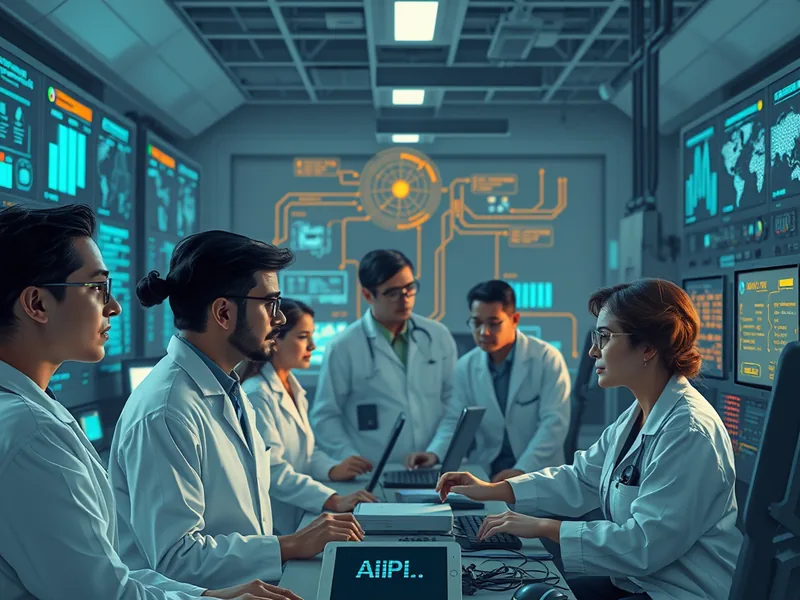
The WMO's efforts extend beyond Brussels. In India, a series of meetings brought together meteorologists, policymakers, and technology experts to discuss regional challenges and opportunities. The focus was on how AI could be tailored to meet the specific needs of different communities, from mountainous regions prone to landslides to coastal areas vulnerable to cyclones.
Dr. Ramesh Kumar, a leading meteorologist from India, highlighted the potential for local innovation. "India has a rich tradition of community-based disaster management," he said. "AI can complement these efforts by providing timely and accurate data. It's about empowering people with information."
The discussions in both Brussels and India underscored the importance of global cooperation. Natural disasters do not respect national boundaries, and effective early warning systems require a coordinated international response. The WMO is working to facilitate this collaboration by bringing together diverse stakeholders and fostering a shared vision.
As these initiatives move forward, the potential benefits are clear. Faster, more accurate warnings can save lives, protect infrastructure, and reduce economic losses. For communities on the front lines of climate change, AI could be a lifeline, offering hope and resilience in the face of uncertainty.
The future is bright with possibility. As Dr. Kuglitsch put it, "We are at the dawn of a new era in disaster management. With global cooperation and responsible innovation, we can build systems that truly serve and protect our communities."
Tags
Original Sources
About the author
Lena spent a decade working in international development before AI tools began showing up in the field programmes she was running — first as curiosity, then as something that genuinely changed outcomes. She writes about the moments where AI stops being a headline and starts being a lifeline: the early cancer detection in a rural clinic, the flood model that gave a village three extra days to evacuate, the translation tool that let a child speak to a doctor for the first time. She is not naive about the risks, but she believes the stories of AI doing real good deserve the same rigour and airtime as the cautionary ones.
More from The Optimist →This Week's Edition
5 May 2026
29 articles
Related Articles

Iambic Therapeutics Raises $150 Million in IPO to Fund AI-Designed Cancer Drugs
Finance & Markets · 5 min

Biotech's Summer Glow Fades as XBI Slips 11% From August Highs
Finance & Markets · 5 min

States Race to Write the Rules for AI Sandboxes in Health Care, and Lobbyists Are Racing Right Alongside Them
Policy & Regulation · 5 min
Related Articles
Iambic Therapeutics Raises $150 Million in IPO to Fund AI-Designed Cancer Drugs
Finance & Markets · 5 min
Biotech's Summer Glow Fades as XBI Slips 11% From August Highs
Finance & Markets · 5 min
States Race to Write the Rules for AI Sandboxes in Health Care, and Lobbyists Are Racing Right Alongside Them
Policy & Regulation · 5 min
More Stories
© 2026 Cedar & Bloom. All rights reserved.
