The Drum · Weekly AI news, freeSubscribe →

Share
AI is revolutionizing nuclear reactor design at BYU, slashing development time and costs. This innovation could make nuclear power more competitive in the race to combat climate change.
In an era where the demand for clean, reliable energy is soaring, researchers at Brigham Young University (BYU) have found a way to significantly speed up the development of nuclear reactors using artificial intelligence (AI). This breakthrough could not only shave years off the lengthy design and licensing processes but also save millions of dollars, making nuclear power a more viable option in the fight against climate change.
As the world grapples with the dual challenges of increasing energy demand and reducing carbon emissions, the need for efficient and sustainable solutions has never been more pressing. According to chemical engineering professor Matthew Memmott, the only baseload power source capable of producing gigawatts of electricity without any emissions is nuclear power. However, the traditional process of designing and licensing a new nuclear reactor in the United States can take up to 20 years and cost around $1 billion. Building the reactor then requires an additional five years and between $5 and $30 billion.
Enter artificial intelligence. Memmott and his colleagues have developed an AI algorithm that can significantly reduce the time and cost associated with nuclear reactor design. By automating the complex computational processes involved, this AI could cut a decade or more off the overall timeline, potentially saving millions of dollars in the process.
“AI is not about giving control to machines; it’s about using advanced algorithms to streamline and optimize the design process,” Memmott explained. “This means we can get new nuclear reactors online faster and at a lower cost, which is crucial for meeting our future energy needs.”
Designing a nuclear reactor is an intricate task that involves multiple layers of physics and engineering. Engineers must consider elements from the quantum scale, such as neutron behavior, to the macro scale, including coolant flow and heat transfer. These processes are tightly coupled, meaning changes in one area can have significant impacts on others.
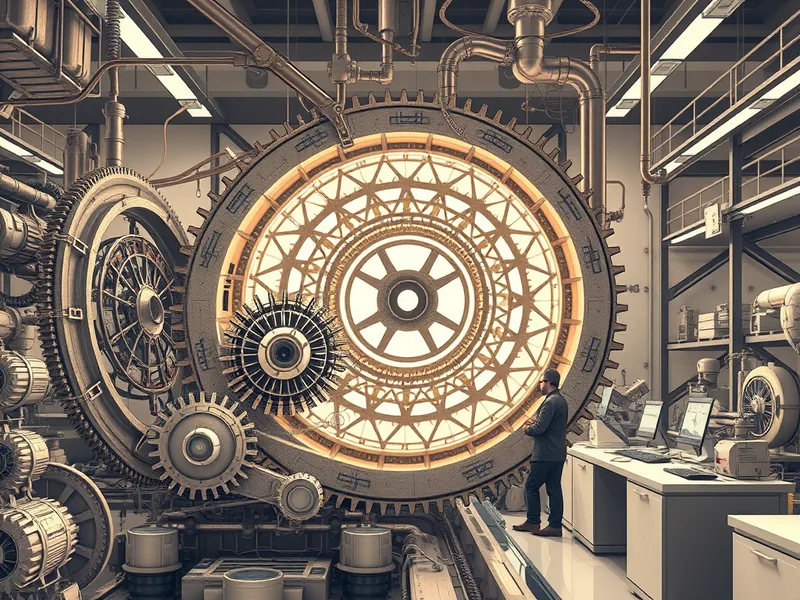
“A lot of these reactor design problems are so massive and involve so much data that it takes months of teams of people working together to resolve the issues,” Memmott said. “AI can handle this complexity more efficiently, allowing us to iterate and test designs much faster.”
The implications of this research are far-reaching. By reducing the time and cost barriers to nuclear reactor development, AI could make nuclear power a more accessible and affordable option for countries around the world. This is particularly important as the global demand for electricity is expected to skyrocket in the coming years.
“Nuclear power has the potential to play a critical role in our transition to a low-carbon economy,” Memmott noted. “By making it faster and cheaper to develop new reactors, we can help ensure that this clean energy source is available to meet future demand.”
While AI offers significant benefits, it also raises important questions about safety and regulation. Memmott emphasizes that the use of AI in nuclear design will be tightly controlled and subject to rigorous testing and oversight.
“Safety remains our top priority,” he said. “We are not cutting corners; we are simply using advanced tools to do the job more efficiently.”
As the world continues to seek solutions to its energy challenges, the integration of AI into nuclear reactor design represents a promising step forward. By leveraging this technology, we can accelerate the development of clean, reliable power sources and move closer to a sustainable future.
Tags
Original Sources
About the author
Amara's entry point into AI was an epidemiology role at a London research hospital, where she spent five years studying how digital health tools reached — or conspicuously failed to reach — underserved communities. Watching early algorithmic systems in healthcare quietly entrench existing inequalities, she redirected her career toward the systemic consequences of AI at scale. She covers AI through an unflinching lens: who benefits, who bears the cost, and what evidence actually says versus what the press release claims. Her writing is calm and precise, but she doesn't mistake balance for neutrality.
More from The Steward →This Week's Edition
6 August 2024
29 articles
Related Articles

Nuclear Plants Are Squeezing Out More Power, But It Won't Be Enough to Meet AI's Demand
Environment & Climate · 5 min

The Hidden Environmental Price Tag of Artificial Intelligence
Environment & Climate · 5 min

Iambic Therapeutics Raises $150 Million in IPO to Fund AI-Designed Cancer Drugs
Finance & Markets · 5 min
Related Articles
Nuclear Plants Are Squeezing Out More Power, But It Won't Be Enough to Meet AI's Demand
Environment & Climate · 5 min
The Hidden Environmental Price Tag of Artificial Intelligence
Environment & Climate · 5 min
Iambic Therapeutics Raises $150 Million in IPO to Fund AI-Designed Cancer Drugs
Finance & Markets · 5 min
More Stories
© 2026 Cedar & Bloom. All rights reserved.
