The Drum · Weekly AI news, freeSubscribe →

Share
AI's rapid advancement in drug discovery is set to缩短这句话以适应30-40字的限制: AI's rapid advancement in drug discovery is poised to dramatically cut development times, offering hope for faster treatments and new approaches in biotech.
In a significant leap forward for medical research, artificial intelligence (AI) is revolutionizing the way we discover new drugs. This breakthrough not only promises to speed up the development of life-saving treatments but also opens new avenues in biotechnology, potentially transforming how we approach public health challenges.
Imagine a world where diseases that once took years to treat can be managed with medications developed in months. For patients suffering from chronic or rare conditions, this could mean the difference between a life of discomfort and a return to normalcy. For healthcare systems, it means more efficient use of resources and better outcomes for all.
Traditionally, drug discovery has been a long and arduous process. Researchers must sift through thousands of potential compounds to find those that effectively target specific diseases. This can take years, costing millions of dollars and often yielding limited success. However, AI is changing this landscape by leveraging machine learning algorithms to predict which compounds are most likely to succeed.
Think of it like a highly advanced search engine for molecules. Just as Google uses complex algorithms to quickly find the information you need on the web, AI can rapidly identify promising drug candidates from vast databases of chemical structures. This not only accelerates the discovery process but also increases the likelihood of finding effective treatments.
Several recent studies have demonstrated the potential of AI in drug discovery. For example, a team at the University of California, San Francisco, used AI to identify a new class of antibiotics that could combat drug-resistant bacteria. In another instance, researchers at the Massachusetts Institute of Technology (MIT) employed AI to develop a compound that shows promise in treating Alzheimer's disease.
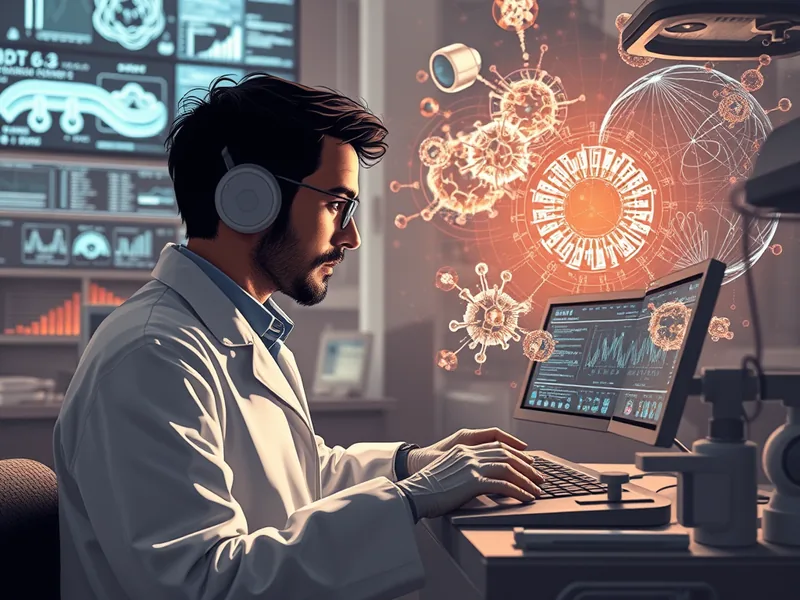
The benefits of AI in drug discovery are clear: faster development times, lower costs, and potentially more effective treatments. However, it's important to consider the risks as well. One concern is the potential for over-reliance on AI, which could lead to a lack of human oversight and creativity in the research process. Additionally, there are ethical considerations around data privacy and the use of AI in healthcare.
Looking ahead, the integration of AI into drug discovery has far-reaching implications. It could democratize access to new treatments by making them more affordable and available. Moreover, it may spur innovation in other areas of biotechnology, such as personalized medicine and gene therapy.
However, these advancements also raise questions about how we regulate and ensure the safety of AI-driven drugs. Policymakers and regulatory bodies will need to stay ahead of the curve to protect public health while fostering innovation.
The use of AI in drug discovery is a game-changer for medical research and public health. By accelerating the development of new treatments, it has the potential to improve lives and transform healthcare systems. As we embrace this technology, it's crucial to balance its benefits with careful consideration of ethical and regulatory issues.
Tags
Original Sources
↗ https://www.goodnewsnetwork.org/contribute/your-blogs
About the author
Amara's entry point into AI was an epidemiology role at a London research hospital, where she spent five years studying how digital health tools reached — or conspicuously failed to reach — underserved communities. Watching early algorithmic systems in healthcare quietly entrench existing inequalities, she redirected her career toward the systemic consequences of AI at scale. She covers AI through an unflinching lens: who benefits, who bears the cost, and what evidence actually says versus what the press release claims. Her writing is calm and precise, but she doesn't mistake balance for neutrality.
More from The Steward →This Week's Edition
29 April 2026
29 articles
Related Articles
Related Articles
More Stories
© 2026 Cedar & Bloom. All rights reserved.