The Drum · Weekly AI news, freeSubscribe →
Share
AI is revolutionizing drug discovery by accelerating the development of new treatments and tackling diseases once thought intractable, offering hope to millions suffering from chronic conditions worldwide.
In a world where medical breakthroughs are becoming increasingly critical, the integration of artificial intelligence (AI) into drug discovery is transforming how we find and develop new treatments. This shift not only promises faster and more efficient processes but also holds the potential to save countless lives by targeting diseases that have long eluded traditional methods.
The stakes are high, especially when considering the global burden of disease. According to the World Health Organization (WHO), non-communicable diseases like cancer, diabetes, and heart disease account for 71% of all deaths worldwide. The process of discovering new drugs to combat these conditions is notoriously long and expensive, often taking over a decade and costing billions of dollars. AI has the potential to revolutionize this process by accelerating drug discovery and making it more cost-effective.
At its core, AI in drug discovery involves using machine learning algorithms to analyze vast amounts of data, from genetic information to clinical trial results. These algorithms can identify patterns and make predictions that would be nearly impossible for humans to discern on their own. For example, AI can predict how different molecules will interact with specific proteins in the body, which is crucial for developing drugs that target particular diseases.
One of the most promising applications of AI is in the early stages of drug discovery, where it can help identify potential drug candidates. Traditional methods often rely on trial and error, testing thousands of compounds to find a few that show promise. AI, however, can narrow down these possibilities by predicting which molecules are most likely to be effective, significantly reducing the time and resources needed for this stage.
Several companies are already making significant strides in this field. For instance, Exscientia, a UK-based biotech firm, used AI to develop a drug candidate for obsessive-compulsive disorder (OCD) in just 12 months-a process that typically takes several years. Similarly, Insilico Medicine, a company with operations in the United States and China, has used AI to identify new targets for treating fibrosis, a condition characterized by excessive scar tissue formation.
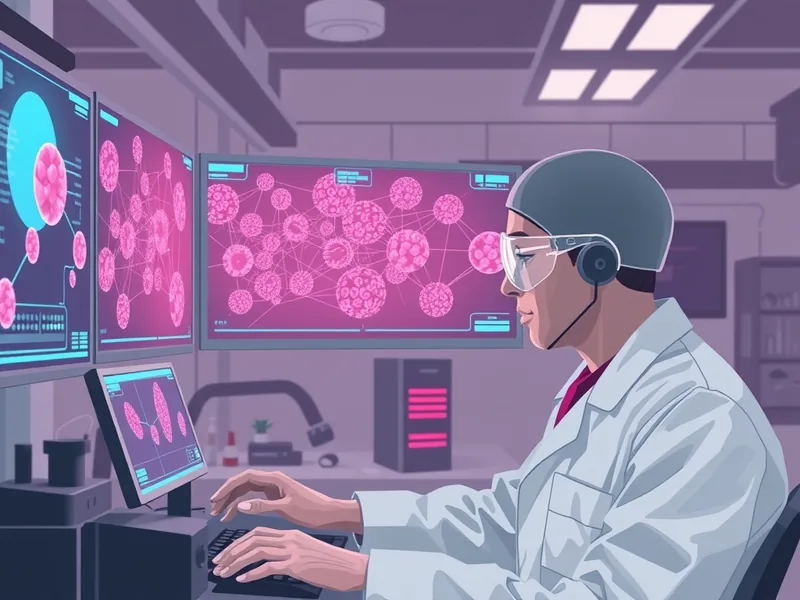
The benefits of AI in drug discovery are clear: faster development times, lower costs, and the potential to find treatments for diseases that have eluded us. However, there are also risks and challenges to consider. One major concern is data privacy and security. The use of large datasets, including patient information, raises ethical questions about how this data is collected, stored, and used.
Another challenge is ensuring that AI models are transparent and explainable. While these algorithms can make highly accurate predictions, they often operate as "black boxes," making it difficult for scientists to understand why certain decisions were made. This lack of transparency can be a barrier to acceptance in the scientific community and among regulatory bodies.
Looking ahead, the integration of AI into drug discovery could have far-reaching consequences. It has the potential to democratize access to new treatments by making the development process more efficient and cost-effective. However, it also raises questions about who will benefit from these advancements and whether they will be accessible to all.
As we move forward, it is crucial to strike a balance between innovation and regulation. Policymakers, scientists, and industry leaders must work together to ensure that AI in drug discovery is used ethically and responsibly, with the ultimate goal of improving public health for everyone.
The use of AI in drug discovery represents a significant step forward in medical research. By harnessing the power of machine learning, we can accelerate the development of new treatments, potentially saving lives and improving the quality of life for millions of people around the world. As this technology continues to evolve, it is essential that we address the ethical and practical challenges to ensure that its benefits are realized equitably.
Tags
Original Sources
↗ https://www.goodnewsnetwork.org/more/geris-blog
About the author
Amara's entry point into AI was an epidemiology role at a London research hospital, where she spent five years studying how digital health tools reached — or conspicuously failed to reach — underserved communities. Watching early algorithmic systems in healthcare quietly entrench existing inequalities, she redirected her career toward the systemic consequences of AI at scale. She covers AI through an unflinching lens: who benefits, who bears the cost, and what evidence actually says versus what the press release claims. Her writing is calm and precise, but she doesn't mistake balance for neutrality.
More from The Steward →This Week's Edition
29 April 2026
29 articles
Related Articles
Related Articles
More Stories
© 2026 Cedar & Bloom. All rights reserved.